Tag: Tariffs

  • Trump Tariffs & the Global Trade War: Impact on Indian Markets

    Trump Tariffs & the Global Trade War: Impact on Indian Markets

    Trump's Tariffs Will Increase Prices and Empty Shelves Within Weeks - Business Insider


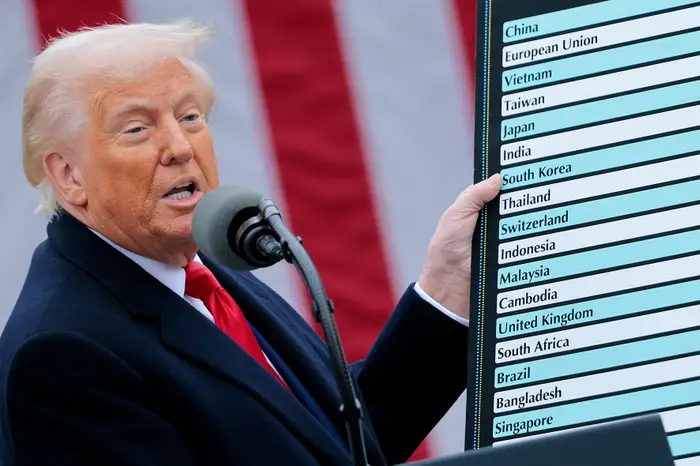
    Trump tariffs India markets: Beginning in 2018, the Trump administration unleashed a broad trade war. It slapped 25% tariffs on imported steel and 10% on aluminum, then applied a 10% surcharge on nearly all imports and much higher rates on key partners​. By April 2025, the US announced “reciprocal” tariffs targeting India (26%) along with China (54%), the EU (20%), Japan (24%) and others. These moves pushed America’s average import duty to the highest level since World War II​, sparking fears of a prolonged global recession. The World Trade Organization’s Pamela Coke-Hamilton warned that the turmoil could shrink world trade by about 3%, as supply chains reorient toward India, Brazil and other emerging markets​. In short, the new tariffs have dramatically raised prices and uncertainties worldwide, fueling volatile reactions in India.

    Impact on Indian Markets (Short Term)

    Indian stock markets plunged on news of the tariffs. BSE Sensex and Nifty 50 dropped about 5% in a single session​ – one of the worst falls in years. By April 7, 2025, BSE market capitalization had lost over ₹14–19 lakh crore (trillions of rupees)​. Broad indices were dragged down by heavy selling in companies tied to the US economy. For example, Tata Group firms (large US exposure) saw their combined market value shrink by ~₹2.4 lakh crore​. Other sectors hit hard included automobiles, metals, IT services, pharmaceuticals, textiles and gems​.

    Economists attribute this sell-off to panic over higher import costs and slower export demand. Foreign funds withdrew from Indian equities, and investors sought safer assets. Gold prices and government bonds rallied while the rupee slid to multi-month lows under the pressure. Analysts note that companies with large U.S. business (consumer goods, tech services, etc.) saw the steepest declines, as investors “offloaded shares of companies with US exposure” amid fears of a worldwide downturn​. Overall, the tariff shock triggered a bout of extreme volatility in Indian markets, wiping out years of gains in days.

    Stock Market Reaction

    Investors immediately turned bearish. Indian equities were hit by a wave of margin calls and panic selling. On April 7, 2025 Sensex and Nifty each fell roughly 5% in one day, only recovering some losses at the close​. That “Black Monday” erased decades of gains for the day, costing the average investor ₹14.2 lakh crore​. The drop was broad-based: every sectoral index saw multi-percentage declines, led by auto, metal, IT, pharma, textiles and gems​. Notably, firms with strong US revenue streams were sold off most aggressively​.

    This turmoil drove foreign portfolio outflows and a scramble for safe havens. The Bombay Stock Exchange warned that any global recovery or tariff roll-back could quickly reverse the slide​. Meanwhile, credit markets priced in higher risk: corporate bond spreads ticked up slightly and banks reported caution in new loans. Commodity prices also reacted – oil dipped on growth worries, while gold climbed as investors sought protection. Analysts emphasize that much of this damage is due to sentiment – fundamentals have not yet fully changed – suggesting a possible rebound if tensions ease​.

    India–US Trade Relations & Retaliation

    India’s trade with the US is significant: bilateral trade exceeds $190 billion/year, with India running a ~$50 billion surplus​. American officials point out that India’s average tariff on US goods (~17%) far exceeds the US rate (~3%). Washington justified its tariffs as “reciprocal” measures to correct this imbalance​.

    In practice, India has limited ability to retaliate symmetrically. A U.S. think-tank notes that many Indian imports (pharmaceuticals, certain foods) are low or zero-duty in the US​. Nonetheless, India originally announced its own tariffs on $900 million of US agricultural exports (apples, almonds, etc.) in response to 2018 steel and aluminum tariffs. Those duties were to mirror US rates but have been largely shelved pending talks​. For now, India is instead lobbying Washington (through WTO and diplomacy) to avoid a trade war. Prime Minister Modi’s government stresses that India and the US are “friends” and is seeking exemptions or a limited deal. In April 2025 the US paused additional duties on some Indian exports for 90 days (until July) in exchange for ongoing talks​.

    Still, bilateral relations are under strain. The US-China conflict and shifting alliances mean India must balance strategic partnership with protection of its own industries. Policymakers in New Delhi are unlikely to lower their tariffs easily – the very reason Trump imposed them in the first place. Any future concessions (on visas, data flows, etc.) may be tied to trade. In short, India is playing a delicate game: protecting exporters in the short term, while negotiating with the US to avoid an escalation​.

    International Comparisons

    India is not alone. China has been the main target of Trump’s trade campaign. Beijing now faces an effective 54% average tariff on its exports, and has retaliated in kind – imposing duties on around 800 US goods, totaling ~$20.6 billion in 2018 alone. In early April 2025 China announced a 34% tariff on all US imports in response to the new US levies​, prompting Trump to threaten a cumulative 104% tariff if China does not back down​. Stock markets in Hong Kong, Shanghai and Taiwan dropped more than 7–9% in one day​, illustrating the contagion.

    The EU and U.S. have a more mixed legacy. In 2018, when Trump slapped metal tariffs, Europe protested via the WTO and imposed ~$3.6 billion of counter-tariffs. By 2021 the Biden administration lifted those sanctions. However, under the new plan the EU was hit with ~20% on many goods. Canada and Mexico – originally exempt from steel/aluminum tariffs – eventually agreed to USMCA (replacing NAFTA) and saw those duties removed by mid-2019​. In this latest round, North American trade flows aren’t directly affected (the new US plan excluded USMCA countries), but Mexico’s factories do feel higher costs on Chinese inputs.

    Across the Indo-Pacific, most countries (aside from China) have so far avoided immediate retaliation​. Governments are instead exploring strategies like diversifying export markets, cutting domestic tariffs and engaging with Washington bilaterally. For example, Vietnam and ASEAN exporters are shifting sales to Europe, Korea and the Middle East​. A recent survey warns that unless global tensions ease, many economies could face long-term slowdowns and a fracturing of trade links​.

    Geopolitical & Economic Shifts

    Trump’s tariff policy – and the uncertainty around it – is catalyzing broader changes. Some emerging economies could gain export share as supply chains move out of China. Indeed, experts forecast that a lasting 3% drop in global trade would redistribute exports toward countries like India and Brazil​. India may attract more foreign investment in manufacturing as companies look for alternatives, though high Indian tariffs remain a hurdle. Domestically, the shock strengthens voices calling for reforms: lower import duties, faster infrastructure spending and new trade deals to insulate the economy.

    Geopolitically, the US moves have weakened trust in multilateral trade rules. The Administration’s tariff actions have prompted complaints to the WTO and may bolster rival trade blocs (e.g. China’s Regional Comprehensive Economic Partnership). Meanwhile, the Sino-US trade war and fears of “decoupling” have driven closer security ties between India and the US (Quad) – but also encourage India to hedge by deepening trade links with Europe, the Middle East and Russia. In sum, American tariffs are not just an economic lever but a strategic signal: that the global order is shifting to a more competitive, less cooperative era.

    Outlook


    In the short term, India’s markets will likely remain jittery. Analysts caution that inflation (from higher import prices) and slower growth are possible outcomes. However, many Indian exporters are already accustomed to volatility, and sectors like pharmaceuticals and IT services have some insulation. If a negotiated compromise emerges (or if tariffs are delayed), a sharp rebound in markets is possible. Longer-term, the experience may prod India to ease some trade barriers and accelerate moves toward a free-market economy – changes that could ultimately bolster resilience.

    Ultimately, Trump’s tariff barrage has shaken Indian markets and tested policymakers, but it has also underscored India’s role as a rising middle power. How New Delhi responds – through diplomacy, industry support and reforms – will shape its economic fortunes in a post-2025 world.

    Related articles

    Trump Tariffs 2025: Economic Impact on India, China & Beyond

  • TCS Hike Delayed in 2025 — Just One More Hit for IT Folks?

    TCS Hike Delayed in 2025 — Just One More Hit for IT Folks?

    TCS corporate office with concerned employees, global map showing US-India tensions and falling economy charts in the background.

    So yeah, here we are in April 2025… and no hike from TCS this time. For lakhs of folks who work there, this news isn’t just disappointing it’s confusing, frustrating, and honestly, kind of expected too?

    Every year around this time, there’s that usual buzz “hike letters coming,” “expecting 10% this time,” etc. But this year? Silence. And then the official word came salary hikes paused, thanks to “global uncertainty” and, well, the whole US tariff mess.

    It’s not cancelled, they said. Just delayed. Still, that’s not much comfort, is it?

    Feels Like Déjà Vu

    Last year also had its share of slowdowns and hiring freezes. And here we are again. Different year, same story. This time, TCS is blaming it on things happening halfway across the world. Something about the US changing trade policies, budgets being cut, and clients holding back on spending.

    Sounds valid on paper. But if you’re someone working late nights, closing deliverables, and doing daily standups, this just feels unfair. You do the work, but the reward? Maybe later. Or maybe never.

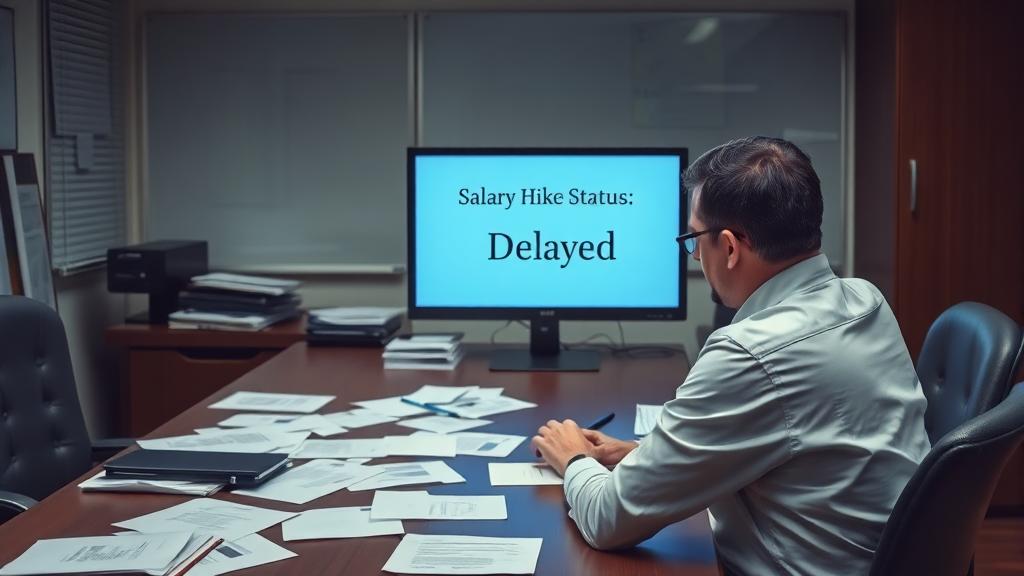
    Corporate employee staring at delayed salary hike message on office computer with frustration
    “When the screen says it all — hike delayed, mood deflated.”

    “We’re Hiring, But We’re Not Giving Hikes” – Make It Make Sense?

    What’s also weird is that hiring’s still on. Freshers are getting onboarded, some experienced roles are being filled too. So clearly, money is there.

    It’s not like TCS is broke. Far from it. Projects are running. Offices are open. There’s chai in the pantry.

    But when it comes to appraisals? Suddenly it’s all about “efficiency” and “cost optimization”.

    Honestly, sounds like corporate jugglery. Cut costs without calling it layoffs. Look “stable” to investors. Keep people in the loop, but not too happy. That’s what it feels like.

    What Employees Are Saying (Quietly)

    No one’s shouting, but the mood is low. On Slack, WhatsApp, Teams people are venting in DMs. Some were counting on the raise to plan EMIs, others were just hoping to catch up with inflation.

    Now it’s more like, “Let’s wait and see.”

    But the truth? This could easily become a trend. Delay this year, maybe trim it next year, and who knows what happens after that.

    But Is It Really Just About the US?

    Okay, sure, the global economy is shaky. Tariffs, elections, wars, AI killing budgets there’s a lot going on.

    But there’s also the inside story no one talks about openly. Companies want to show better profits. Margins were low last year. Cutting hikes makes the books look good. That’s not a conspiracy. That’s just how business works.

    You stop one hike, you save crores. Simple math.

    And if Infosys and Wipro are doing the same, well… there’s safety in numbers, right?

    What Can You Even Do?

    Honestly? Not much.

    But maybe don’t wait around hoping. Learn something new. Cloud, AI, DevOps whatever keeps you in demand.

    Start saving smart. Like seriously, don’t depend on appraisals to balance your budget. They’re not guaranteed anymore.

    And yeah, don’t blindly jump jobs either. Other companies might not be much better right now.

    Final Thought – Not The End, But Definitely a Signal

    This isn’t some tragic collapse. It’s not TCS shutting shop. But it is a warning.

    The market’s changed. The way companies work has changed. And hikes? They might not come as easily or as regularly as they used to.

    So yeah, hang in there. Upskill. Stay sharp. Keep your eyes open.

    Because if the world’s gonna throw curveballs, we better learn how to hit sixes too.

    This blog is just the start. Explore more with: TCS to delay salary hikes: We will decide within the …, says HR head

  • Trump Tariffs 2025: Economic Impact on India, China & Beyond
    Trump Tariffs 2025: Economic Impact on India, China & Beyond
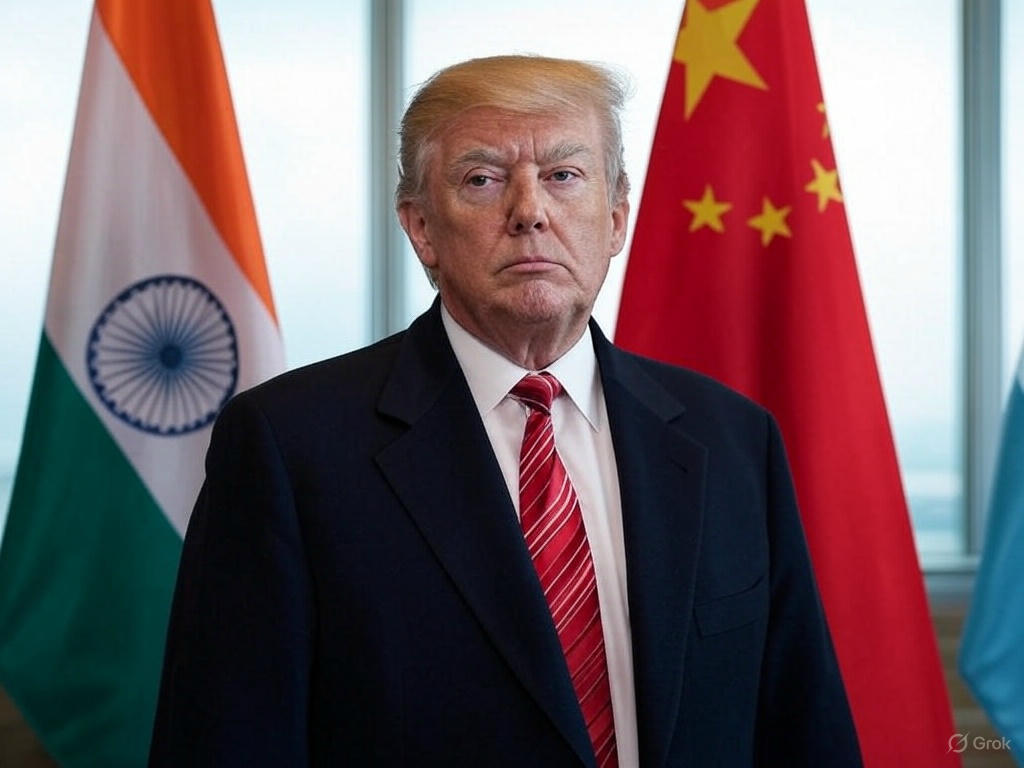
    Donald Trump standing between the flags of India and China, wearing a dark suit and red tie, with a serious expression, symbolizing trade policy discussions.

    A New Era of Trade Policy: What’s This Tariffs Drama in 2025?

    So, here we are again the world’s economy is at some kind of big crossroad, all because of Trump and his new tariffs in 2025. You’ve probably heard about that crazy 104% tax on Chinese stuff. And then he’s got these reciprocal tariffs hitting other countries left, right, and centre. Everyone’s got something to say big economists, politicians, even my neighbour who runs a small shop. Trump’s shouting it’ll bring jobs back to America. But some folks are like, “Wait a minute, this could land us all in a recession!” Honestly, I don’t know who to believe yet. So, let’s sit down and figure this out—what’s going to happen with prices, jobs, markets, all that jazz. It’s going to be a rough ride, so hold on tight.

    What’s the Deal with Tariffs Anyway?

    Look, tariffs are just taxes we slap on things coming from outside—like clothes, phones, whatever. The whole point? Make that foreign stuff cost more, so we start buying what’s made here. Trump’s saying this’ll get American businesses buzzing again, bring jobs home. Fair enough, sounds nice. But hang on—things aren’t that straightforward. Economics isn’t like a cricket match where one side wins and that’s it. It’s more like a big tangle of threads.

    People have been fighting over tariffs since forever. Some swear it’s the best way to save our factories and cut those trade gaps we keep hearing about. But then others pipe up, “No way, this just means everything gets expensive!” And yeah, they’re not wrong. When stuff from China or Europe costs a bomb, it’s not just fancy people feeling it—it’s me and you at the shop too. Plus, if those countries get annoyed and hit backlike China did with 84% on American goods—it’s trouble. Jobs might pop up in some places, sure, but in others like shops or farms—they could vanish. It’s a risky game, and we’re all watching to see who’s right.

    Prices Going UpThanks, Tariffs!

    Let’s talk real stuff now—inflation. You know how it is—when things cost more to bring in, the shop guy doesn’t just smile and take it. He puts the price up for us. People who study this stuff say Trump’s tariffs might make everything pricier soon. Think about it—factories need steel or those little phone chips from abroad. If that gets costly, the cars or gadgets they make? Boom, prices jump—maybe 10-20% more, depending how bad it gets.

    And it’s not stopping there. When daily things—like soap or shoes—cost more, we all start asking for bigger paychecks. That just keeps pushing inflation up! Some clever folks reckon it could go from 2.8% now to 4.4% by the end of the year. For families like mine, already stretching every rupee, that’s no joke—less money for fun, more worry. Trump’s like, “Relax, we’ll make more here soon.” But come on, building new factories isn’t quick—it’s years, not days. So, for now, it’s us regular people stuck with the bill.

    Supply and Demand—It’s a Messy Fight

    Tariffs don’t just mess with prices—they turn supply and demand into a proper wrestling match. On the supply side, it’s a headache. Say there’s a 50% tariff on Chinese electronics. Companies can’t keep buying from there—they’ll hunt for other places. But those new options? Either too expensive or not good enough. So, what happens? Things like chips get rare, and suddenly, your car or fridge isn’t ready when you want it. Prices don’t come down because there’s just not enough stuff.

    Then there’s demand. When prices climb, we all think twice—do I need that new shirt? Maybe not today. Businesses feel it too—they’re scared to spend big when nothing’s clear. But here’s the funny part—if local stuff gets cheaper than imports, maybe we’ll buy that instead. Could work, if they can make enough. Meanwhile, other countries hitting back with tariffs—like on our soybeans or planes—that’s bad news for farmers and factories here. It’s a big push-and-pull, and tariffs are making it wild. No wonder the markets are jumpy and we’re holding our cash tight.

    The Ugly Side of Tariffs

    Okay, tariffs sound like they’ll fix everything, but there’s a catch—plenty of bad stuff too. For one, the whole economy might slow down. Higher costs, less trade? That’s trouble brewing. Some folks who know this game say there’s a 45-60% chance America could hit a recession next year. Jobs in shops or delivery could disappear if people stop buying. And if countries like Canada or the EU keep throwing tariffs back—like China’s 84% on our goods—it’s a full-on trade fight. Everyone loses then.

    There’s even this weird thing called stagflation—prices keep going up, but the economy’s stuck. That’s a real pain for everyone, even the big shots at the banks. The worst part? If we all feel broke and scared, we stop spending. Businesses see that, and they’re like, “Why hire now?” It just keeps getting worse. Spooky, isn’t it?

    Markets Acting Crazy

    You should’ve seen the markets when Trump dropped this tariff bomb! The S&P 500 tanked over 10% in two days—same chaos in Asia, Europe, everywhere. Why? Nobody likes not knowing what’s next. Investors are like, “Will Trump push more or chill out?” Companies like Apple or Walmart, who grab stuff from all over, are sweating buckets. Costs are up, profits might drop. And when stocks crash, it hits people’s savings—especially the rich ones who spend big.

    But it’s not all gloom. Some local businesses—like steel guys—might get a boost if tariffs help them. Still, right now, it’s a rollercoaster. People are hoping the Fed cuts rates to ease the pain, but that’s just sticking a plaster on it, not fixing the mess.

    What’s Coming Next?

    So, where are we headed? The next few months are make-or-break. Prices for imported things will probably shoot up by summer—shops won’t wait to charge us more. Meanwhile, places like Japan and South Korea are talking to the U.S., trying to soften these tariffs. If that works out, trade might not crash too hard. But if we stop spending or businesses get nervous, recession’s knocking. Keep an eye on job news and growth stuff—it’ll show us the real picture.

    Trump’s dropping little hints he might change things, but his “be cool” talk? Sounds like he’s not backing down. If he does ease up, markets might relax a bit. For us regular folks, better start planning now—stick to what you need, maybe buy local if it’s cheaper. Businesses? Find new suppliers quick, before everyone’s scrambling. And if you’ve got stocks, don’t panic—spread it out, hang on. Markets always find a way, somehow.

    Any Hope Left?

    Look, it’s not all bad news. If tariffs go right, they might fire up American factories again. Trump’s also pushing tax cuts and fewer rules—could lift things up a bit. Maybe trade deals get better, and the U.S. comes out stronger. But that’s a big maybe—it’s a long road, and there’s heaps of trouble ahead. Still, a little hope keeps us going, right?

    Wrapping Up: Facing This Tariff Mess

    Look, Trump’s tariffs are a big, loud try at something—bold, sure, but who knows if it’ll work? Prices are probably going up, supply’s getting all tangled, and markets? They’re shaking like anything. For us regular folks and even the shop owners, it’s tough times ahead—everything’s getting costlier, and nobody’s sure what’s next. Still, there’s a way to push through, you know—maybe find new places to buy from, put some cash into our own stuff, or just hope the big guys sort out smarter trade rules.

    This whole tariff thing? It’s not going to settle in a day or two—it’ll drag on for months. Keep your ears open, make a plan, and don’t let all those scary news bits freeze you up. The economy’s like a river—it keeps moving, changing. The real question is, can we keep up with it or not?