Tag: Security

  • Top Online Security Tips to Stay Safe from Cyber Threats in 2025

    Top Online Security Tips to Stay Safe from Cyber Threats in 2025

    online security tips

    With just a tap on your phone, you can connect with anyone in the world today. In a time like this, it is important that you observe sensible online security tips to protect your personal details. From bogus payment links to malicious software embedded in seemingly innocuous attachments, cyber threats have increased in number and sophistication. Knowing how the fraudsters think and learning successful countermeasures makes you one step ahead.

    Common Threats You Should Know

    Payment Frauds and UPI Scams

    Most of us use net banking and UPI on a daily basis. But fake apps or duplicate websites mislead individuals into providing OTPs or login details. For example, one of my friends once got a message saying that it was from her bank, and she was being given cashback. She clicked the link and unknowingly provided her details, losing money in minutes.

    Real-world reports indicate Indians have been cheated of more than Rs. 1,750 crore through cyber scams in the initial four months of 2024, commonly through UPI and card payments.

    Phishing and Spoofed Emails

    Scammers send seemingly official emails—false bank notifications or parcel delivery receipts—to capture login information. I have a memory of an uncle who clicked on a link regarding an outstanding railway ticket refund; his email was hacked.

    Phishing is still one of the top vectors, with thousands of reports registered every day in India.

    OTP Fraud and SIM Swapping

    OTP frauds shoot through the roof when attackers phish telcos into porting your number. After they get control of your SIM, they reset passwords across the board. Before you even realize it, your bank, social media and even email accounts are hijacked.

    Millions of such account-takeover attacks reportedly occur every year in India.

    Must-Know Online Security Tips

    Use Strong, Unique Passwords

    A password such as “12345678” or your birthdate is a hacker’s free pass. Use a combination of letters, numbers and symbols—something nobody will ever guess. Furthermore, never reuse passwords across different sites. If one site gets hacked, all your accounts remain safe.

    Turn on Two-Factor Authentication

    Two-factor authentication provides an extra layer of protection. Even if someone has your password, they still require the one-time code on your phone or an authenticator app. So always turn on 2FA for bank, email and social-media accounts.

    Be Careful with Suspicious Links and Attachments

    Thieves take advantage of curiosity—such as a surprise bill or an unbelievable coupon code. So check the sender first before clicking and scan attachments for viruses using antivirus software.

    Also, float over links to ensure the true URL before clicking.

    Keep Software Up to Date

    Mobile apps, browsers and operating systems release updates to close security breaches. Failing to install them in a timely manner leaves you exposed.

    Just as you seal a leaky roof to prevent rain from entering, updating software repels malware.

    Use Secure Networks Only

    Public Wi-Fi in airports or cafes could be unsafe. So do not bank or shop using open networks.

    If at all, employ a reputable VPN service to cloak your connection. Thus your data stays secure from intruders.

    Install and Update Antivirus Tools

    A good antivirus can detect and isolate malware before it can cause damage. But no solution is ever perfect—so pair it with safe browsing habits.

    Antivirus software is like a watchdog that warns you that intruders are present.

    Monitor Your Account Activity Routinely

    Check bank and payment apps every few days for suspicious transactions. If something seems amiss, report it to your bank at once.

    Catching it early can avoid larger losses.

    Back Up Critical Data

    Periodic backups on an external drive or safe cloud storage enable you to recover from ransomware attacks or device crashes.

    Keep backups as a safety net beneath your tightrope of day-to-day work.

    Real-Life Example: Village Cooperative Approach

    In a small town in Pune, the shopkeepers created a WhatsApp group to exchange tips on fresh scams. Every time someone was a victim, they alerted others immediately, so nobody else lost anything.

    This ‘digital panchayat‘ illustrates how information-sharing and community action make collective security more robust.

    Personal Takeaway

    Sincerely, after having a scare with a spoofed EMI message, I now think twice before clicking a link and practice these online security tips on a daily basis.

    Risks might never go away, but prudence and good habits can keep our information secure.

    Read more artical for Finance here: Finance | sochbuzz
  • ₹6,839 Cr indian Border Plan: Security or Development?

    ₹6,839 Cr indian Border Plan: Security or Development?

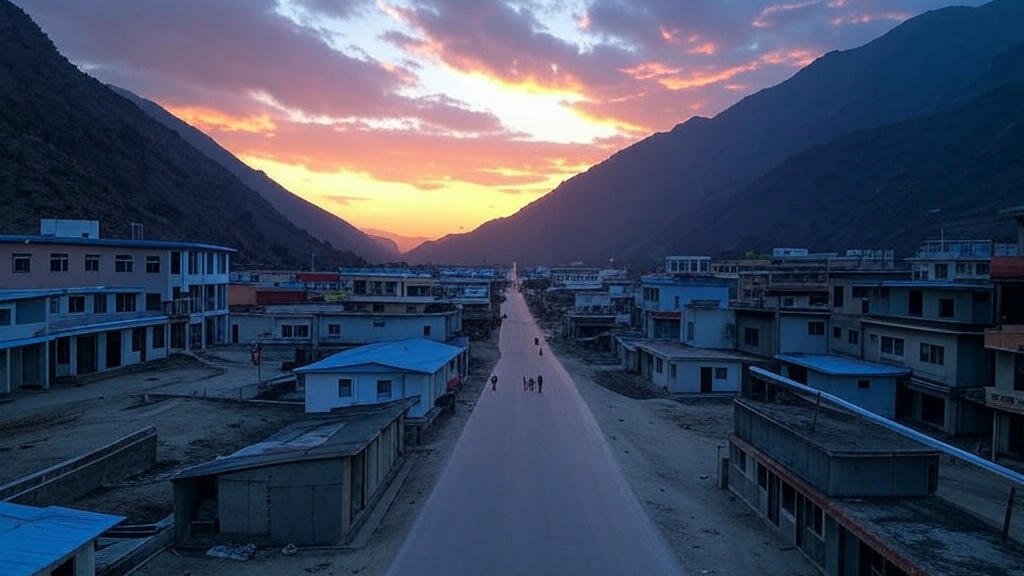
    A vibrant sunset scene over an Indian border village with new roads and SMART classrooms, flanked by rugged mountains and a faint Chinese border post, symbolizing hope and tension.

    Imagine a quiet village tucked between jagged mountain ranges, where the silence carries both tension and hope. Now picture that same place buzzing with new roads, smart classrooms, and tourists. On April 6, 2025, the Indian cabinet announced something massive—₹6,839 crore for the second phase of the Vibrant Villages Programme (VVP-II). Since then, the chatter hasn’t stopped. Some call it a bold move to tighten our borders against China, while others say it’s just another dream that may get buried under red tape.

    Let’s unpack what’s going on.

    The Big Push But What’s the Real Goal?

    Last Sunday, the cabinet, headed by Prime Minister Narendra Modi, gave the nod to pour ₹6,839 crore into villages along India’s international borders. This covers 17 states and union territories—from the valleys of Jammu & Kashmir to the edges of Arunachal and Rajasthan.

    The plan runs till 2028-29, and on paper, it sounds impressive: build all-weather roads, set up SMART classrooms, create tourism circuits, and launch livelihood schemes like cooperatives. It’s an upgrade to the original Vibrant Villages Programme that kicked off in 2023—but this time, with more money, more urgency, and maybe, more politics.

    The government says the goal is to integrate these distant communities into the national fabric—so they don’t just survive on the fringe but become the “eyes and ears” for the forces guarding our borders.

    But here’s the twist—opinions are split. Some are calling it a geopolitical masterstroke. Others are asking the obvious: will this money really reach the ground, or is it just another scheme that’ll get lost in the system?

    Security or Human Touch? That’s the Core Fight

    The heart of this debate is simple: is this about guarding the border, or is it about building lives?

    Security thinkers are all in. After the Galwan clash in 2020, India has been on high alert. Stronger roads help move troops faster. Better internet and mobile networks mean people living there can stay connected—unlike before when they were left in isolation, which China has used to its advantage. Making border villagers active participants in security sounds like a smart, people-powered shield. And given how much China has invested in its “Xiaokang” border villages, this is clearly India’s reply.

    But flip the view, and development-focused voices are asking tougher questions. This isn’t just about bunkers and boots on the ground. It’s about children walking miles for school, villages that still wait for drinking water, and entire communities that migrate for survival. If done right, this ₹6,839 crore could finally change that—giving them stable jobs, tourism income, and the dignity of staying where they belong.

    Yet, memories of past schemes linger. Vibrant Villages Phase I had ₹4,800 crore behind it, but many of those villages are still waiting for the promises to materialise. That’s where the doubt creeps in.

    It’s Not Just About Borders It’s About Belonging

    This debate isn’t just technical it hits right at India’s identity.

    Our borders aren’t just fences or lines on maps. They are living, breathing spaces. Villages in Ladakh, Arunachal, and Sikkim have held their ground despite years of neglect. Many of these places see more yaks than tourists. They’ve lost people to migration and have watched China quietly build railways, schools, and showpiece villages just across the fence.

    This ₹6,839 crore isn’t just an investment—it’s a statement. A way to say: we see you, we need you, and we’re with you.

    Globally too, this changes India’s pitch. While the U.S. gets tangled in tariff wars and China expands its influence brick by brick, India is saying: “We’ll hold our ground, but we’ll also grow our roots.” But it’s a tightrope. Focus too much on infrastructure, and the human side gets lost. Focus only on people, and security might fall behind. Striking the right balance is tricky—but necessary.

    What Can This Really Achieve?

    So here’s the big question: will this plan work?

    If executed well, it could be huge. Imagine 2,000+ villages with proper roads, digital classrooms, cooperative-based businesses, and cultural festivals pulling in tourists. That’s not just pride—it’s real progress.

    The government says it’ll use PM Gati Shakti to coordinate planning and cut red tape. But we’ve seen delays before—remember the Sela Tunnel? Projects on paper often take years longer on the ground.

    And ₹6,839 crore, while big, gets spread out thin once you account for terrain, logistics, and corruption. Execution is everything. The difference between a headline and real change lies in that one word.

    On the Ground, The Talk Is Real

    Online, the arguments are flying.

    Some folks are proud, posting about India finally “catching up” with China. Others are cynical, asking, “Where did the last ₹4,800 crore go?” It’s classic Indian discourse—half hopeful, half weary. And maybe both sides are right.

    My take? This could genuinely shift things—if the money flows past the files and into the villages. Picture a Ladakhi artisan selling woven goods to visiting trekkers, or a girl from Tawang learning science in a smart classroom without needing to migrate to a town 60 km away. That’s the kind of story worth building.

    As of April 10, the Clock Has Started Ticking

    This ₹6,839 crore isn’t just a number—it’s a bet on how we see our own people at the edge. Is it a protective shield against outside threats? Yes. Is it a chance to bring dignity and opportunity to some of India’s most forgotten citizens? Also yes.

    The real test? Between now and 2028-29. That’s when we’ll know whether this was just another press release or a proper turning point.

    Till then, the debate’s onand you should be part of it. What do you think: smart strategy or another empty promise? Pull up a chair, pour some chai, and let’s talk.

    Explore more insights with this related artical. clickhere

    If this topic caught your attention, here’s another one worth checking out: check here