Tag: Science

  • Elon Musk’s Book List That Could Change You Too

    Elon Musk’s Book List That Could Change You Too

    Introduction

    Elon Musk didn’t become Elon Musk’s overnight. Behind all the rockets, electric cars, and big ideas, there’s a mind that has been shaped deeply by books. He has often said that reading played a huge role in how he thinks and builds things. And when you look at the kinds of books he read while growing up—and even now you’ll notice one thing: they’re not just for entertainment. These books pushed him to think big, solve hard problems, and imagine things most of us wouldn’t even dare.

    In this blog, we’ll go through 10 books that Elon Musk himself has spoken about — the kind of books that helped him become who he is today. Whether you’re into tech, business, science, or just want to grow as a person, there’s something here that might just nudge you in a new direction.

    Books That Fired Up Elon Musk’s Imagination

    Musk’s bookshelf is full of variety science fiction, biographies, even books on engineering. Let’s take a look at what made an impact on him and how these books can still inspire anyone looking to do something meaningful.

    1. The Foundation Series – Isaac Asimov

    This one’s more than just sci-fi. It’s about how one person uses math to predict the rise and fall of empires. Musk has said it helped him think about saving civilization, not just building rockets. In a way, it’s like using knowledge to plan the future, which honestly feels close to what our ancient thinkers were doing too.

    2. The Lord of the Rings – J.R.R. Tolkien

    The story isn’t just about elves and battles—it’s about standing up when things go wrong. Musk once mentioned how the characters’ courage inspired him to stay strong during tough times. Even in our own lives, when nothing seems to work, it helps to remember that heroes are made during hard times.

    3. The Moon Is a Harsh Mistress – Robert Heinlein

    This one’s a story about a lunar colony fighting for freedom. It’s got politics, science, and big ideas. Musk connected with its message of independence and building from scratch. Just like how India’s scientists quietly built our space dreams from small labs—this book reflects that same spirit.

    Biographies That Shaped Elon Musk’s Real-World Lessons

    Musk didn’t only read fiction. He also picked up biographies of people who did many things at once thinkers, inventors, leaders. These real-life stories showed him that curiosity and effort can lead to big change.

    4. Benjamin Franklin: An American Life – Walter Isaacson

    Franklin was into everything electricity, diplomacy, business. Musk liked how he chased new ideas and built useful things. And honestly, it reminds us of our own thinkers who didn’t stick to just one field. Learning from people who did multiple things well can be very motivating.

    5. Einstein: His Life and Universe – Walter Isaacson

    Einstein’s name is everywhere in science. But this book shows the human side too — his doubts, his dreams. Musk admired his thinking style. For anyone who wants to understand how bold ideas come alive, this one’s worth reading.

    Books That Influenced Elon Musk’s Approach to Building the Future

    As someone who’s started many companies, Musk values books that talk about building things that don’t exist yet.

    6. Zero to One – Peter Thiel
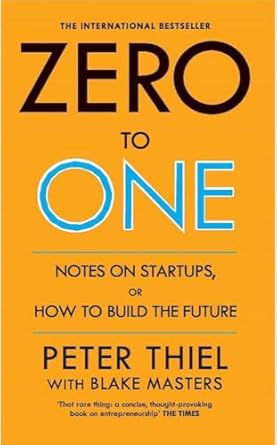
    This book says it straight don’t copy others, build something fresh. Musk appreciated that message. And in India too, we’ve seen startups doing new things rather than just repeating foreign models. If you’ve ever thought of starting something on your own, this book gives a solid push.

    That Reflect Elon Musk’s Vision for the Future of Tech

    With AI and machines becoming a big part of life now, Musk also reads books that deal with technology’s risks and power.

    7. Superintelligence – Nick Bostrom

    This book warns that AI could one day be smarter than humans and not in a good way. Musk takes this seriously. And with India’s tech sector growing fast, it’s something we also need to think about. Not everything new is automatically good.

    8. Life 3.0 – Max Tegmark

    Here, the author imagines what might happen when AI truly takes over. Elon Musk’s said it helped him think about the choices we need to make. For anyone who’s curious about the next 20–30 years, this is eye-opening.

    Books That Gave Him Technical Know-How

    Musk didn’t rely only on experts. He read technical stuff to understand the work himself.

    9. Structures: Or Why Things Don’t Fall Down – J.E. Gordon

    It sounds like a dry book, but it’s not. It explains how bridges and buildings stay up or fall down. Musk used it to understand rocket parts better. And honestly, anyone into design or construction can benefit from the clear way it explains things.

    10. Ignition! – John D. Clark

    This one’s a funny and detailed history of rocket fuel. Musk enjoyed how it mixed humour with hard science. It shows how even serious fields can be fun to learn if written well.

    What I Learnt After Going Through This List

    Reading about Elon Musk’s book choices makes one thing clear success doesn’t just come from action. It starts with ideas. And those ideas often come from reading the right things. Whether it’s a story about a future planet or a life story from the past, these books gave Musk the fuel he needed. And honestly, they can do the same for anyone who’s curious and willing to think beyond the usual.

    You don’t need to be a billionaire to start reading like one. Maybe try just one of these books and see where it takes you.

    Liked this post? Then you’ll probably love this as well: Zero to One by Peter Thiel – A go-to book for startup folks. Here’s Peter Thiel’s official site if you’re curious about his work beyond the book.

    Interested in this? You’ll also want to read: Effective Time Management Techniques for a More Productive Life — If Elon Musk can manage multiple companies and still find time to read, so can you. Here’s how to structure your day like a pro.

  • After 12th Science: Top Courses to Kickstart Your Career

    After 12th Science: Top Courses to Kickstart Your Career

    After 12 science

    Introduction

    As soon as the 12th Science results come out, students in cities and small towns alike face the same big question: “What next?” In Indian households, the pressure is real. At chai pe charchas, it’s all about who’ll crack JEE or NEET. I remember sitting in our Delhi classroom when the teacher asked, “Beta, engineering lenge ya medicine?” Even among friends, one jokes that living rooms start sounding like counselling sessions: “Beta, doctor ban ja” or “Beta, engineer ban ja”.

    The truth is, Engineering and Medicine are seen as “sure-shot” careers in India. We have thousands of colleges churning out engineers and doctors each year. For perspective, over 14.15 lakh students appeared for JEE Main 2024linkedin.com, and in 2023 about 20.38 lakh students appeared for NEETadda247.com! These numbers show how fierce the competition is. In this blog, we’ll break down the core science streams after 12th – focusing on traditional courses – and cover entrance exams, career options, and tips to pick the right path.

    Core Career Streams after 12th Science

    Engineering Courses

    Engineering is perhaps the most popular choice among Science students. In our country, engineering colleges are everywhere – from top IITs to local state universities. India produces nearly 1 million engineering graduates every year from about 3,500+ engineering collegesen. Common branches include:

    Computer Science & Engineering (CSE) – hot favorite, leading to IT/Software jobs.

    Mechanical Engineering – core sector jobs in manufacturing, automotive, heavy industries.

    Civil Engineering – designing and building infrastructure, roads, buildings.

    Electrical & Electronics Engineering – power plants, electronics, telecommunications.

    Electronics & Communication (ECE) – semiconductors, telecom, consumer electronics.

    Chemical Engineering – pharmaceuticals, petrochemicals, materials.

    Others (Aerospace, Metallurgy, etc.) – specialized fields with dedicated institutes.

    Engineering often appeals due to its mix of math, physics, and practical problem-solving. Classmates from Delhi to Chennai often dream of an IIT or NIT degree, hoping it opens doors to top tech firms or government jobs.

    Medical and Allied Courses

    Medicine is the other big traditional stream. For those fascinated by biology and patient care, careers in healthcare are rewarding. Nowadays, one common exam (NEET) covers most medical courses. According to Government data, India has about 731 medical colleges with an intake of around 1,12,112 MBBS seats as of 2024timesofindia.indiatimes.com. Popular medical and paramedical courses include:

    MBBS (Bachelor of Medicine & Surgery) – the standard medical doctor degree.

    BDS (Bachelor of Dental Surgery) – training for dentists.

    BAMS (Bachelor of Ayurvedic Medicine & Surgery) – Ayurveda physician.

    BHMS (Bachelor of Homeopathic Medicine & Surgery) – Homeopathy doctor.

    B.Pharm (Bachelor of Pharmacy) – pharmacist, drug development.

    B.Sc Nursing – nursing professionals in hospitals and clinics.

    BPT (Bachelor of Physiotherapy) – physiotherapists for rehabilitation.

    Others: B.Sc (MRT), BMLT (lab technicians), B.V.Sc (veterinary).

    In practical terms, MBBS students attend public health camps, cadaver dissections, and clinic rounds. My cousin from a smaller town spent all night disassembling a model skeleton for practice. Whether it’s becoming a surgeon or a pediatrician, medical careers carry social prestige and a demand in healthcare sectors.

    Other Science & Professional Courses

    Not everyone goes directly into Engineering or MBBS. Some students pick B.Sc degrees in subjects like Physics, Chemistry, Mathematics, or Biology. A B.Sc Honours can lead to an M.Sc or work in labs and research. While less in the limelight, science graduates contribute as researchers, lab technicians, or teachers.Another traditional path is Architecture (B.Arch) – a blend of art and tech. It requires cracking exams like NATA or JEE Paper II. Civil projects and urban planning need architects, so it’s an option for creative STEM students.

    Some also do BCA/B.Sc (Computer Science) if they lean toward IT but want a university degree route. In the government sector, defence, railways, and public services have technical posts that 12th Science grads can aim for (through separate exams or after B.E/B.Sc).

    Brief on Common Entrance Exams

    The journey to these colleges usually starts with entrance tests. Here are the main ones:

    JEE (Joint Entrance Examination) – For engineering. JEE Main (Conducted by NTA) is the first step; over 14 lakh students took it in 2024. Good JEE Main scores can get you into NITs, IIITs, state colleges, and qualify you for JEE Advanced E Advanced is only for the top ~2.5 lakh scorers from Mainlinke and leads to the IITs.

    NEET (National Eligibility cum Entrance Test) – For medical/dental. In 2023 around 20.38 lakh candidates appeared. NEET is now the gateway to MBBS, BDS, BAMS, BHMS, etc. (Earlier AIIMS and other institutes had separate exams, but now NEET covers them.)

    State and Others – Many states have their own engineering exams (like MHT-CET in Maharashtra). Architecture aspirants take NATA or JEE Arch. Some institutions accept their own tests or merit lists (like DU for medical science courses).

    Career Opportunities after these courses

    Choosing a course is only step one – what you can do afterwards matters too. Here are some broad career paths by stream:

    Engineering Graduates: Most join the booming IT industry as software developers, data analysts, etc. Others work in core industries: construction, automotive, energy, or telecom. Many engineers take campus placements in companies like TCS, Infosys, Bosch, or public sector units (PSUs) such as BHEL, DRDO, ONGC (through GATE exam or campus recruitments). Some pursue higher studies (M.Tech, MS abroad) or switch to management (MBA). A local example: my engineering batchmate was hired by a bank for a tech role, another joined a startup building robotics.

    Medical Graduates: MBBS doctors either join hospitals (public or private), start clinics, or go for specializations (MD, MS) in fields like Pediatrics or Cardiology. Dentists (BDS) set up private clinics. Ayurvedic/Homeopathy graduates run traditional clinics or manufacture herbal medicines. Government health services (like Army Medical Corps or government hospitals) are also big recruiters. Allied health professionals (nurses, pharmacists, physios) find roles in hospitals, research labs, or health product companies. With healthcare growing, there are opportunities in medical administration and public health too.

    Pharmacy & Science Graduates: B.Pharm grads often join pharmaceutical companies or pharmacies. B.Sc graduates can work as lab assistants in industries or government labs (like ISRO, DRDO, pollution control), become school/college teachers (after B.Ed or M.Sc), or continue research (M.Sc, PhD). For example, a friend with a Chemistry Honors now works in a material science lab. Public exams (UPSC/State PSC) have technical positions like Scientist or Geologist for B.Sc backgrounds.

    Architecture: Architects work in design firms or urban planning departments. They can be self-employed consultants or government planners. With India’s real estate boom, good architects are in demand for building projects.

    Others (CS/BCA, etc.): Even if not B.E., computer science grads or BCA holders often end up in IT jobs. Some become game developers or graphic designers (though latter may lean design field).

    Tips for Choosing the Right Path

    Know Your Interest: Ask yourself if you enjoy coding and math problems, or biology and patient care. Don’t pick Engineering just because “everybody does”. If you’re excited by biology, a course in medicine or life sciences might keep you motivated. Apni dilution dekho.

    Seek Guidance: Talk to teachers, school counselors, seniors and professionals. For example, I spoke to my cousin (a doctor) and a friend who’s an engineer to get their perspective. Also, attend career fairs or counseling seminars at your school or local colleges.

    Research Trends: Look at industry growth. Healthcare is always needed, but also consider competition. IT sector is booming, but some core fields (like Civil) are seeing a resurgence with infrastructure projects.

    Check College & Curriculum: The college you get into matters a lot. Investigate college placement records, faculty, and labs. An average branch at a top college can be better than a top branch at a local college.

    Prepare Early: If you aim for JEE/NEET, start preparation in Class 11. Boards often overlap with entrance syllabi. Joining a coaching center or using online resources helps.

    Have Backup Options: Don’t put all eggs in one basket. Many students take both JEE and NEET. If entrance scores fall short, remember there are diploma courses, polytechnics or private colleges. Also consider combined degrees (like B.Sc + integrated M.Sc).

    Family Discussion: Family expectations are important in India. Talk openly with parents about your strengths and passions. For instance, if your parents want you to become a doctor, but you hate biology, maybe compromise (like pharmacy or biotech).

    Realistic Mindset: Be ready for hard work. Engineering and medical studies are rigorous. Avoid last-minute panics; instead, plan revision time, mock exams, and breaks.

    Stay Flexible: Your first degree doesn’t lock your future forever. An engineer can later pursue medicine (with further exams), or a science graduate can do an MBA. Skills and experience count too.

    Personal Opinion / Takeaway

    Having seen classmates and relatives take different paths, I’ve learned there’s no single “right” choice. My own journey after 12th Science was uncertain – my parents dreamed of me in an engineering college, while I secretly loved astronomy. Eventually I joined a tech engineering college (following the trend!), but I realized that passion matters more than just a degree name.

    My advice to 12th graders and parents: Balance dreams with reality. If a student genuinely enjoys PCB (Physics-Chemistry-Bio), forcing them into computer science might backfire. Likewise, if someone is good at solving math puzzles and hates biology, making them dissect frogs all day won’t make them happy. Listen to your instinct. For instance, I had a cousin who was introverted and found biochemistry fascinating – she chose medicine and is now thriving as a lab researcher, fulfilling both family and personal goals.

    Finally, remember that these courses are stepping stones. The world is changing fast: engineers are starting health-tech companies, doctors are learning data science. It’s India 2025, and fields are blending. Choose a strong foundation based on your skills and interests, prepare well for entrances like JEE/NEET, and the career options will keep growing with you.

    Top 10 Free Online Courses to Boost Your Career in 2025