Tag: Planning

  • Securing Your Future with Atal Pension Yojana: A Detailed Guide

    Securing Your Future with Atal Pension Yojana: A Detailed Guide

    Old age Pension Yojana

    Understanding Atal Pension Yojana

    Atal Pension Yojana was introduced by the Modi government in May 2015 to provide a guaranteed pension of up to ₹5,000 a month from age 60. The scheme is targeted at unorganised sector workers so they can make arrangements for old age through graded contributions based on the age of joining. This scheme fills the crucial lack in India’s retirement landscape in which a number of self-employed and informal sector employees have no formal pension protection. The pension plans for each month range from ₹1,000 to ₹5,000, and the contribution to be remitted correspondingly is affordable even by low-income households. To see your contribution obligations at a glance, consult the atal pension yojana chart on your bank’s portal.

    Key Features of the Scheme

    • Guaranteed Pension: Guaranteed pension of ₹1,000/₹2,000/₹3,000/₹4,000/₹5,000 per month from the age of 60.
    • Flexible Contributions: Monthly contribution varies with the age of joining; young members pay lower. Check the atal pension yojana chart to determine the exact amount for your age bracket.
    • Government Co-contribution: Government co-contribution of 50% (up to ₹1,000 annually) for subscribers joining by March 2015 and not covered under any social security scheme.
    • Auto-debit Facility: Contributions are automatically debited from the linked bank account to facilitate timely payment.
    • Spousal Benefit: The spouse also receives the pension at the death of the subscriber.

    Eligibility and Contribution Chart (atal pension yojana chart)

    The scheme is open to all citizens aged between 18–40 years with eligibility for Aadhaar and bank account. The contribution tenure varies from 20 years to 42 years depending on age at entry. Below is the atal pension yojana chart showing approximate monthly contributions to receive ₹5,000 pension:

    • Entry Age 18–20: ₹42
    • Entry Age 21–30: ₹210–₹350
    • Entry Age 31–40: ₹700–₹1,454

    Always refer back to the official atal pension yojana chart when planning your long-term savings—this chart is your roadmap to a steady pension.

    How to Enrol in Atal Pension Yojana

    Enrolling is easy. Go to your bank branch providing APY or use net-banking websites where available. Complete the APY form, give Aadhaar, bank details and select your pension amount. Use the atal pension yojana chart to decide which pension slab works best for your budget. The bank will auto-debit contributions on a selected date every month. Keep your Aadhaar-linked mobile number active to get notifications.

    Step-by-Step Enrollment

    • Get the APY form from your bank or download it online.
    • Enter personal and nominee information, including Aadhaar and bank account.
    • Select desired size of pension and auto-debit date, guided by the atal pension yojana chart.
    • Supply KYC documents as per bank requirements.
    • Do mandate for auto-debit service.
    • Make contribution from following due date.

    Advantages and Disadvantages

    Atal Pension Yojana offers the peace of mind of assured pension despite market fluctuations. It encourages systematic savings by employees in the unorganized sector. Pre-mature exit prior to 60 years is allowed only in exceptional situations and could result in a penalty. Absence of market-related higher returns might deter individuals willing to bear more risk for more returns. Remember to compare your options with the atal pension yojana chart before deciding.

    Recent Updates and Statistics

    As of April 2025, over 5 crore citizens have subscribed to Atal Pension Yojana, reflecting enhanced trust in the scheme. Pension Fund Regulatory and Development Authority (PFRDA) has registered over ₹15,000 crore corpus under APY, reflecting steady accumulation of retirement funds. In the latest Union Budget, additional incentives were proposed to stimulate rural registrations, including partnerships with Common Service Centres for hassle-free registration in far-flung areas. Also, mobile banking app-based digital onboarding is being piloted in ten states with a view to engaging more tech-savvy young people in tier-2 and tier-3 cities.

    Real-Life Examples

    Take the case of Ramesh from Bihar, who signed up for APY at 25. He chose a ₹2,000 pension scheme and now contributes just ₹83 per month. Two decades later, he is confident of getting a guaranteed income after 60. Or take Jyoti in Kerala; she is a home tutor who joined at the age of 30 for a ₹3,000 pension. The small monthly deduction has not bitten into her expenditure, but she sleeps soundly, knowing of a guaranteed retirement income.

    Personal Takeaway

    Honestly, schemes like Atal Pension Yojana really prove beneficial in small towns where a major part of work is done informally. It’s not sleek like private pension plans, but its simplicity and reliability are strengths. I think with more publicity campaigns in villages and small towns, more families will plan for their future under this scheme.

    Related artical:
    – Check more detail of this yojna at Offical Government page
    – Check thi blog more Finance tips: 10 Practical Tips to Create a Monthly Budget That Sticks

  • A Beginner’s Guide to Building a Diversified Investment Portfolio

    A Beginner’s Guide to Building a Diversified Investment Portfolio

    Investing for Beginners

    So, you’ve managed to save a little money. Maybe from your job, a few side gigs, or even from that LIC maturity that took forever. And now you’re thinking “How do I grow this Portfolio?”

    You search online, right? And suddenly there’s a flood of terms diversification, asset classes, SIP, inflation hedge. It gets overwhelming fast. Honestly, feels like everyone’s trying to sound smart instead of just explaining stuff properly.

    But don’t worry. I’ll keep it straight. No fluff. No financial mumbo-jumbo. Just simple gyaan, the way I’d tell my cousin if he asked me over chai.

    Why “Diversified Portfolio” Is Not Just Fancy Talk

    Let’s say you put all your money into one stock. And guess what? That company tanks.

    Now what? You wait and hope. Maybe pray also.
    This is where diversification becomes your safety net. Basically, you spread your money around so if one thing fails, the others hold steady. It’s not about playing it safe always, but playing it smart.

    Imagine a proper Indian thali. You don’t eat only pickle or only rice. You need a bit of everything roti, sabzi, daal, some curd maybe. Investing works kinda like that too. Mix it up.

    How To Actually Build a Balanced Portfolio (No MBA Needed)

    Let’s break it down easy. No bulletproof rules, just common sense.

    1. First, Know Yourself – Not Just Your Money

    Before jumping in, ask two simple things:

    • How much risk can I actually handle?
    • What do I want this money to do? Buy a house? Retire early? Just feel secure?

    If you’re in your 20s with no major responsibility, maybe you can take more risk. But if you’re in your 40s with kids and EMIs, then better be more cautious. Your portfolio should match your life not someone else’s.

    2. Don’t Bet All on One Horse — Spread It Around

    Here’s how most beginners in India usually divide things:

    • Stocks / Mutual Funds – Can grow fast, but can fall fast too.
    • Fixed Deposits / PPF / Bonds – Slow but steady.
    • Gold – Been in Indian homes forever. Useful when inflation rises.
    • Real Estate – Not quick to sell, but holds value long term.
    • Crypto – Only if you’re ready to see wild ups and downs.

    Now, you don’t need to touch all these. But try not to put 100% into just one.

    3. Forget Perfect Timing — Just Start

    You know what ruins most plans? Waiting for the “right time.”

    There is no perfect time. Start small. ₹1000/month in a mutual fund is better than ₹0 sitting in your savings account.

    And over time? Compounding does its work quietly. Like how a tree grows you don’t see much in the beginning, but give it time and water, and boom.

    4. Rebalancing — Not a Fancy Word, Just a Check-Up

    Once or twice a year, sit down and check where your money’s gone.

    Let’s say stock market went up and now your 50-50 balance is more like 70-30. Time to take a little profit and move it into safer places.

    It’s like rotating tyres keeps the ride smooth.

    5. Learn Bit by Bit — Don’t Get Scared or Blindly Follow

    Nobody’s asking you to become Warren Buffet.

    But you can’t just invest blindly because your cousin or some YouTuber said so. Read a little. Follow one or two trusted finance sites. Don’t take tips from WhatsApp forwards or Telegram groups.

    Even watching 1-2 YouTube videos a week helps more than doing nothing.

    Bonus: Use Technology, But Keep Your Mind On

    Apps and robo-advisors are useful. They help with tracking and planning. But don’t just trust their suggestions blindly. Your money, your decisions.

    Apps can assist, but final call should always be yours. Trust your own understanding more than some algorithm.

    Final Words – Greed Hurts, Patience Pays

    Everyone dreams of that one big win invest today, become rich tomorrow.

    But let’s be real. That’s not how it works.

    A solid, diversified portfolio doesn’t promise overnight riches. What it does give you is peace of mind. Steady growth. Safety from sudden crashes.

    And if you just stick with it start small, learn slowly, and stay calm you’ll be way ahead of those trying to get rich in a hurry.

    Before you go, here’s another good one: Best Budgeting Apps for Beginners in 2025

    Follow us on on Thread to check similar updates like this

  • Solo Travel Tips Every First-Time Explorer Should Know

    Solo Travel Tips Every First-Time Explorer Should Know

    A young solo traveller with a backpack, walking alone on a mountain trail during sunset with a scenic background – peaceful, adventurous vibe

    There’s something special about going on your first solo travel trip. It’s exciting, sure, but also a bit scary. You’re on your own walking around a new place, eating alone, figuring things out by yourself. Some moments feel peaceful, some feel confusing. But that’s the fun of it.

    Let’s be honest, solo travel isn’t always picture-perfect. It’s not just beaches and sunsets. Sometimes it’s getting lost, or sitting quietly in a café not knowing what to do next. But if you’ve been thinking about going on a solo trip for the first time, this might help. No fancy advice here, just simple talk.

    Why Even Travel Alone?

    Think about it. When you go with others, the trip becomes a group story. When you go alone, it becomes your own story. You notice small things more. You feel proud when you figure something out without help like reading a signboard in another language, or finding your hostel without asking ten people.

    And the best part? You start feeling okay with being alone. You enjoy your own company. It’s like getting to know yourself better, but while walking through a street market or watching the sunset from a quiet hill.

    Tips That Actually Help (From People Who’ve Done It)

    Start with a Comfortable Place

    You don’t have to fly across the world. Pick a place that’s safe and easy to travel maybe a popular destination where lots of solo travellers go. Somewhere with good transport, English signs, and friendly locals.

    Pack Only What You’ll Use

    One big mistake? Overpacking. Remember, you’re the one carrying everything. Pick clothes that match with each other. Carry basic medicines, a power bank, and photocopies of your ID. Keep it light your back will thank you later.

    Plan Less, Feel More

    It’s good to know where you’re going, but don’t fix every hour. Some of the best memories come from unplanned moments. Maybe you find a quiet beach that’s not on the internet. Or a stranger tells you about a food stall nearby. Leave some space for surprises.

    Stay in Hostels (Not Just Hotels)

    If you stay in hostels or homestays, you’ll meet other solo travellers. Many of them are also exploring for the first time. You might hear some interesting travel stories or even end up exploring together for a day.

    Trust That Feeling in Your Stomach

    If something doesn’t feel right leave. Whether it’s a place, a person, or a situation. You don’t owe anyone an explanation. Better to feel safe than be polite for no reason.

    That Quiet Feeling Called Loneliness

    It happens. You’ll see people laughing in groups while you’re eating alone. You’ll miss home during quiet nights. But slowly, you’ll learn to enjoy these slow moments. Carry a book. Write a few thoughts in a notebook. Or just sit on a bench and watch people go by.

    And yes, call your people. A five-minute chat with your friend or your parents can really lift your mood.

    Small Things That Actually Matter

    • Download offline maps — WiFi isn’t reliable everywhere.
    • Learn a few local words — even just “hello” or “thank you” shows respect.
    • Keep your passport and money in different places — in case one gets lost or stolen.
    • Post your photos after leaving the place — just a basic safety tip.

    Final Word: It’s Your Journey

    Solo travel isn’t about running away from life. It’s about walking into it — slowly, calmly, with your own steps. It teaches you things that no book or video can. You’ll come back with more confidence, a better mood, and a new kind of peace.

    So if you’ve been waiting for a sign, this is it. Book that ticket. Go see a new place. Talk to strangers. Eat new food. Make mistakes. Learn from them. And come back with stories only you could’ve lived.

    If you are plannning to travel to europe, this page will surely help you to bags : What to Pack for a 2-Week Europe Trip from India

  • What to Pack for a 2-Week Europe Trip from India

    What to Pack for a 2-Week Europe Trip from India

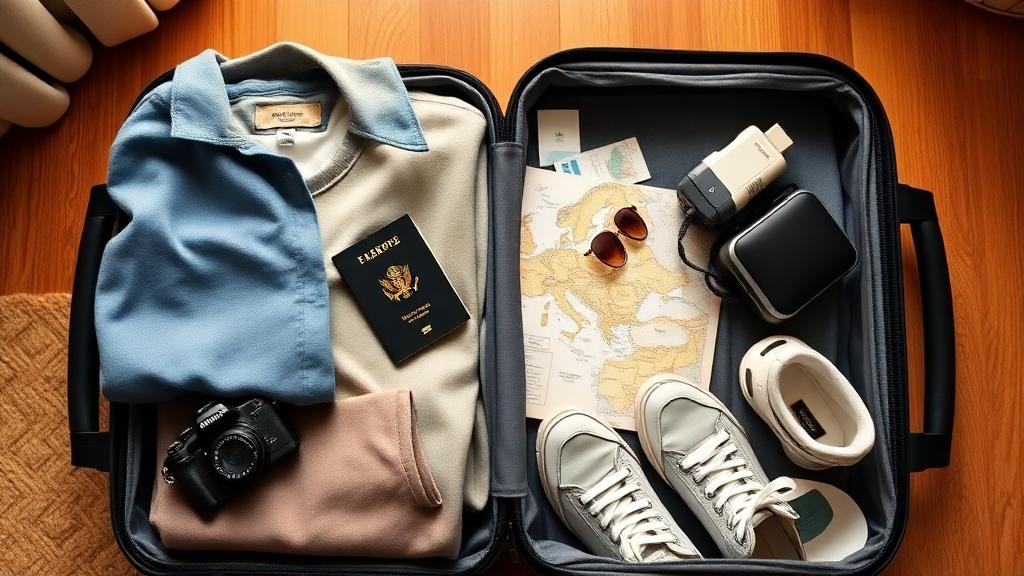
    Flat lay of a neatly arranged suitcase with travel essentials for Europe: casual clothes, passport, camera, travel adapter, sunglasses, sneakers, and a map, with warm lighting in a cozy room

    You know that feeling, right? Europe trip booked, the countdown begins, and suddenly—panic. What to pack, what to skip, will it be too cold, what if I forget something important?

    Don’t worry. If you’re heading from India to Europe trip for 14 days, I’ve got a tried-and-tested list that won’t leave you lugging around a suitcase heavier than your excitement.
    Whether you’re hopping cities or chilling by the countryside, here’s a sensible guide to keep your bags light and your mind lighter.

    Packing Basics – Travel Light, Travel Happy

    Let’s be real Europe isn’t the place for hauling 25 kilos of baggage. You’ll walk a lot, catch trains, and maybe even get lost in some cute old town (and you’ll love it). So the lighter, the better.

    Choose the right bag:

    • Backpack (40-50L): If you’re going budget or solo-style.
    • Carry-on suitcase (55 cm): Good for efficient travel, especially if you’re flying between countries.
    • Check-in suitcase (max 23 kg): Fine if you’re staying longer or prefer comfort over minimalism.

    Pro tip: Carry a small foldable daypack for daily outings — easy to tuck in your main bag and super handy on the road.

    Clothes – Smart, Simple & Stylish

    There’s this 5-4-3-2-1 rule floating around online, and guess what? It actually works.

    Here’s what you need:

    • 5 tops: Some casual, one or two for evenings out, and at least one that’s warm enough if it gets chilly.
    • 4 bottoms: Jeans, one comfy travel trouser, a skirt or shorts maybe.
    • 3 dresses or Indo-Western fusion outfits: Looks great in those Europe photos!
    • 2 jackets: One light and one slightly heavier – layering is key in Europe.
    • 1 dressy outfit: For that fancy dinner or unexpected plan.

    And don’t forget:

    • 6-8 innerwear pieces
    • 2 sets of nightwear
    • 4-5 pairs of socks
    • 1 scarf/stole – handy for style and visiting churches or temples
    • 1 swimsuit – yes, you’ll wish you had one if you find a pretty beach or thermal spa

    Style Note: Europeans don’t overdress. Neutral tones, comfy layers, and clean shoes that’s the vibe. Heavy Indian suits or bright desi dresses? Maybe skip unless you’ve got a wedding or special event.

    Shoes – Only Two, Seriously

    Your legs will do a lot of the work on this trip. Think walking tours, old towns, and stairs. So your shoes? They better be loyal.

    • 1 pair good walking shoes/sneakers – something your feet already love.
    • 1 pair nice flats or sandals – something you can wear for dinner or casual outings.

    Avoid heels. Those cobblestone lanes are pretty but brutal.

    Toiletries – Pack Mini, Pack Wise

    Yes, you’ll get everything in Europe. But why spend 3x more there when you can carry a small kit from home?

    • Toothbrush, mini toothpaste
    • Shampoo, conditioner (travel-size)
    • Moisturiser, and definitely sunscreen
    • Razor, deodorant, pads/tampons
    • Lip balm, wet wipes, nail cutter
    • Optional: Few sachets of detergent to handwash socks and undies

    Documents & Money – Don’t Mess This Up

    This section’s boring but essential. One slip here can ruin your trip, not joking.

    Must-haves:

    • Passport + visa printout
    • Travel insurance (yes, you need it for Schengen)
    • Flight tickets + hotel confirmations (physical and on phone)
    • Cash (Euros + small USD stash)
    • Forex/Debit card with international use ON
    • Photocopies of all important papers — packed separately, just in case

    Gadgets – Only What You’ll Use

    Europe uses Type C plugs. Get a universal adapter or you’ll end up begging strangers for a charger.

    • Phone + charger
    • Power bank
    • Camera (if you’re into photos)
    • Kindle or one good book
    • Earphones/headphones
    • Download offline maps, Google Translate, Eurail/Omio apps before flying

    From One Indian Traveller to Another – Don’t Forget These

    These aren’t on fancy packing lists but trust me, you’ll thank yourself later.

    • Few basic medicines fever, cold, stomach upset, all those travel bugs
    • Ready-to-eat food few Maggis, Upma packets, or Thepla (if you eat it)
    • Small steel spoon + refillable water bottle
    • Passport photos helpful if you’re getting a local SIM or hostel ID

    Indian Hack: Most European tap water is clean. Save money — just keep refilling your bottle.

    Final Word – Travel Light, Travel Right

    A Europe trip from India is special. So don’t let overpacking ruin it. Carry the things you know you’ll use, and leave the “what if” stuff behind.

    You don’t need five pairs of jeans or your entire skincare drawer. Keep space for souvenirs, pack layers, and above all just enjoy the ride.

    Castles, museums, sunsets, random alley cafés they’re all waiting. Go make memories. ✈️🌍

    If you are planning you to travel solo, then this blog will help you to make you exprience better: Solo Travel Tips Every First-Time Explorer Should Know