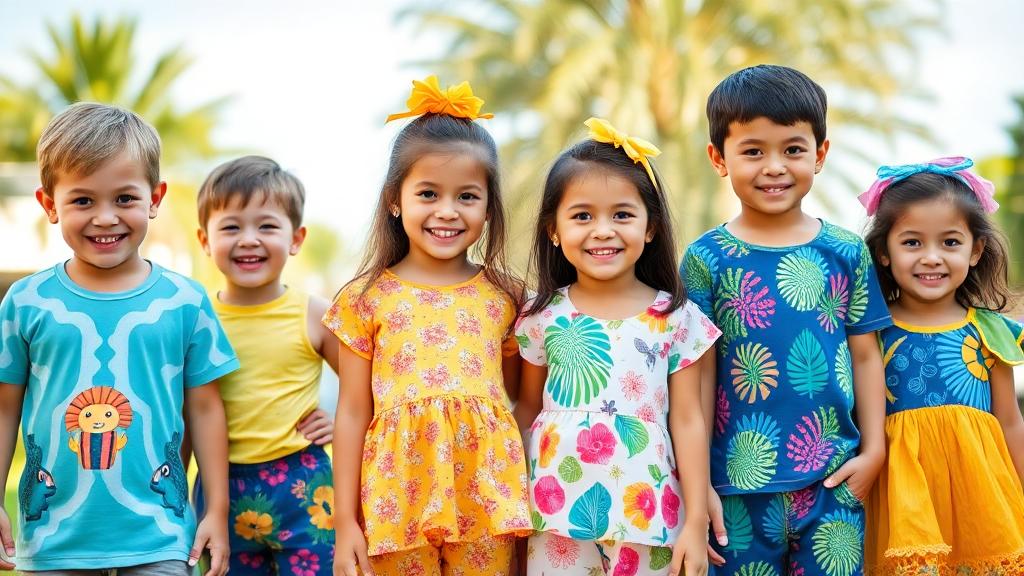
Kids’ wardrobes are entering 2025 in full bloom – think vibrant hues, bold patterns, and mix‑and‑match silhouettes that spark creativity. Industry forecasters note that children’s fashion is now “bursting with creativity,” blending playful colors with thoughtful design. In spring/summer collections, one boutique buyer describes the overall vibe as “an explosion of color, prints, and textures” paired with vintage-inspired nods. Parents and retailers alike are responding: bright oranges, sunny yellows and lively blues dominate, while comfort and sustainability guide material choices. This post breaks down the key Summer 2025 trends in kidswear – from cheerful patterns to performance-friendly fabrics – with insights and data for fashion professionals.
Bold Colors & Playful Prints
Summer 2025 will see children’s clothing saturated in joyful color and dynamic prints. Pantone-led forecasts and trend blogs agree that “bright and bold colors are… making waves,” enabling “playful and eye-catching outfits” for kids. Expect color palettes full of citrus orange, sunflower yellow, cerulean blue and bubblegum pink. These energetic hues appear in everything from tops to sneakers, often paired together in creative ways. Graphic designers are mixing patterns freely – floral, animal, and geometric motifs all feature in a single outfit – to let each child’s personality shine.
Classic florals and chintz: Nostalgic ditsy florals and vintage-inspired botanical prints remain perennial favorites (often “beyond the bouquet” with oversized blooms). Gentle pastels and watercolor effects refresh the look, while embroidered and appliqué details add tactile charm.
Stripes and geometrics: Wide horizontal or vertical stripes, checkerboard and polka-dot patterns inject a classic yet fun feel. Bold blocks of color and simple shapes resonate for both boys and girls. Many labels mix stripes with other prints (stripes + florals, dots + animals) to create quirky, camera-ready outfits.
Comfort & Movement-Ready Styles
From preschool to playground, ease of movement is paramount. For 2025, most kidswear silhouettes prioritize comfort first. Think relaxed-fit joggers, pull-on shorts and soft jersey tops. Many pieces resemble what adults call “athleisure”: breathable cotton‐blend sweatshirts, cozy hoodies, and elastic-waist pants that allow full play. Natural, stretchy fabrics like organic cotton and bamboo jersey dominate – fabrics that feel soft against the skin and adapt as kids grow. Japan’s children’s brands, for example, emphasize that clothes must keep kids comfortable during all activities. In practice, this means garments with extra room in the shoulders and knees, flat seams to prevent chafing, and even adjustable features (drawstring waists, turn-up cuffs) that extend wear.
Even dressier kids’ outfits get a comfort boost: bloomer-style shorts under dresses, knit blends instead of stiff fabrics, and stretchy leggings paired with tunics. Layering pieces like light cardigans and jersey vests let parents adapt outfits for indoor/outdoor play. According to industry observers, families today expect children’s clothing to be both cute and practical. A recent trend report notes athleisure’s continued dominance with “breathable, stretchable, and moisture-wicking fabrics becoming essentials” for kids. This mirrors what one blog calls a shift towards wellness and ease: parents value clothes that handle jumping, climbing and running without worrying about rips or stains.
Essential pieces: Soft sweatshirts and tees, hoodie jackets, and jogger pants.
Play-friendly details: Flat seams, gusseted crotches, and snaps/zippers placed where kids can’t poke themselves.
Layering: Lightweight hoodies over T-shirts, leggings under skirts – combinations that move with the child.
Footwear: Sneakers with Velcro or elastic laces for easy on/off; slip-ons; and no-hard-welt sandals.
Sustainable, Eco-Conscious Fashion
Sustainability is no longer a niche – it’s mainstream in kidswear. Across all regions, parents and brands are seeking eco-friendly materials. The standout fibers of 2025 include organic cotton, bamboo fabric, Tencel (eucalyptus fiber) and recycled polyester. These materials meet a double demand: they are gentle on kids’ sensitive skin and better for the planet. As one source bluntly states, “the rise of sustainable and eco-friendly fashion” is a defining theme for children’s clothing this year Organic cotton shirts and jeans (grown without toxic dyes) now sit next to bamboo-blend joggers (naturally antibacterial and UV-protective). Tencel, made from wood pulp, appears in flowing dresses and rompers for its silky feel and durability.
For retailers, this means stocking basics like organic T-shirts and sustainable denim. Many small brands specialize in biodegradable fabrics or recycled sweater knits. And even in fashion-forward kids’ lines, the old classic (natural cotton!) remains king – it’s breathable, easy to wash, and aligns with the global demand to “be kind to the planet”.
Notable Brands and Collections
The kidswear market remains large and diverse. Research shows the global children’s apparel market will top USD 225 billion in 2025, fueled by growing markets in Asia-Pacific. Leading players include Carter’s (US), Inditex (Zara Kids), H&M, Nike and other multinationals, along with luxury labels like Burberry and Versace that offer premium children’s lines. These big brands set broad trends – for example, mini-me streetwear packs from Nike or mass-market floral dresses from H&M.
But smaller and regional brands are also shaping looks. In the US, independent labels like Appaman and Mini Rodini are known for quirky prints and organic fabrics. In Europe, parents covet brands like Mini A Ture (Denmark) and Bobo Choses (Spain) for their creative graphics. The new generation of Japanese kids’ brands often merges minimalism with function (Uniqlo has a popular kids’ line). Online marketplaces have popularized global designs: a French label’s boho blouse or a South Korean brand’s neon tracksuit can be bought worldwide. In short, retailers should stock both essentials (denim, tees, sneakers) and statement pieces.
Here are some illustrative names (neither exhaustive nor exclusive):
Global retail chains: Carter’s, The Children’s Place, Gap/Old Navy, Zara Kids, H&M, Uniqlo (kids), Primark Kids.
Sportswear: Nike, Adidas Kids, Puma (activewear, sneakers).
Boutique/Designer: Burberry Kids, Tommy Hilfiger Kids, Stella McCartney Kids, Tiny Cottons (Spain), My Little Cozmo (Spain) – known for premium casuals.
Sustainable/Niche: Patagonia Kids, Pact (organic basics), Stella McCartney Kids (eco-friendly luxe), Bobo Choses (artsy prints), Organic Era (India, eco-fashion).
Retailers can leverage these names for trends and collaborations: for example, limited-edition graphic tees or eco-collection pop-ups tap into both brand and trend-conscious shoppers. Whichever brands carry your shelves, look for their summer ’25 capsule collections to see these themes in action.
Regional Highlights
United States: US kids’ fashion is leaning into street-inspired comfort. American lines often feature oversized hoodies, joggers, and sneaker culture, reflecting urban streetwear trends. Bright logo tees and personalized denim (embroidered names or patches) are popular. According to one industry guide, “kids’ clothing trends in the USA are all about bold streetwear, playful aesthetics, and sustainable fashion,” with a focus on vibrant colors and statement-making designs. Athleisure dominates, so expect many kids tracksuits, performance tees, and sports-inspired sets.
Europe: In Europe, there’s still a taste for a bit more “classic with a twist.” Coastal regions emphasize breathable linens, nautical stripes and pastel palettes (think Mediterranean summer). Northern Europe and Scandinavia often deliver playful prints in high-quality organic fabrics. French brands add a chic flair – CouCou’s spring preview even highlights quirky British and French labels bringing bohemian and vintage charm (flowy dresses, textured knitwear) to kids’ closets. European brands excel at mixing tradition with modern play – e.g., a kids’ gabardine jacket with a fun animal lining, or a gingham dress with practical sneakers.
Pop Culture & Social Media Influence
No kids’ trend report would be complete without mentioning the digital world. The influence of social media and pop culture on kids’ fashion is huge and growing. Online, images of stylish toddlers or tweens in cute outfits can go viral overnight. As one market survey notes, “the rising influence of social media and blogs regarding kids’ fashion” is actually fueling the market’s expansion. Platforms like Instagram and TikTok are full of mommy-and-me fashion posts, unboxing videos, and hashtag challenges that showcase children’s outfits. Retailers should note that “outfit-of-the-day” content drives demand for photogenic pieces (think twirly dresses, matching sets, or character-themed back-to-school looks).
Conclusion
Summer 2025’s kids’ fashion is about happiness and confidence – clothes that look fun and feel good. Colorful prints, easy silhouettes and eco-friendly materials are the cornerstones. For retailers and designers, the key is to stock a mix of joyful staple pieces (like organic cotton tees in bright prints) and versatile basics (athletic sets, joggers) while keeping an eye on sustainability credentials. By embracing creativity – from bold pattern clashing to inclusive sizing – the industry can meet parents’ desires and inspire children’s self-expression. In short, kids’ fashion in 2025 celebrates individuality, comfort, and the brighter side of style.
Related Articles,
Enjoyed this read? Continue the journey with:
10 Creative Indoor Activities for Kids on Summer Days
Top 10 Essential Kids’ Fashion Trends for Spring and Summer 2025