Tag: Health

  • Tiny Pacemaker, Big Impact: Saving Newborns with Heart Defects

    Tiny Pacemaker, Big Impact: Saving Newborns with Heart Defects

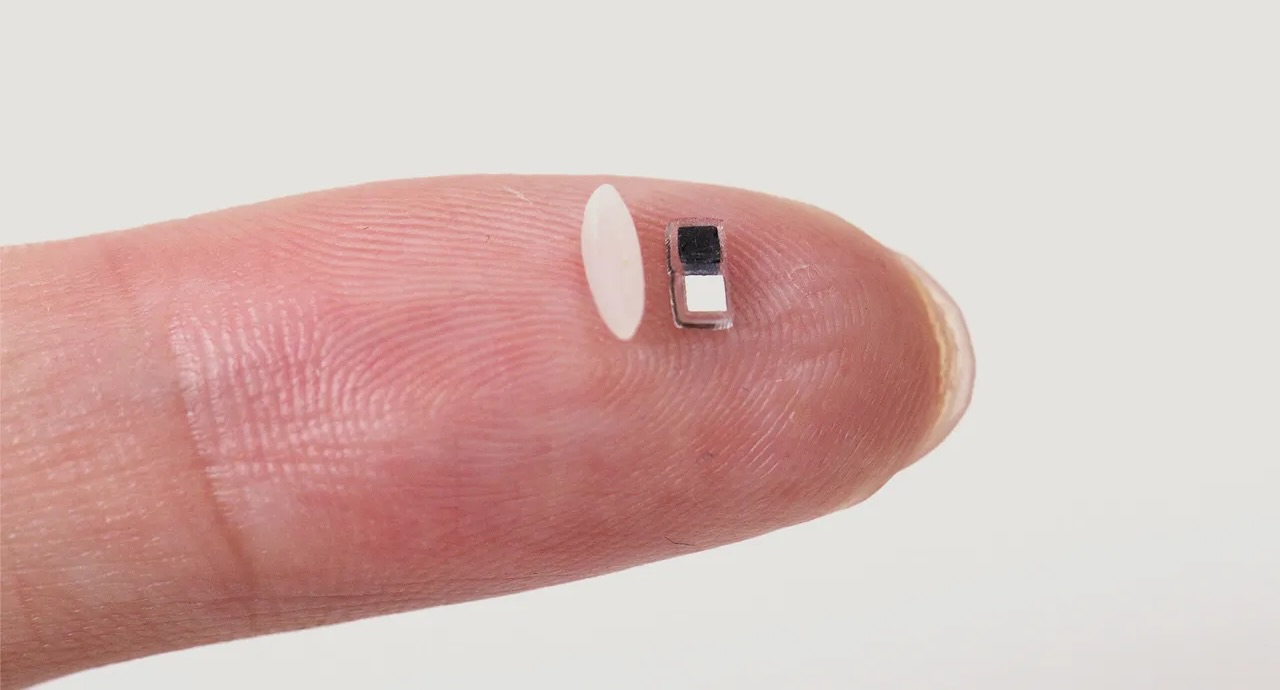
    Pacemaker smaller than a grain of rice, made for newborn babies with heart defects

    in our country, especially in small towns and villages, babies born with heart problems often don’t make it. It’s painful to say, but it’s true. Many of them come into the world too early or too weak, and their tiny hearts can’t keep up. Some need surgeries, others just need help with their heartbeat. But what do we do when even the tools we have are too big for such small lives, Well, recently, something very new and very tiny came into the picture a heart pacemaker that’s smaller than a grain of rice. And believe it or not, this tiny thing might save a lot of lives, especially in places like ours.

    So What’s This Pacemaker All About?

    We all know about pacemakers, right? Those little machines that help the heart beat properly. Normally, they’re used for old people or heart patients. But here, we’re talking about newborn babies tiny, delicate, barely a few days old. For them, even the smallest regular pacemaker is too big and risky.

    Now, scientists have made this new kind of pacemaker one that’s super small and can be injected into the body. No wires, no surgery, no stitches. You just push it in with a syringe, and it starts working. Sounds unbelievable, but it’s real.

    And the best part? After a few days, it melts inside the body. No need to remove it. That means one less operation for the baby. One less tension for the parents.

    Why It’s a Big Deal for Our Side of the World

    Let’s talk honestly. In big cities, there are fancy hospitals, machines, and specialists. But in small towns, we don’t have all that. Many government hospitals can’t even manage regular heart surgeries, let alone high-tech tools.

    That’s why this tiny device could be such a blessing. If doctors can use it even in basic hospitals, then even babies in rural areas will get a chance to survive.

    Think about it — if something like this can be done with just a syringe, how many lives can be saved?

    How Does the Pacemaker Actually Work?

    Okay, without getting too technical, this thing doesn’t have batteries or wires. It works using the body’s natural fluids. There are small metal bits inside it that create tiny electrical pulses when they touch those fluids. That’s enough to keep the heart beating properly for a few days.

    To control it, doctors stick a soft patch outside the baby’s chest. Like a small sticker. That patch sends signals (using light!) to tell the pacemaker what to do. No pain. No wires poking inside.

    After about a week, when the baby’s heart gets stronger, the device dissolves inside. The body just absorbs it. Simple as that.

    Made for Newborns – Not Adults, Not Older Kids

    This isn’t a ‘mini version’ of a regular pacemaker. It was made only for babies, especially those who just had heart surgery. In such cases, doctors only need to support the heart for a few days not forever.

    Till now, they used regular pacemakers, which had to be removed later. That meant another surgery, more pain, more time in the hospital. This new one avoids all that.

    Where It Was Made – And Why It Gives Us Hope

    A team of engineers in the US, at Northwestern University, made this device. They knew that babies in many parts of the world, like India, don’t survive because we simply don’t have the right tools. So they built this with exactly that in mind.

    It’s not flashy. Not expensive. Just smart. Something that can quietly do its job and disappear without a trace. Kind of like a guardian angel inside the baby’s body.

    This Could Be a Lifesaver in India

    Let’s look at the numbers. India has over 2.5 crore births every year. Out of those, lakhs of babies are born with heart defects. In villages, many of these babies don’t get the treatment they need. Some families can’t travel. Others don’t even know their child has a heart problem until it’s too late.

    This device could change that. If government hospitals get it, if NGOs help spread it, we could see survival rates go up — not just in cities, but also in small districts and towns.

    Real-Life Hope – Not Just Science Talk

    There was a case in the US — a baby named Mikey. He was too small for a regular pacemaker. Doctors didn’t know what to do. Cases like his are what inspired this invention. In India, we’ll have many more such cases.

    Once this device starts being used here, we’ll see real stories of survival. Babies who got a second chance. Parents who didn’t have to bury their child just because treatment wasn’t possible.

    Simple, Smart, and So Needed

    Honestly, I feel proud that humans can invent such things. But I also feel sad that it took so long. We’ve lost too many babies already. This device won’t fix everything but it’s a big step in the right direction.

    Sometimes, the best solutions are not the biggest machines, but the tiniest ones that quietly do their work.

    Final Thoughts

    If you’re a doctor, nurse, health worker, or just someone who cares, keep an eye on this. Share it. Talk about it. Push for it to come to India soon.

    And if you’re a parent-to-be, just know science is trying its best. One small invention at a time.

    🔗 Useful Links

  • 5 Daily Habits That Actually Brought Me Mental Peace !

    5 Daily Habits That Actually Brought Me Mental Peace !

    A young Indian man or woman sitting peacefully on a terrace at sunrise, sipping chai, with a diary and a plant beside them

    Let’s be real for a second—life’s noisy these days. Whether you’re staying in a small district town or somewhere busy like Bangalore, that daily mental load… it doesn’t really leave you, does it? Work calls, family expectations, Instagram reels till midnight, and still waking up with a tired head next day.

    I’ve been there too. My mind used to feel cluttered all the time. Not serious mental illness maybe, but that constant feeling of being overwhelmed? The kind where nothing’s really wrong, but something never feels right either.

    So I didn’t do anything fancy—no retreats, no expensive therapies. Just started with a few simple daily habits. Very normal things, but when done regularly, they made a big difference to how peaceful I feel inside.

    Let me share what worked for me. Maybe it’ll help you too.

    1. Don’t Touch Your Phone First Thing In The Morning

    What I was doing before:
    Wake up, unlock phone, straight into 10 missed messages, political news, some viral reel, and boom my head would already feel heavy before brushing.

    Now what I do:
    First 30 minutes, no phone. I sit quietly with my morning chai, maybe look at the plants outside or just sit in silence. It feels oddly calm.

    Small tip that helped:
    Keep your phone in another room while sleeping. Use a regular alarm clock, like old times. You’ll sleep deeper and start your day lighter.

    2. Walk Daily (Even If It’s Just Your Corridor)

    What I noticed:
    My neighbour aunty, who’s almost 60, walks every evening for 15–20 minutes on her rooftop. She says her knees feel better and her mind feels fresher.

    I followed the same. No fancy shoes, no gym. Just regular walk, even if it’s around the living room. It clears your head. Especially when done without screens or distractions.

    Why it helps:
    Walking isn’t just for fitness. It gives your thoughts space to breathe.

    3. Finish One Small Task Before Noon

    What it means:
    Doesn’t have to be big—can be folding yesterday’s clothes, replying to one pending mail, or watering the plants.

    How it helps:
    Completing something early in the day gives your mind a push—like, “ok, I’ve done something today already.” It sets the mood for the rest of the day.

    My personal example:
    I clean the front porch every morning. It takes 10 minutes, but gives me that small proud feeling, like I’ve started the day right.

    4. Speak To One Real Person (Not Just Messaging)

    Let’s be honest—most of us spend the day replying to texts or reacting to reels, but actual conversation? Very rare.

    What I do now:
    I call my childhood friend in the evening. We talk nonsense for 10 minutes—memes, what’s cooking, weather. It gives me more peace than any motivational video.

    Try this:
    Call someone who won’t judge. No need for deep talks—just normal catch-up is enough.

    5. No Screens At Least 30 Minutes Before Bed

    Why I changed this:
    Earlier I used to scroll till my eyes shut. But it messed up my sleep and dreams. Now I switch off all screens 30 minutes before bed.

    What I do instead:
    Sometimes I stretch lightly, sometimes I just stare at the moon from my window. I even write a small note of 2-3 things I’m thankful for that day. It brings calmness.

    🌿 My Honest Take: Peace Is Already Around Us

    We keep chasing peace like it’s locked inside some self-care app or therapy session. But actually, it’s sitting quietly next to us—in a quiet morning tea, in one real chat, in a 10-min walk on the rooftop.

    These habits aren’t magic tricks. They won’t change your life in one week. But if you stick to even a few of them, something inside you starts to soften. And that small shift? That’s where peace begins.

    So don’t overthink it. Pick any one and start today.

    Related Links,
    Enjoyed this read? Continue the journey with: Master Time Management with These Proven Techniques
    If this resonated with you, here’s something similar you might like: 12 essential mindfulness practices for cultivating inner peace

  • Simple Home Workouts You Can Do Right in Your Living Room

    Simple Home Workouts You Can Do Right in Your Living Room

    Person doing push-ups, squats, and lunges in a minimalist living room, showcasing a home workout routine.

    Home workouts, Let’s be honest, not everyone has time or money to hit the gym every day. And truth be told, you don’t really need fancy machines or flashy equipment to stay healthy. A small corner in your room, a bit of dedication, and your own bodyweight that’s more than enough to get going.

    These days, a lot of people are skipping gym memberships and choosing to work out at home. It’s easier, pocket-friendly, and fits right into your daily routine even if you’ve got a busy schedule. Whether you’re just starting out or trying to get back in shape, home workouts are a solid option.

    Why More People Are Choosing Home Workouts Now

    First thing comfort. At home, you’re in your own space. No waiting in line for dumbbells or awkward stares when you’re trying a new move. You can work out in your night shorts if you want. Who’s going to judge?

    And you save a lot too. No monthly gym fee, no petrol to drive anywhere, and no gear to buy. Honestly, all you need is a floor mat and the will to move.

    On top of that, there’s flexibility. Early morning, during lunch break, or even at midnight, you can exercise whenever you find time. That’s the best part. No fixed hours, no trainer pressure.

    Some Easy Home Workouts That Actually Work

    You don’t need equipment or machines. Your body itself is enough. These exercises are simple, effective, and good for beginners too.

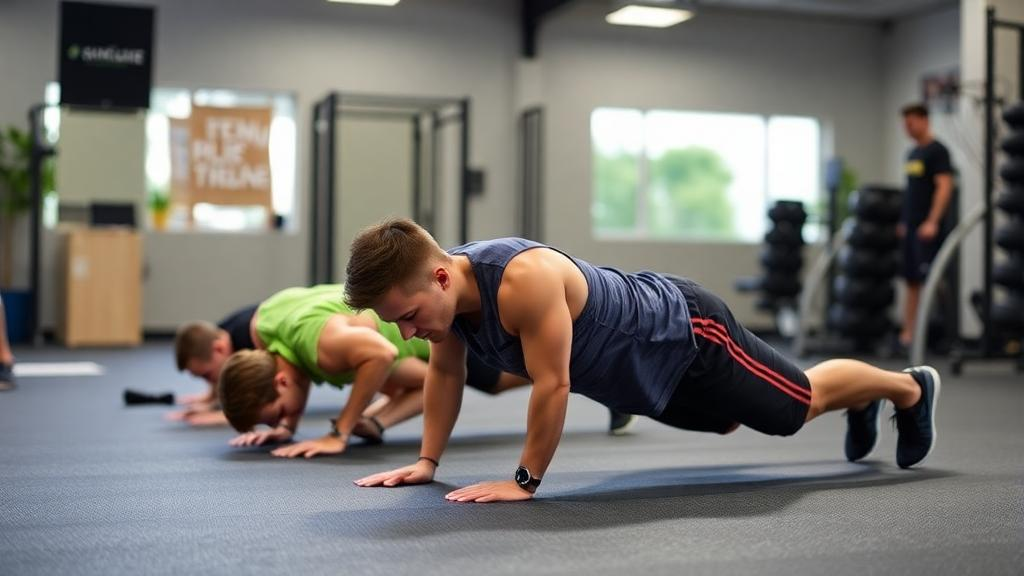
    1. Push-ups

    Old-school but still gold. Push-ups work on your chest, arms, and shoulders. Just lie face-down, place your palms on the floor under your shoulders, and push your body up and down. Can’t do full ones? No problem — try doing them on your knees till you get stronger.

    Push up

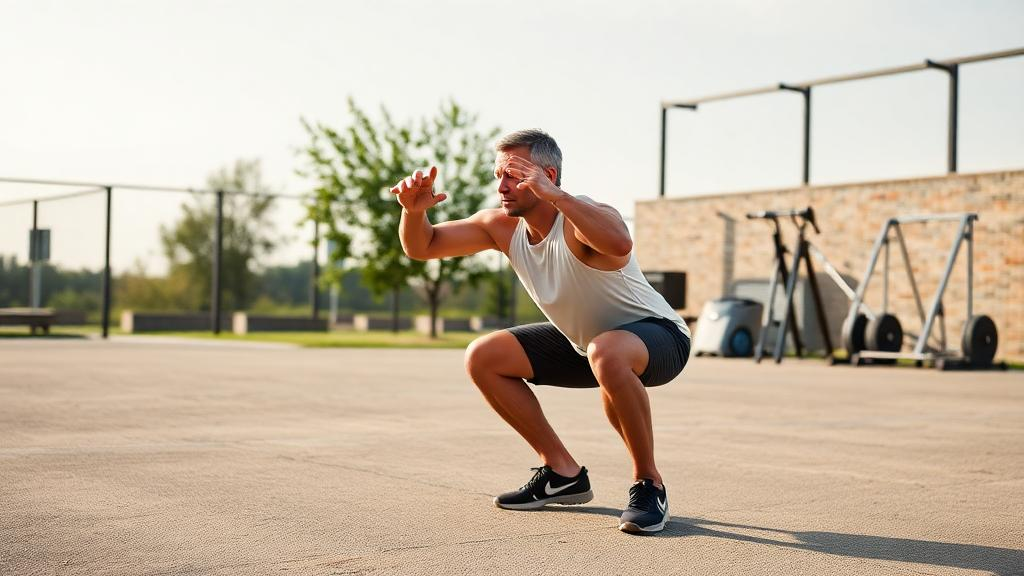
    2. Squats

    Think of sitting on a low stool — that’s pretty much a squat. It helps your legs, thighs, and backside (glutes). Keep your feet apart, bend your knees, and sit halfway. Then come back up. Do it slowly and steadily.

    man doing Squats

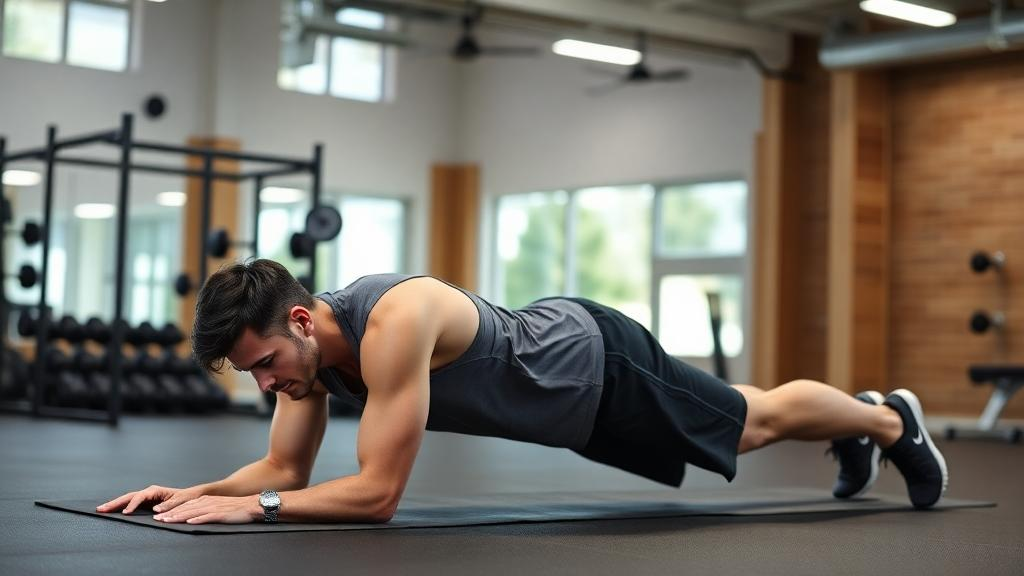
    3. Plank

    This one looks simple but burns like crazy. Just stay in a push-up-like position, but on your elbows. Keep your back straight, tighten your stomach, and hold. Even 20-30 seconds will feel like an hour in the beginning.

    a man doing Plank

    4. Lunges

    Lunges are good for leg strength and balance. Stand straight, take one big step forward, bend both knees, and come back. Do it on both sides. Great for improving stability too.

    Lunges doing

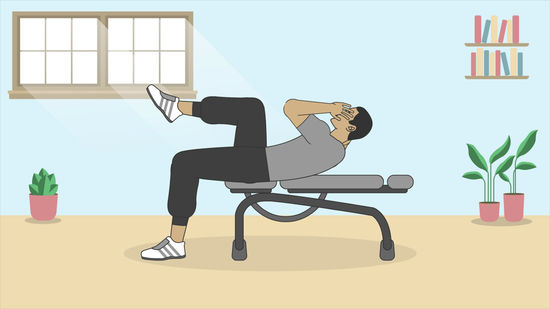
    5. Bicycle Crunches

    Lie down, lift your legs, and pedal them in the air. While doing this, twist your upper body to touch opposite elbow to knee. It hits your stomach muscles real good.

    Bicycle Crunches

    How to Make Your Own Home Workout Plan

    Now you’ve got a few moves in your pocket, just mix and match. Pick 4-5 of them, do each for 30–45 seconds, then rest for 15–30 seconds. Repeat this whole thing 3-4 times.

    If you’re just starting, don’t push too hard. As you get better, increase the time or add extra rounds. Main thing is — be regular. Even 15 minutes daily is better than doing 1 hour once a week.

    Tips to Keep You Going

    Here’s what usually helps people stick to home workouts:

    • Set small goals – Like “I’ll do 10 squats today” or “3 rounds of plank”. Don’t overplan.
    • Fix a time – Morning or evening, doesn’t matter. Just follow it like a habit.
    • Track something – Maybe note down reps in a notebook or take progress pics.
    • Don’t skip warm-up or cool-down – A few stretches before and after makes a big difference.

    Final Words

    You don’t need a gym membership to stay fit that’s the simple truth. Even small workouts at home can improve your health, mood, and energy. Just start somewhere. Move your body. Keep it consistent. Slowly you’ll see the difference not just in looks, but how you feel too.

    Even if you’re busy, even if your budget is tight fitness is still possible. Just clear a little space in your room and begin. Rest will follow.

    Enjoyed this read? Continue the journey with The Ultimate Guide to Clean Eating on a Budget

  • 7 Simple Morning Habits That Actually Help Your Mental Health

    7 Simple Morning Habits That Actually Help Your Mental Health

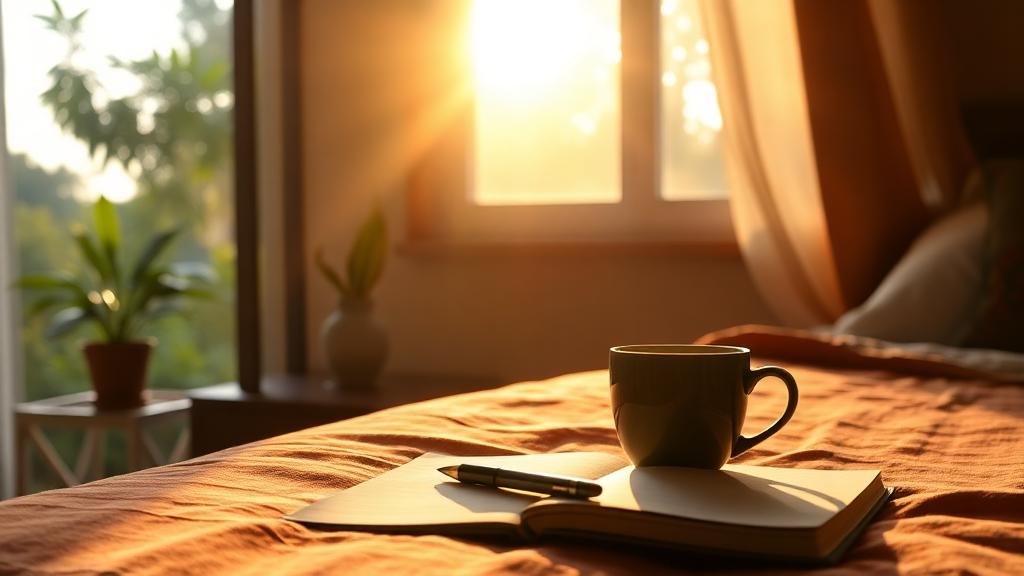
    A cup of tea on a bedside table, open journal with pen, and peaceful atmosphere

    Mornings in India are never silent. Somewhere someone’s pressure cooker is whistling, a bus is honking nonstop, and your phone is already buzzing with “Good Morning” WhatsApp messages. Amid all this, the way you start your day matters more than you think.

    You don’t need a gym membership, green smoothie, or fancy yoga mat. Just a few real, doable habits that fit into everyday life — yes, even if you’re waking up groggy or rushing for work.

    Here are 7 desi-friendly habits that can genuinely lift your mood, reduce anxiety, and help you feel more in control.

    1. Start Your Day in Silence – No Phone, No Noise

    First thing in the morning, most of us grab our phones. Scrolling Instagram or reading random forwards isn’t exactly calming. Instead, try giving your mind some peace — just 5–10 minutes of quiet.

    How?

    • Don’t touch your phone for 30 minutes
    • Sit quietly near your window or balcony
    • No need to “meditate” — just observe your breath or the sounds around

    Even a few calm moments help your brain feel less rushed.

    2. Make Your Bed – It Feels Good

    Sounds silly, but trust me — making your bed gives you a small win. You feel like you’ve achieved something right after waking up. That small boost can shift your whole day.

    Why it works?

    • It gives a sense of control
    • Tidier space = calmer mind
    • Plus, who doesn’t like coming back to a clean bed at night?

    3. Drink Water Before Chai

    After a whole night without water, your body’s running dry. That groggy feeling isn’t just sleep — it’s dehydration.

    Try this:

    • One glass of lukewarm water as soon as you wake up
    • Add a slice of lemon or a pinch of jeera if you like

    It helps wake up your digestion and clears your mind before caffeine hits your system.

    4. Move Your Body – Even for Just 10 Minutes

    You don’t need to hit the gym. Just stretch, walk around your room, or dance to your favourite song. It’s more about movement than muscle.

    Quick things you can do:

    • 10 jumping jacks
    • 10 squats
    • Neck rolls and shoulder stretches
    • Or just shake a leg to your go-to Bollywood track

    Your body wakes up, and so does your mood.

    5. Write Something – Doesn’t Have to Be Fancy

    Writing down your thoughts can clear mental clutter. You don’t need a special notebook or planner. Even the last page of an old diary works.

    Two easy ideas:

    • Write 3 things you’re grateful for
    • Or do a brain dump — all the thoughts running in your head

    It’s like cleaning your brain shelf before the day starts.

    6. Step Into the Sun – Nature’s Free Therapy

    Sunlight helps your body produce serotonin — that’s the hormone that makes you feel good and focused. Morning sun is gentle and very effective.

    Don’t have time to go out?

    • Sit near a sunny window while sipping chai
    • Do your morning call or scrolling in that sun patch instead of a dark room

    Your body and mind both get a natural reset.

    7. Protect Your Brain from Negative Stuff Early On

    Your brain is like a sponge in the morning. If you fill it with stressful news, office emails, or gossip — that’s the vibe it carries all day.

    Instead, try:

    • Listening to soothing music, mantras, or bhajans
    • Talking to someone positive (even your pet counts!)
    • Avoid opening work-related apps before breakfast

    Guard your peace. The world can wait.

    Final Thought: Your Morning Is Yours

    Don’t try to do all 7 habits at once. Start with 2–3 that feel easy. Maybe today you just drink water and skip the phone for 10 minutes. That’s enough.

    Remember: this isn’t about being perfect. It’s about showing up for yourself, little by little.

    Strong mornings don’t need hustle. They just need heart.
    And if you make space for your mind in the morning, your whole day moves a little better.