Tag: EVs

  • Are EVs Really Worth It in India? Real-Life Look at Cost vs Savings

    Are EVs Really Worth It in India? Real-Life Look at Cost vs Savings

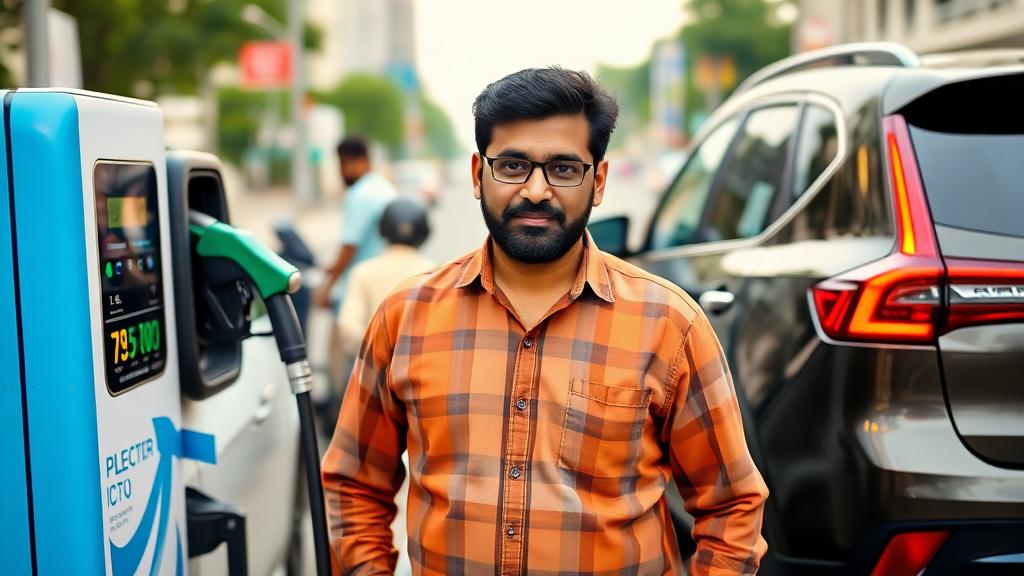
    An Indian man comparing fuel prices with electric charging, with a petrol car and an EV behind him, city background

    These days, you can’t scroll through the news or even go to a showroom without hearing about EVs. Everyone’s talking “EVs is the future”, “no more petrol headache”, and so on. But let’s be honest — when it comes to buying one, it’s not just about the hype. The real question most of us have is: Are EVs actually worth it in India? Or is it just another fancy trend that’ll pass?

    So let’s break it down in simple words, with real numbers and see if putting your hard-earned money on an electric vehicle makes sense in 2025.

    First Up — The Price Tag: Oof or Okay?

    Let’s face it, most EVs still come with a bit of a shock when you first look at the price. Take the Tata Nexon EV starts around ₹14.7 lakh. Meanwhile, the petrol version of Hyundai Venue? You can get that under ₹9 lakh.

    So yeah, you’re staring at a ₹3 to ₹5 lakh gap. Not small at all. But hang on don’t give up yet. There’s more to this story.

    What About Subsidies & Benefits?

    See, the government is really pushing EVs right now. Under schemes like FAME II and some state policies, you can get:

    • Direct discount on EVs (sometimes more than ₹1.5 lakh)
    • Reduced registration and road tax
    • Tax benefits on loans (Section 80EEB gives up to ₹1.5 lakh deduction on interest)

    So, when you add all that up, the price difference starts shrinking. It’s not cheap, but it becomes doable — especially if you’re planning long-term.

    Petrol vs Electricity: The Daily Savings Game

    Now this one’s a big factor. Fuel. You already know how painful petrol prices are. Let’s do a quick math:

    If you drive 15,000 km in a year:

    Vehicle TypeAvg. Cost/kmAnnual Fuel CostCost in 5 Years
    Petrol Car₹7/km₹1,05,000₹5,25,000
    EV₹1.2/km₹18,000₹90,000

    So that’s ₹4.3 lakh just saved on fuel in 5 years. That’s no joke.

    Maintenance: The Quiet Money Saver Nobody Talks About

    Petrol or diesel cars need regular servicing engine oil, filters, clutch, gearbox, exhaust, and whatnot. EVs? Most of that stuff doesn’t even exist.

    On average, EV owners save around ₹25,000 to ₹40,000 a year on maintenance. So in 5 years, that’s another ₹1.25 to ₹2 lakh that stays in your wallet. Basically, fewer headaches and fewer trips to the mechanic.

    But What About Charging?

    Let’s talk about the thing everyone worries about where will I charge this thing?

    Good news 2025 India isn’t the same as even 3 years ago. Charging stations are now in malls, offices, apartments even some kirana store parking lots! Apps like Statiq and Ather Grid make it easy to find chargers near you.

    If you’re staying in a city or big town, daily charging won’t be a problem. Even home charging setups are getting common. Sure, if you’re traveling to very remote areas, it can be tricky but for most daily commutes, you’re covered.

    Battery Life & Resale: Still a Gamble?

    Not really. Most new EVs come with 8-year battery warranties. And battery tech has improved degradation is just 1.5% – 2% per year now. That means even after 10 years, the car’s range is still quite usable.

    And resale? It’s not like before brands like Tata, MG, and Hyundai are holding decent value now. As EVs go mainstream, more buyers are trusting second-hand models too.

    So, Who Should Go for an EV in India?

    Honestly, if you:

    • Drive around 30–60 km daily (especially in city traffic)
    • Have a spot to charge at home or work
    • Plan to keep the car at least 5 years
    • Care about running cost more than top speed

    Then yes, it’s a good bet.

    But if:

    • You live in a remote area with poor charging access
    • You barely drive in a year (under 3,000 km)
    • Or you keep switching cars every 2–3 years

    Then maybe wait a bit or go hybrid.

    Final Thoughts: Are EVs Worth It in 2025 India?

    If you look beyond just the showroom price yes, 100%. The money you save on fuel and maintenance adds up fast. Plus, the driving experience is smooth, quiet, and kinda fun, honestly. And if helping the environment is your thing that’s a bonus.
    Are EVs Really Worth It in India? check here

    For many Indian families today, buying an EV isn’t just a “green” choice it’s a smart one.
  • CNG Kit vs EV Conversion Kit: Which Makes More Sense 2025?

    CNG Kit vs EV Conversion Kit: Which Makes More Sense 2025?

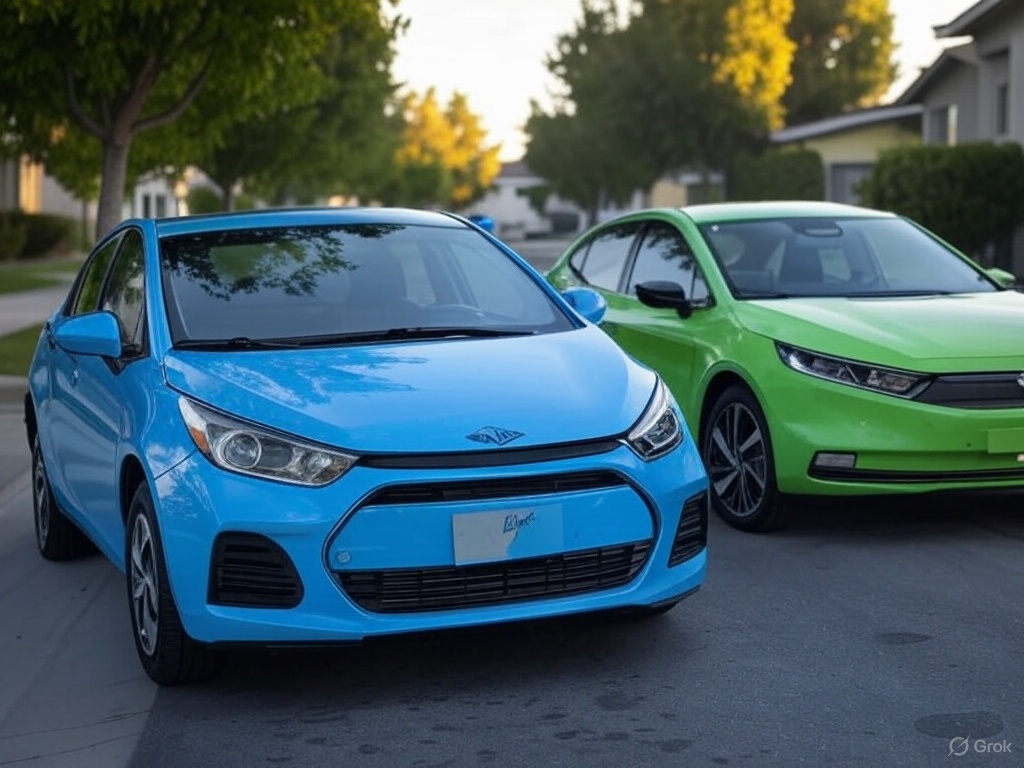
    Hilights 2 car one is CNG car onther is EV car

    Nowadays, everyone is trying to save fuel money. Petrol and diesel have become like gold ₹100 plus per litre, it’s just not affordable for daily travel anymore. On top of that, our cities are full of smoke and dust. So people are asking, “Should I go for a CNG kit or convert my car to EV Conversion?”

    That’s a fair question, honestly. Both options help you save money in the long run, and they’re also better for the environment. But they work in very different ways. So let’s try to make this simple without any big words or complicated lists.

    Why are so many people changing their cars these days?

    Let’s be real fuel price is the biggest reason. If you drive a petrol car every day, your pocket starts crying by the end of the month. And then there’s pollution. If you live in Delhi, Pune, or Bangalore, you know how bad the air has become. People want cleaner options that are also pocket-friendly.

    And that’s where CNG kits and EV Conversion kits come in.

    CNG Kit – Old but still working fine

    CNG kits have been around for years now. Especially in cities like Delhi or Mumbai, you’ll see autos, taxis, and even private cars running on CNG. The idea is simple you get a big cylinder fitted in your car’s boot, and instead of petrol, it runs on compressed natural gas.

    So, what’s good about it?

    • First of all, it’s cheap. Where petrol will cost you ₹8–10 per km, CNG runs at ₹2–3 per km.
    • You don’t need to change the whole engine or anything. Just fit the kit and you’re good.
    • And it’s still cleaner than petrol or diesel, though not as clean as EVs.

    But yeah, not everything is perfect.

    Some small problems with CNG kits

    • The gas cylinder takes up your boot space. So forget about keeping big bags or suitcases there.
    • You’ll feel that the car is slightly slower, especially when you switch on the AC.
    • And during busy times, you might have to stand in line at the CNG station for 20–30 minutes. That can get annoying.

    EV Conversion Kits – New and exciting, but still developing

    Now electric vehicles are the future everybody knows that. But buying a new EV can cost a bomb. Like, even the cheapest ones are above ₹10 lakhs. So instead, people have started converting their old cars into EVs using electric kits.

    With these EV conversion kits, you remove the fuel engine and fit a battery, motor, controller basically, all the stuff that makes it electric.

    Here’s why people are liking EV kits:

    • You get zero pollution. No smoke, no smell, nothing.
    • Cost per km is super low — around ₹1 or even less.
    • The ride becomes smooth and silent — no vibration, no noise.
    • And in some places, the government also gives support or subsidies.

    But again, like anything new, there are some roadblocks.

    A few issues with EV kits

    • They’re expensive right now. Most kits cost between ₹3 to ₹5 lakhs.
    • Not many companies are offering it, especially in smaller cities.
    • You need RTO permission, and that’s not always easy in all states.
    • Also, the battery lasts 5–7 years. Replacing it later is not cheap.

    Let’s Compare – EV Kit vs CNG Kit (Real Talk Table)

    FeatureCNG KitEV Conversion Kit
    Cost₹50,000 – ₹80,000₹3 – ₹5 lakhs
    Running Cost/km₹2 – ₹3₹0.8 – ₹1
    Installation Time1 day3–5 days
    SpaceBoot gets filledDepends on kit design
    RTO ProcessEasy and knownStill complicated
    Green FactorMediumVery high
    AvailabilityCommon in metrosLimited for now

    So yeah, if you’re short on budget and want to start saving immediately, CNG is still a good choice. But if you want to go fully electric and don’t mind the initial cost, then EV kits make more sense for the long run.

    What about Hybrid Kits?

    You might have heard this too some companies are now working on kits that can run on both electric and petrol or CNG. This sounds like a great idea, but it’s still in early stages. Very few models are available and testing is going on. If this becomes common, it could be a total game-changer.

    Who Should Go for What?

    There’s no one-size-fits-all answer. It depends on your needs.

    If you travel inside the city, don’t want to spend too much, and your car is in decent shape CNG can save you a lot every month.

    But if you want to go fully electric, reduce maintenance, and drive in peace without worrying about fuel prices, and you’re okay spending ₹3–4 lakhs upfront EV kits are a better bet.

    Where to Get EV Kits in India?

    You won’t find EV kits in every garage. You’ll need to go to certified people. Some good names right now are:

    • E-Trio
    • Boson Motors
    • Loop Moto
    • GoGoA1 – They’ve got RTO-approved kits for many cars.

    🔗 Check them here: GoGoA1 official site

    🧭 You can also check our blog on “Top EV Conversion Companies in India” for more info (internal link).

    Final Thoughts – What Should You Choose?

    CNG or EV — both are better than staying on petrol. But your choice should depend on how much you can invest, where you live, and how often you drive.

    👉 If you’re looking to start saving immediately and don’t want much hassle — go for CNG.

    👉 If you’re ready to go green, spend a bit more now, and think long-term — EV kits are your friend.

    In a few years, electric kits will become more common and cheaper too. So even if you go for CNG now, keep watching the EV space. The future is definitely electric.