Tag: Climate

  • India’s Nuclear Energy Reform: Attracting Global Investment

    India’s Nuclear Energy Reform: Attracting Global Investment

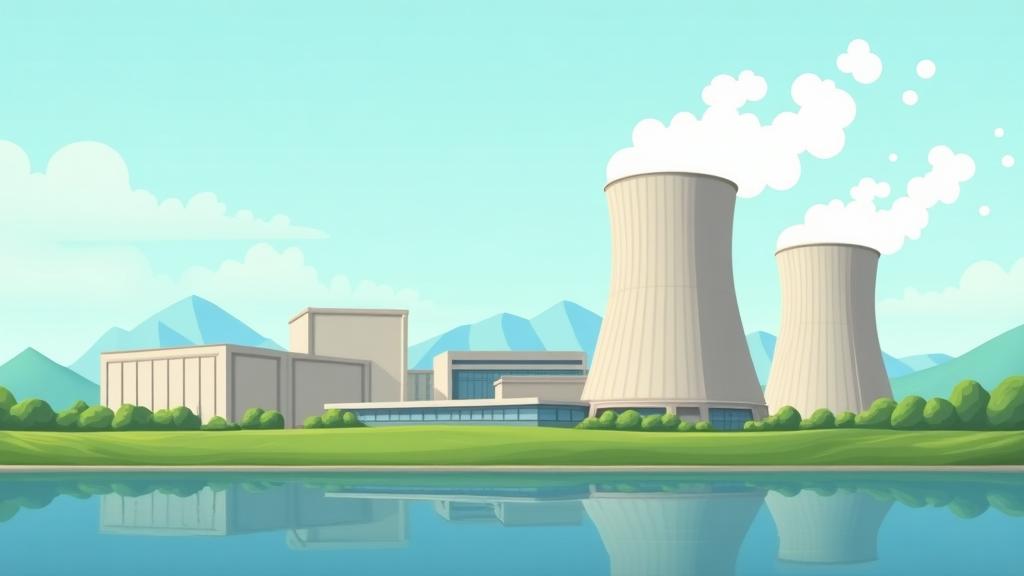
    An illustration of a modern nuclear power plant in India

    A Familiar Scene: Power Cuts and Pollution

    If you’ve ever lived in a small town or even in the outskirts of a city, you probably know what it feels like to sit in the dark during power cuts. Fans stop, fridges get warm, and life slows down. On the other hand, big cities are constantly choking on smoke from coal plants and fuel-based industries. So, what’s the middle path? India is now eyeing nuclear energy as one of the ways to clean things up without sacrificing power needs.

    Now, the government is working on something big—changing the rules around nuclear energy to make it easier for foreign companies to come and invest. These updates to the 2010 law may not sound exciting at first, but they could play a huge role in powering India’s future in a cleaner, more stable way.

    What Went Wrong with the Old Law?

    Back in 2010, after the Bhopal gas disaster memories were still fresh, India made a strict law that said if there’s a nuclear accident, even the equipment supplier will be held liable. It made sense at the time—nobody wanted another disaster. But the law also scared away big global players like General Electric and Westinghouse. Why would they risk it when other countries had more balanced rules?

    That’s where India got stuck. We wanted nuclear energy but made the rules so strict that no one wanted to help us build it.

    So, What’s Changing Now?

    The new idea is simple: make the suppliers less scared. If something goes wrong, their liability would now be capped. Also, they’ll only be responsible for a limited time, and only up to the value of their contract. This is more in line with how things work in countries like France or the US, where plant operators—not the suppliers—are mainly responsible for safety.

    By doing this, India hopes to invite foreign companies back, bring in fresh investments, and build more nuclear plants without too many legal hurdles.

    The Big Target: 100 GW by 2047

    Right now, India’s nuclear power capacity is somewhere around 8 GW. But the goal is 100 GW by 2047. That’s a huge jump, no doubt. To make that happen, experts say we’ll need close to ₹15 lakh crore in funding. That’s a mountain of money.

    Good news is, big names like Reliance, Adani Power, Tata Power, and Vedanta are already talking about putting in $5 billion each. If all goes well, we might just hit the target—but only if the red tape is reduced and partnerships are encouraged.

    Global Bonds: It’s Not Just About Power

    This reform isn’t just about watts and megawatts. It’s also about diplomacy. If India becomes easier to work with, countries like the US will be more willing to team up. This means not just reactors, but also technology sharing, training, and maybe even cleaner exports.

    India’s goal of taking trade with the US from $191 billion to $500 billion by 2030? This reform could help move that needle in the right direction.

    Hold On, What About Safety?

    Let’s not get carried away. Cutting supplier liability doesn’t mean we should take safety lightly. Nuclear energy is clean, yes, but it’s also risky if mismanaged. We’ve seen what happened in Fukushima and Chernobyl. Even if those were decades ago, they serve as lessons.

    So, while making things easier for investors, India also needs to keep strict checks in place. There has to be transparency, regular inspections, and accountability. Otherwise, public trust will vanish in a flash.

    What I Think: Not Perfect, But Needed

    Honestly, I think this move is more of a necessity than a bold experiment. India needs cleaner energy, and coal won’t take us there. Solar and wind are growing fast, but they have limits too. Nuclear energy, when done right, can fill the gap.

    But we have to balance growth with safety. We can’t afford shortcuts. If these reforms are implemented carefully—with solid safety nets—then I believe we’re heading in the right direction.

    If you like this blog you may interest in clean energy, Check out our blog The Future of Solar Energy: Solar Futures and Predictions 2025
  • Are We Ready for AI’s Energy Crisis? Data Centers Set to Double Power Use by 2030

    Are We Ready for AI’s Energy Crisis? Data Centers Set to Double Power Use by 2030

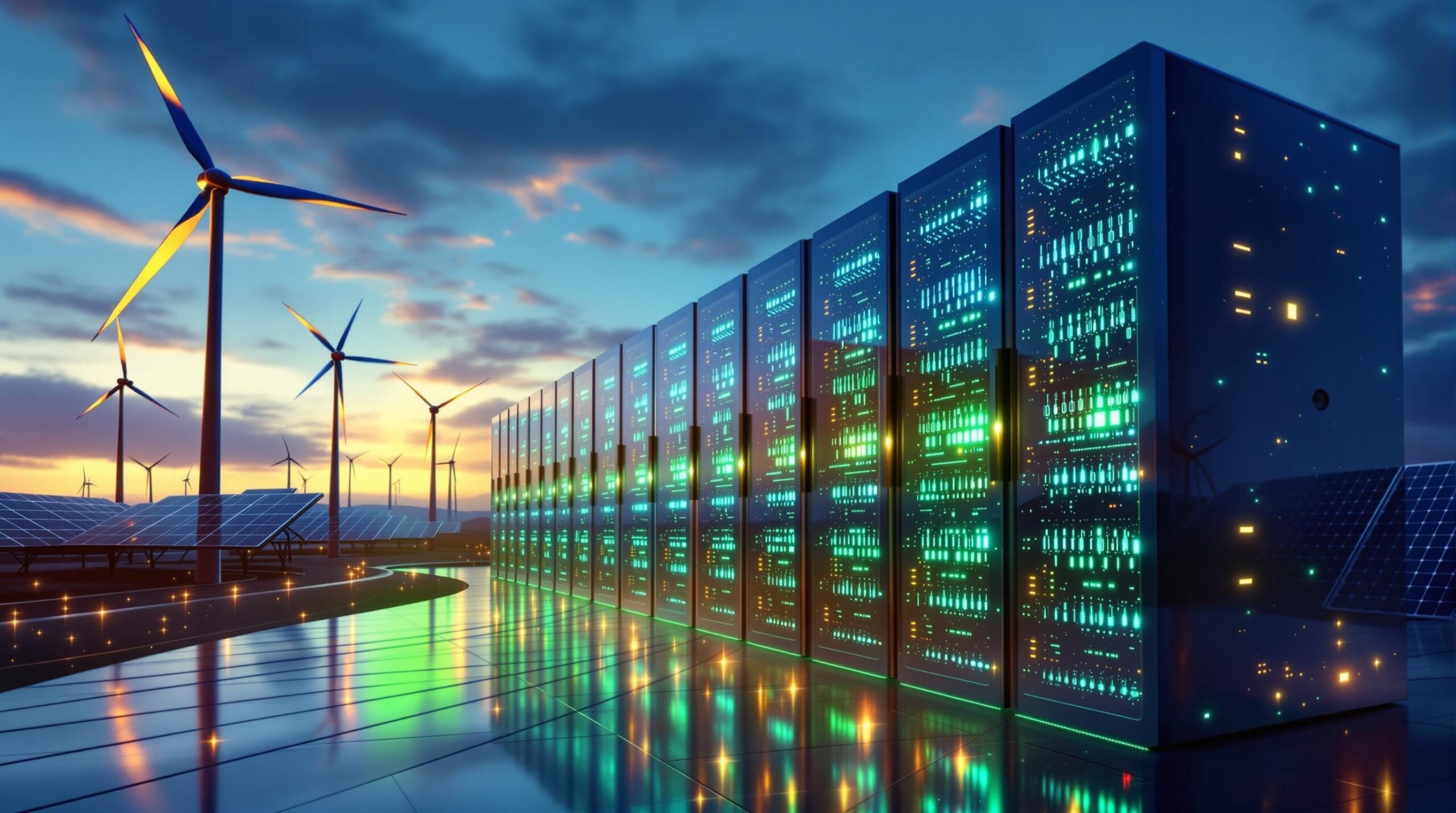
    Futuristic AI server farm illuminated with blue and green lights, surrounded by windmills and solar panels in the background.

    Why Everyone’s Talking About AI’s Power Use

    So here’s the deal. On April 10, 2025, the International Energy Agency (IEA) dropped a report that made people sit up straight.

    It said that by 2030, electricity used by data centres including the ones running AI tools like ChatGPT, MidJourney and others could more than double. Yep, not just a little rise. We’re talking about double the current usage.

    And naturally, social media went nuts. X (you know, what used to be Twitter) was buzzing with all kinds of takes. Some folks were hyped more power, more AI, smarter tech. But many were seriously worried.

    And honestly, who can blame them? We’re already hearing about power shortages and climate issues. Now imagine adding this AI electricity binge on top.

    What the IEA Actually Said In Simple Words

    Okay, here’s the gist.

    Back in 2022, data centres globally were already using around 460 terawatt-hours (TWh) of electricity.

    By 2030, that number might hit 1,000 TWh.

    To give you an idea that’s close to what Japan uses in a year. Let that sink in.

    And why is this happening? Well, because AI doesn’t just run on ideas and code it runs on pure electricity.

    Training big models like GPT-4 takes weeks on thousands of GPUs. And even after training, every time you ask a chatbot something or generate an image, electricity is being used behind the scenes.

    Which Countries Are Feeling It Most?

    Right now, places like the US, Ireland, and Nordic countries are hosting a lot of data centres.

    But now, Asia-Pacific is stepping in especially India, Singapore, and China. And with India aiming to be a tech leader, this is something we seriously need to keep an eye on.

    The Big Dilemma: Innovation vs Environment

    We’re at a tricky point.

    AI is doing amazing things helping detect cancer early, giving accurate weather forecasts, even improving education in remote areas. No doubt about that.

    But there’s a flip side. All this “smartness” is coming with a massive power bill and carbon cost.

    I read two opinions online that really hit home:

    “AI is revolutionising climate research, medicine, and education what’s the big deal about some extra power?”

    And then the other one:

    “If the tools we use to fight climate change are worsening the problem… what’s even the point?”

    That second one? Yeah, kind of hard to ignore.

    What’s Causing the Power Spike?

    Here’s what’s cooking behind the scenes:

    • AI training and inference – Models like GPT-4, DALL·E, etc. need GPU clusters that run for weeks.
    • Crypto mining – Still going strong in many places.
    • Cloud gaming & streaming – Think Netflix, Xbox Cloud, etc. they’re no less power-hungry.
    • Cloud expansion – Every app, startup, or smart home gadget is hosted somewhere on the cloud.

    In short, the digital world is growing fast. And it’s gulping down power just as fast.

    Can Renewables Catch Up in Time?

    Here’s the hopeful part.

    Some countries are already saying: “Fine, build your data centres, but show us your green energy plan first.”

    Like in Ireland and Denmark, new data centres need to commit to renewables from the start.

    Big tech companies like Google and Microsoft have promised to go 100% carbon-free by 2030 at least for their data centres.

    And in India? Our solar sector is gaining serious attention. Could become the backbone for our AI growth, if done right.

    But let’s be real renewables need to scale faster than AI does. Otherwise, it’s like trying to fill a water tank with a hole in it.

    India’s Role in This Power Puzzle

    As India runs towards becoming an AI giant, we’ve got to play it smart.

    Here’s what needs doing:

    • Upcoming data parks in Tamil Nadu, Telangana, Gujarat? They better have green energy baked in from the start.
    • Make it mandatory for big AI or cloud investments to include renewable plans.
    • Educate startups even your chatbot uses energy. Awareness is the first step.

    If we don’t act now, we might end up chasing tech dreams while blackouts and heatwaves become normal.

    Bottomline: Smarter AI, Not Just Bigger AI

    Here’s a thought what if the next big leap in AI isn’t about speed or intelligence… but about how little energy it uses?

    We don’t need more machines that think fast. We need machines that think smart and consume less.

    That means:

    • Models that need fewer GPUs
    • Data centres powered by wind, solar, or even ocean energy
    • Public and policy pressure that pushes companies to clean up their act

    Because let’s face it AI is staying. But how we choose to power it? That choice is still ours.

    And maybe, just maybe, AI won’t just be smart. It’ll be wise too.

    🔗 Related Reads You Might Like