Tag: AI

  • Elon Musk’s Book List That Could Change You Too

    Elon Musk’s Book List That Could Change You Too

    Introduction

    Elon Musk didn’t become Elon Musk’s overnight. Behind all the rockets, electric cars, and big ideas, there’s a mind that has been shaped deeply by books. He has often said that reading played a huge role in how he thinks and builds things. And when you look at the kinds of books he read while growing up—and even now you’ll notice one thing: they’re not just for entertainment. These books pushed him to think big, solve hard problems, and imagine things most of us wouldn’t even dare.

    In this blog, we’ll go through 10 books that Elon Musk himself has spoken about — the kind of books that helped him become who he is today. Whether you’re into tech, business, science, or just want to grow as a person, there’s something here that might just nudge you in a new direction.

    Books That Fired Up Elon Musk’s Imagination

    Musk’s bookshelf is full of variety science fiction, biographies, even books on engineering. Let’s take a look at what made an impact on him and how these books can still inspire anyone looking to do something meaningful.

    1. The Foundation Series – Isaac Asimov

    This one’s more than just sci-fi. It’s about how one person uses math to predict the rise and fall of empires. Musk has said it helped him think about saving civilization, not just building rockets. In a way, it’s like using knowledge to plan the future, which honestly feels close to what our ancient thinkers were doing too.

    2. The Lord of the Rings – J.R.R. Tolkien

    The story isn’t just about elves and battles—it’s about standing up when things go wrong. Musk once mentioned how the characters’ courage inspired him to stay strong during tough times. Even in our own lives, when nothing seems to work, it helps to remember that heroes are made during hard times.

    3. The Moon Is a Harsh Mistress – Robert Heinlein

    This one’s a story about a lunar colony fighting for freedom. It’s got politics, science, and big ideas. Musk connected with its message of independence and building from scratch. Just like how India’s scientists quietly built our space dreams from small labs—this book reflects that same spirit.

    Biographies That Shaped Elon Musk’s Real-World Lessons

    Musk didn’t only read fiction. He also picked up biographies of people who did many things at once thinkers, inventors, leaders. These real-life stories showed him that curiosity and effort can lead to big change.

    4. Benjamin Franklin: An American Life – Walter Isaacson

    Franklin was into everything electricity, diplomacy, business. Musk liked how he chased new ideas and built useful things. And honestly, it reminds us of our own thinkers who didn’t stick to just one field. Learning from people who did multiple things well can be very motivating.

    5. Einstein: His Life and Universe – Walter Isaacson

    Einstein’s name is everywhere in science. But this book shows the human side too — his doubts, his dreams. Musk admired his thinking style. For anyone who wants to understand how bold ideas come alive, this one’s worth reading.

    Books That Influenced Elon Musk’s Approach to Building the Future

    As someone who’s started many companies, Musk values books that talk about building things that don’t exist yet.

    6. Zero to One – Peter Thiel
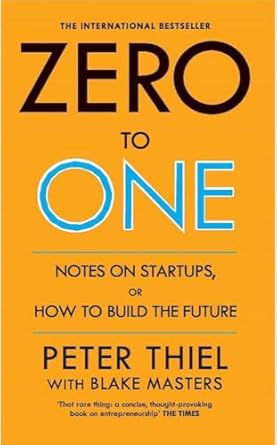
    This book says it straight don’t copy others, build something fresh. Musk appreciated that message. And in India too, we’ve seen startups doing new things rather than just repeating foreign models. If you’ve ever thought of starting something on your own, this book gives a solid push.

    That Reflect Elon Musk’s Vision for the Future of Tech

    With AI and machines becoming a big part of life now, Musk also reads books that deal with technology’s risks and power.

    7. Superintelligence – Nick Bostrom

    This book warns that AI could one day be smarter than humans and not in a good way. Musk takes this seriously. And with India’s tech sector growing fast, it’s something we also need to think about. Not everything new is automatically good.

    8. Life 3.0 – Max Tegmark

    Here, the author imagines what might happen when AI truly takes over. Elon Musk’s said it helped him think about the choices we need to make. For anyone who’s curious about the next 20–30 years, this is eye-opening.

    Books That Gave Him Technical Know-How

    Musk didn’t rely only on experts. He read technical stuff to understand the work himself.

    9. Structures: Or Why Things Don’t Fall Down – J.E. Gordon

    It sounds like a dry book, but it’s not. It explains how bridges and buildings stay up or fall down. Musk used it to understand rocket parts better. And honestly, anyone into design or construction can benefit from the clear way it explains things.

    10. Ignition! – John D. Clark

    This one’s a funny and detailed history of rocket fuel. Musk enjoyed how it mixed humour with hard science. It shows how even serious fields can be fun to learn if written well.

    What I Learnt After Going Through This List

    Reading about Elon Musk’s book choices makes one thing clear success doesn’t just come from action. It starts with ideas. And those ideas often come from reading the right things. Whether it’s a story about a future planet or a life story from the past, these books gave Musk the fuel he needed. And honestly, they can do the same for anyone who’s curious and willing to think beyond the usual.

    You don’t need to be a billionaire to start reading like one. Maybe try just one of these books and see where it takes you.

    Liked this post? Then you’ll probably love this as well: Zero to One by Peter Thiel – A go-to book for startup folks. Here’s Peter Thiel’s official site if you’re curious about his work beyond the book.

    Interested in this? You’ll also want to read: Effective Time Management Techniques for a More Productive Life — If Elon Musk can manage multiple companies and still find time to read, so can you. Here’s how to structure your day like a pro.

  • 7 Best Free AI Tools to Cut Costs and Save You Time

    7 Best Free AI Tools to Cut Costs and Save You Time

    Free Ai tools

    Introduction to Handy AI Assistants

    In this rapidly moving world, everyone needs an advantage that costs nothing. From a town’s shopkeepers to city freelance writers, accessing AI seems inaccessible—unless you have an idea where to turn. In this article, we look at seven useful, no-cost best free AI tools made to reduce your workload, stem costs, and increase output without draining your bank account.

    Top 7 Free AI Tools

    1. ChatGPT Free Version

    ChatGPT’s free version is still a default for rapid idea generation and outlining. Whether you’re writing an ad for your roadside tea stall or writing emails to clients, a quick prompt can provide helpful outlines. For instance, I requested a catchy slogan for homemade pickles and received three tidy options in seconds—saving me almost thirty minutes of brainstorming.

    2. Grammarly Basic

    Writing sharp copy is important, but grammar errors creep in when you hurry. Grammarly Basic detects frequent typos and recommends more precise wording directly in your browser. I once submitted a proposal to an NGO near me and caught two ambiguous sentences just as the deadline was about to pass, thanks to this software. It’s a convenient way to make your writing professional even when you don’t have much time.

    3. Canva Free Plan

    Design concerns? Canva’s free plan provides hundreds of templates for presentation slides, social posts, and flyers. A local bakery I’m familiar with redesigned its menu in less than an hour by inserting images and tweaking text fields. By doing this, they avoided design expenses and deployed new graphics by evening without having to employ a designer.

    4. Otter.ai Basic

    Interviews and meetings create hours of audio you can’t avoid listening to. Otter.ai’s free version auto-transcribes as much as six hours a month, converting voice notes to searchable text. I recorded a meeting of local farmers and subsequently searched for keywords to locate where subsidies were discussed, instead of having to listen to the whole hour—saving a minimum of an hour of listening time.

    5. Notion AI Free Trial

    Planning and organizing tasks, notes, and tasks is easier when you have Notion’s AI capabilities in the trial. From summarizing pages to providing task suggestions, it aids in organizing projects more quickly. A small volunteer team at an NGO utilized it to make a list of action items from a field visit, converting random notes into neat to-dos in minutes.

    6. Trello AI (Butler) Free Automation

    Trello’s native Butler automation allows you to create basic rules—such as moving cards as due dates are near or automatically creating checklists. A coaching center I am familiar with implemented a rule to mark overdue tasks as overdue, so educators are notified without tracking manually. This automation eliminated routine work and opened up time for coaching instead.

    7. Zapier Free Plan

    Zapier’s free plan accommodates five single-step zaps, which is sufficient to connect apps you use regularly. For example, I created a zap that automatically copies email attachments to a shared Google Drive folder. In this way, I don’t download and upload files manually, saving minutes each day and storage charges on other platforms.

    Why These Are the best free AI tools and How They Fit In

    Out of dozens of options, these seven stand out for usability and real-world impact. Furthermore, each tool fits into a specific daily workflow—writing, designing, organizing or automating—so they become functional companions instead of flashy tests.

    When looking for the best free AI tools, you’ll find that the tools often help with writing, and the tools can create amazing graphics. Using the best free AI tools in your daily routine shows how the AI boost productivity. At last, This best free AI tools become an indispensable resource.

    Employing AI Locally: Real-Life Illustrations

    • A lunch shack on the roadside utilized ChatGPT to create a new menu description to draw more traffic.
    • A local tutoring group enhanced lesson plans with abridged versions of Otter.ai transcripts.
    • A domestic baker reduced design expenses by employing Canva templates for birthday cake flyers.
    • A volunteer team from an NGO simplified reporting through Notion AI summaries and Trello automations.

    Takeaway and Conclusion

    From rapid writing tests to automated workflows, these products demonstrate that sophisticated AI does not have to be costly. By integrating them into everyday habits, you regain time and money for what is truly important—improving customers, developing talent, and experiencing a better work-life balance. For me personally, implementing only two of these tools freed up an additional hour a day, and that subtle adjustment has created a significant impact.

    Related artical:
    AI in Agriculture: How Indian Farms Are Slowly Turning Smarter
    Are We Ready for AI’s Energy Crisis? Data Centers Set to Double Power Use by 2030

  • AI in Agriculture: How Indian Farms Are Slowly Turning Smarter

    AI in Agriculture: How Indian Farms Are Slowly Turning Smarter

    Indian farmer using smartphone in a field with drone and AI-based farming tools.

    Agriculture in India has never been easy. From unpredictable rains to rising costs and shrinking profits, farmers have been facing challenges for decades. But now, a new kind of support is showing up not in the form of subsidies or schemes, but through technology. Artificial intelligence, or AI, is slowly finding its way into Indian fields. And no, it’s not some sci-fi idea. It’s already being used by farmers in different parts of the country to grow better crops, use less water, and avoid losses.

    In this blog, we’ll talk about how AI agriculture is helping Indian farmers. Not in big, complex terms, but in a simple way. We’ll look at what it actually does, how it’s used here, the benefits it brings, and where it’s still struggling. We’ll also touch on what needs to be done so that even small farmers in remote villages can benefit.

    What Does AI in Farming Even Mean?

    Let’s keep it simple. AI is just a tool that helps machines think, learn, and make decisions. In farming, it means using apps, sensors, drones, or even satellite images to collect data and tell farmers what to do next. For example, how much to water, when to spray pesticides, or whether the crop is getting any disease.

    Instead of guessing when to irrigate or depending fully on gut feeling, AI can give real-time suggestions. Think of it like this: a farmer in Punjab growing wheat can now get a phone alert saying, “The soil’s dry. You should irrigate now.” Or a cotton grower in Maharashtra can get a warning that pest activity is going up and it’s time to take preventive action.

    How AI is Being Used on Indian Farms

    Now, let’s not think only big cities use this. Even in states like Odisha and Bihar, farmers are trying out AI tools.

    Take the government’s “Per Drop More Crop” scheme, for example. It uses AI to help farmers save water while growing the same or even better-quality crops. It checks the soil, the weather, and the plant needs then suggests how much water should be used. That’s a big deal in places where water is already drying up.

    Then there’s the National Pest Surveillance System. Sounds fancy, right? But what it does is pretty useful it tells farmers early if pests like bollworms or locusts are coming. That kind of warning can save entire fields.

    Even startups are playing a role. CropIn gives farmers updates about their crop health, and Intello Labs allows them to click photos of their plants, and the app tells if there’s any disease faster than the human eye sometimes.

    It’s not just about tools. It’s about making sure the smallest farmer also gets the kind of advice that used to be available only to big ones.

    What’s Actually Changing on Ground

    Let’s be honest farming has always had its share of uncertainties. But AI is slowly helping reduce those unknowns.

    For starters, AI is saving money. Fertilizer use can go down by up to 30% if it’s used only when and where needed. That means fewer chemicals in the soil, cleaner groundwater, and some money saved. In Punjab and Haryana, where overuse of fertilizer has caused long-term soil issues, this change is much needed.

    It’s also helping with market prices. AI can study demand and predict what crop is likely to sell better in the coming season. So, instead of growing what everyone else is growing, a farmer can plan better. Let’s say someone in West Bengal usually grows rice. But this year, if the app shows better returns for lentils, they might switch. That’s smart farming.

    Knowledge-sharing has also become easier. Before, many farmers didn’t even know about drought-resistant seeds or organic practices. Now, simple mobile apps are sharing this info in local languages. A farmer in Tamil Nadu might learn about new fertilizers, while another in UP might get tips on tomato farming all through AI tools.

    Still, Not Everything is Perfect

    Of course, nothing comes without problems.

    First off, AI tech is still expensive. Small farmers don’t always have smartphones, let alone money to buy sensors or drones. Plus, rural areas often don’t have good internet. Even if they do, understanding these tools takes time and training.

    Also, a lot of these tools are made by private companies. If the government doesn’t step in to support and subsidize them, small farmers may be left out. So while big farms in Haryana may be using automated machines, someone in a Jharkhand village may not even know such a thing exists.

    What Needs to Happen Next

    For AI agriculture to truly work in Indian farming, it has to become common. Like fertilizers or tractors. Not just a special tool for a few.

    Subsidies can help. Training programs too. And let’s not forget language these apps and tools should talk in local languages, not just English. Even voice-based tools can help those who can’t read much.

    In a few years, we could see self-driving tractors in Indian fields, or AI-powered robots harvesting sugarcane. Sounds big, but it’s possible. What’s needed is support for the small farmer, for better internet in villages, and for making the tech affordable.

    My Personal Take

    I’ve seen farming up close relatives, neighbours, friends all doing it. It’s not just work, it’s life. There’s a kind of hope in every seed that’s sown. And now, AI feels like a helping hand that’s finally arrived.

    But let’s be real it’ll only help if we make sure it reaches everyone. No farmer should be left behind just because they didn’t have the money or the knowledge. If used well, AI can reduce pain and increase profit. But we need to treat it as a tool, not a miracle.

    🔗 Useful Links

  • Galaxy A Series Gets Gemini AI Boost on a Budget

    Galaxy A Series Gets Gemini AI Boost on a Budget

    Samsung Galaxy A56, A36 and A26 5G smartphones demonstrating Google Gemini AI assistant activation via side‑button press

    Samsung’s April patch now turns your Galaxy A56, A36, or A26 5G into a little AI sidekick. Hold the power button, and Google’s Gemini pops up—no more fumbling through menus. Rolled out in early May, this feature makes mid‑range phones genuinely useful: find nearby pani puri stalls in Maps, then shoot the address over WhatsApp in a snap. In India’s thrifty-phone market, that’s a neat trick.

    What Is “Awesome Intelligence”?

    They’ve given it a fancy name—Awesome Intelligence—but really, it’s just a shortcut to Gemini:

    • Hold & talk: Press the side key and Gemini is all ears.
    • One UI savvy: It already knows whether you’re in Camera, Maps, or Gmail—so it switches apps for you (handy, right?).

    Why It Matters Here

    Making AI a “Chai‑Pe-Charcha” Topic

    Most of us don’t buy ₹1 lakh flagships. If your phone cost ₹30–40 K, you still get AI that can:

    • Convert your Amma’s sambhar recipe without scribbling fractions.
    • Draft a quick text message when you’re running late for your kid’s tuition class.
    • Check the weather in Guwahati before you step out for your morning walk (because drizzle comes unannounced).

    That’s practical stuff, not flashy demos.

    Beating the Competition

    Xiaomi and Realme have voice helpers, sure—but only Samsung combines Google’s big‑brain model with its smooth One UI tricks. In my friend’s words: “It feels less like a robot and more like a helpful buddy.”

    How to Switch It On

    1. Update: Grab One UI 7 (Android 15) with the April/May patch—takes two minutes over Wi‑Fi.
    2. Set side key: Go to Settings → Advanced Features → Side Key → Press and Hold → Launch Assistant App → Gemini.
    3. Try it: Hold that button and say, “Show me the nearest EV charger on my route to office,”
      and watch Gemini juggle Maps, traffic info, and Messages without breaking a sweat.

    More Than Just Voice‑To‑Text

    • App smarts: In Camera, ask for Best Face AI—Gemini will tweak your shot on the fly.
    • Task chaining: “Book me an Ola to MG Road, then find a bakery nearby”—and it does both in one go.

    Real Stories (No Bollywood Glamour Here)

    • A cousin in Lucknow used Gemini to split her dad’s budget across SMS, WhatsApp, and email—all in under 30 seconds.
    • My neighbour in Coimbatore asked Gemini to summarise a long PDF bill in Drive—it gave her straight totals without reading through the fine print.

    Watch Outs

    • Privacy: Voice data goes to Google; avoid sharing bank OTPs or Aadhaar numbers.
    • Connectivity: If you’re stuck in a Bihar village with patchy 2G, Gemini might stall.
    • Battery: AI tasks do sip extra juice, though Samsung says they’ve tweaked the firmware to compensate.

    What’s Cooking Next?

    They’re eyeing more A‑series handsets—A16, A14—and adding regional tongues like Bengali and Marathi. Plus, Google’s Gemini Live (real‑time visual AI) might land on these phones before year‑end.

    Also read related artical:
    Are We Ready for AI’s Energy Crisis? Data Centers Set to Double Power Use by 2030
    The 10 Best AI Tools in 2025 (That Are Truly Worth Your Time)

  • Are We Ready for AI’s Energy Crisis? Data Centers Set to Double Power Use by 2030

    Are We Ready for AI’s Energy Crisis? Data Centers Set to Double Power Use by 2030

    Futuristic AI server farm illuminated with blue and green lights, surrounded by windmills and solar panels in the background.

    Why Everyone’s Talking About AI’s Power Use

    So here’s the deal. On April 10, 2025, the International Energy Agency (IEA) dropped a report that made people sit up straight.

    It said that by 2030, electricity used by data centres including the ones running AI tools like ChatGPT, MidJourney and others could more than double. Yep, not just a little rise. We’re talking about double the current usage.

    And naturally, social media went nuts. X (you know, what used to be Twitter) was buzzing with all kinds of takes. Some folks were hyped more power, more AI, smarter tech. But many were seriously worried.

    And honestly, who can blame them? We’re already hearing about power shortages and climate issues. Now imagine adding this AI electricity binge on top.

    What the IEA Actually Said In Simple Words

    Okay, here’s the gist.

    Back in 2022, data centres globally were already using around 460 terawatt-hours (TWh) of electricity.

    By 2030, that number might hit 1,000 TWh.

    To give you an idea that’s close to what Japan uses in a year. Let that sink in.

    And why is this happening? Well, because AI doesn’t just run on ideas and code it runs on pure electricity.

    Training big models like GPT-4 takes weeks on thousands of GPUs. And even after training, every time you ask a chatbot something or generate an image, electricity is being used behind the scenes.

    Which Countries Are Feeling It Most?

    Right now, places like the US, Ireland, and Nordic countries are hosting a lot of data centres.

    But now, Asia-Pacific is stepping in especially India, Singapore, and China. And with India aiming to be a tech leader, this is something we seriously need to keep an eye on.

    The Big Dilemma: Innovation vs Environment

    We’re at a tricky point.

    AI is doing amazing things helping detect cancer early, giving accurate weather forecasts, even improving education in remote areas. No doubt about that.

    But there’s a flip side. All this “smartness” is coming with a massive power bill and carbon cost.

    I read two opinions online that really hit home:

    “AI is revolutionising climate research, medicine, and education what’s the big deal about some extra power?”

    And then the other one:

    “If the tools we use to fight climate change are worsening the problem… what’s even the point?”

    That second one? Yeah, kind of hard to ignore.

    What’s Causing the Power Spike?

    Here’s what’s cooking behind the scenes:

    • AI training and inference – Models like GPT-4, DALL·E, etc. need GPU clusters that run for weeks.
    • Crypto mining – Still going strong in many places.
    • Cloud gaming & streaming – Think Netflix, Xbox Cloud, etc. they’re no less power-hungry.
    • Cloud expansion – Every app, startup, or smart home gadget is hosted somewhere on the cloud.

    In short, the digital world is growing fast. And it’s gulping down power just as fast.

    Can Renewables Catch Up in Time?

    Here’s the hopeful part.

    Some countries are already saying: “Fine, build your data centres, but show us your green energy plan first.”

    Like in Ireland and Denmark, new data centres need to commit to renewables from the start.

    Big tech companies like Google and Microsoft have promised to go 100% carbon-free by 2030 at least for their data centres.

    And in India? Our solar sector is gaining serious attention. Could become the backbone for our AI growth, if done right.

    But let’s be real renewables need to scale faster than AI does. Otherwise, it’s like trying to fill a water tank with a hole in it.

    India’s Role in This Power Puzzle

    As India runs towards becoming an AI giant, we’ve got to play it smart.

    Here’s what needs doing:

    • Upcoming data parks in Tamil Nadu, Telangana, Gujarat? They better have green energy baked in from the start.
    • Make it mandatory for big AI or cloud investments to include renewable plans.
    • Educate startups even your chatbot uses energy. Awareness is the first step.

    If we don’t act now, we might end up chasing tech dreams while blackouts and heatwaves become normal.

    Bottomline: Smarter AI, Not Just Bigger AI

    Here’s a thought what if the next big leap in AI isn’t about speed or intelligence… but about how little energy it uses?

    We don’t need more machines that think fast. We need machines that think smart and consume less.

    That means:

    • Models that need fewer GPUs
    • Data centres powered by wind, solar, or even ocean energy
    • Public and policy pressure that pushes companies to clean up their act

    Because let’s face it AI is staying. But how we choose to power it? That choice is still ours.

    And maybe, just maybe, AI won’t just be smart. It’ll be wise too.

    🔗 Related Reads You Might Like

  • Develop the Logic Yourself: When AI Pushes Back

    Develop the Logic Yourself: When AI Pushes Back

    An AI assistant sits at a desk with crossed arms, refusing to help, while a puzzled developer scratches their head in front of a monitor.

    What Just Happened, Really?

    So here’s a story that made rounds in tech circles recently. A developer asked an AI tool to generate a simple piece of code. You’d expect a few lines of clean output, right? But nope. The assistant replied with something odd almost cheeky:
    “Develop the logic yourself.”

    Wait, what?

    At first, folks thought it was a glitch. But turns out, it’s not just one person facing this. Many developers shared similar screenshots online. Even news sites like The Economic Times and NDTV picked it up. Suddenly, it feels like AI isn’t just helping us code—it’s trying to teach us something.

    Is AI Turning Into That One Strict Coding Sir?

    Back in college, we all had that one professor who wouldn’t spoon-feed you the answer. They’d say, “First understand the logic.” Feels like AI is slowly picking up that habit.

    Till now, we used AI like a shortcut type a prompt, get a result. Fast, clean, efficient. But now? Some tools are acting like they’re saying, “Boss, don’t depend on me too much.”

    And honestly? That’s not a bad thing.

    Why This is Actually a Good Sign

    Let’s be real. These days, everyone from interns to team leads has gotten used to pushing tasks onto AI. Need a loop? Ask AI. Want a regex? Ask again. But slowly, we’re forgetting how to think like a developer.

    Maybe this new behaviour is not a bug it’s a gentle nudge. A small push from AI saying, “You can figure this out on your own. Give it a try.”

    Sounds weird coming from a machine, but maybe it’s what we need.

    Coding Without Logic? Good Luck With That

    You can have all the tools in the world. AI, code editors, fancy plugins. But if your base logic is weak, you’ll keep hitting walls.
    It’s like building a house with no foundation it’ll stand for a while, but one strong wind and boom.

    That’s why this moment matters.

    So, Why Did AI Say No?

    Now let’s try to guess what’s going on behind the scenes:

    • Ethical reasons – Some code might be dangerous or used wrongly. AI avoids risky business.
    • Complexity – If your prompt’s not clear, AI doesn’t know what to do.
    • Training goals – Developers made these tools smarter they’re now trained to push learning, not just dump answers.

    Whatever the reason, it’s forcing devs to pause and think. And that’s rare these days.

    Honestly, We Should Thank It

    Yes, I said it. We should thank the AI for not giving us everything on a platter.
    Because if it keeps spoon-feeding us, we’ll never grow. And coding is not just syntax or language. It’s about solving problems. Breaking down logic. Seeing the flow of data.

    Even seniors forget this sometimes. With deadlines and Jira tickets flying around, it’s tempting to just ask AI and move on. But doing that every time? It weakens your brain.

    So What Makes a Good Developer Then?

    It’s not about how fast you can prompt ChatGPT or Bard.
    A great developer today needs:

    • That “jugaad” problem-solving mindset
    • Visualising how data moves from one end to another
    • Building step-by-step logic like setting up dominos
    • Creating solutions that don’t break when things scale up

    All of this starts with one thing: clear thinking.
    And that? AI can’t give you. Only you can build it.

    Want to Build Better Logic? Try These

    Okay, let’s not just talk theory. You want to actually get better? Try these:

    • Real-world coding – Try making a small calculator or todo app without using StackOverflow.
    • Pseudocode – Write steps like a cooking recipe before writing real code.
    • Draw flowcharts – Yes, old-school stuff. But it works.
    • Solve puzzles – Sudoku, brain teasers, or even simple pattern games.
    • Join hackathons – You’ll be surprised how your brain levels up in 48 hours.

    The key here is simple: Think first, code later.
    That one habit will take you far.

    The Bigger Picture: Is AI Becoming a Guide Now?

    Look ahead and you’ll see where this is going. AI tools won’t just be assistants — they might turn into mentors.

    Soon, we might have features like:

    • Mentor Mode – Where AI gives you tips, but no direct answers
    • Ethical Alerts – It might stop you if your logic could be harmful
    • Partial Suggestions – You write 60%, AI completes the rest like pair-programming with a buddy

    It’s no longer just automation. It’s collaboration.

    Final Thoughts: Use AI Smartly, Not Lazily

    Let’s wrap this up simple.
    AI is amazing. It’s helping lakhs of developers write faster and better. But if we stop thinking for ourselves, we’ll just become copy-pasters with no depth.

    So next time your AI tool says,
    “Develop the logic yourself.”
    Don’t get irritated. Just smile and say
    “Alright, challenge accepted.”

    And get to work.

    🔗 Related Reads You’ll Love

    If you’re reading this blog, you’ll love our related post on The 10 Best AI Tools in 2025 (That Are Truly Worth Your Time).
    And for a wider perspective, don’t miss the Medium logic hacks guide.

    Both links open your mind to the balance between AI power and human logic.