Blog

  • Myanmar Earthquake: The Ground Shakes Again

    Myanmar Earthquake: The Ground Shakes Again

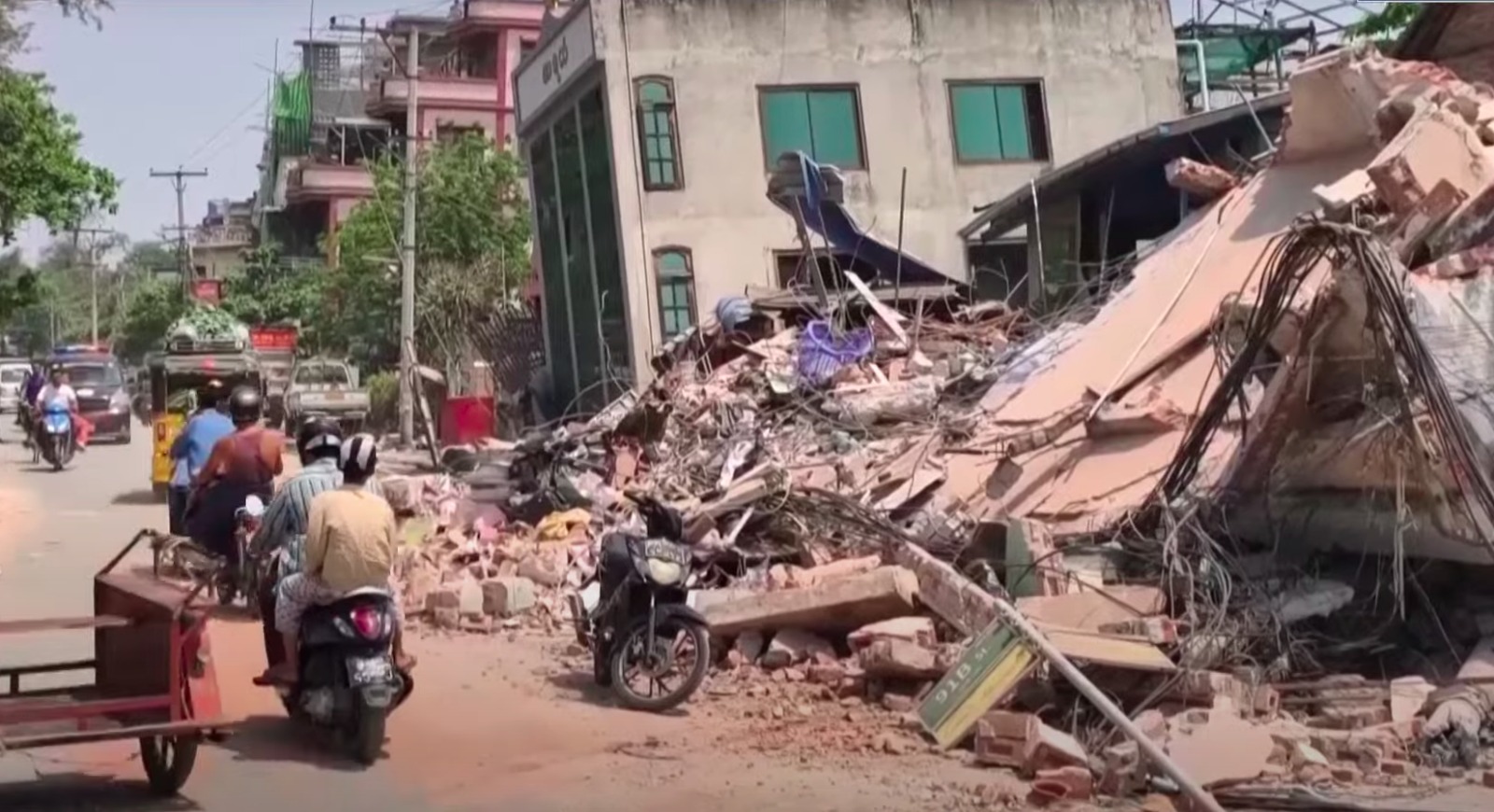
    People standing outside cracked buildings in Myanmar after earthquake, looking anxious and alert

    Another Shake, Another Shock

    Just when folks in Myanmar had started to catch their breath after that big March 28 earthquake, the ground gave another scary jolt. On April 13, around 8 in the morning, a fresh earthquake this time 5.5 on the scale hit close to Meiktila. That’s somewhere in the middle of Mandalay and Naypyitaw.

    Now, this wasn’t just another mild tremor. It was one of the strongest aftershocks since last month’s quake. People were already scared, and this one brought all that fear right back. Honestly, it’s not just about buildings shaking people’s hearts shook too.

    Where Exactly Did It Strike?

    This quake hit central Myanmar, about 28 km west of Meiktila. The US Geological Survey said the depth was roughly 10 km. Not too deep, so folks on the surface felt it strongly.

    And this area? It’s not just any spot. Meiktila has been under a lot of pressure recently, quite literally. Sitting between two big cities and along the Sagaing Fault Line, this zone has become a sort of tension point.

    Locals said they rushed out of their homes, markets, and tea stalls. “We didn’t even wait to switch off the stove,” one shopkeeper said. Some towns lost electricity for a bit, adding to the panic.

    But Why So Many Quakes All of a Sudden?

    See, Myanmar sits on the Sagaing Fault. It’s a major crack running through the country, part of a much larger fault system connected to the Indo-Australian and Eurasian plates. You must’ve heard of tectonic plates they’re like slow-moving giant slabs under our feet. When they grind or bump into each other, the earth shakes.

    Small tremors are common in this part, yes. But the recent ones? They’ve been stronger and happening more often. The March 28 earthquake was a 6.0 it damaged plenty of older buildings that weren’t built for such things. This April 13 one may be smaller, but it came at a time when people hadn’t even fully recovered from the last one.

    So the panic was understandable.

    People Ran—Again

    Eyewitness Bits

    In Meiktila, Than Htay, who runs a small tea stall near the main road, said, “We were just opening the shop, and suddenly everything started wobbling. First the spoons clinked, then the glasses toppled. We all just ran.”

    No major injuries were reported, thankfully. But fear? That was everywhere. Schools closed for the day. Hospitals moved patients outside. Nobody wanted to be inside any tall building. Can’t blame them, really.

    This Region’s Been On Edge

    This isn’t just about Myanmar. Few days back, Tajikistan faced a bigger 6.4 magnitude earthquake. All across Asia, it seems the plates below are shifting more than usual lately.

    And for Myanmar, this timing couldn’t be worse. The country is already handling political tension and an economy under pressure. Add repeated natural disasters to the mix, and it becomes a real struggle—for the government, and especially for common people.
    Are Authorities Doing Enough?

    Government folks did issue the usual earthquake safety tips:

    • Stay away from damaged walls and buildings
    • Keep a small emergency kit ready
    • Don’t use lifts when the ground shakes
    • Know which corner in your home is safest
    • Teach children and elders what to do

    All this is good. But people are asking for stronger action. “What’s the point of drills if the buildings collapse?” asked someone from Mandalay. And that’s a fair point.

    What’s needed now is not just awareness but strong buildings and quicker relief work. Because when the same fear keeps coming back every few weeks, it wears people down.

    A Bigger Lesson for Southeast Asia

    These repeated tremors—first in Myanmar, then Tajikistan are not just flukes. They’re signals. The whole region, from the Himalayas to Southeast Asia, sits on dangerous tectonic zones. Many cities in these parts still don’t have proper earthquake-proof buildings.

    Japan is one example where even big quakes don’t cause much harm because they’ve got solid systems in place. Strict building codes, educated citizens, proper drills. Other countries, including ours, need to follow suit.

    What Now?

    The people of Myanmar have seen more than their share of hardship. Political issues, economic troubles, and now, quakes. But somehow, they still hold on with courage.

    Yes, the earth shook again. But life didn’t stop. People helped each other. Strangers became family, if only for a few minutes.

    Hope is alive. But let’s not rely on hope alone. This is the time to:

    • Plan ahead
    • Build better
    • Stay informed
    • Watch out for one another

    Let’s not wait for a bigger disaster to make us act.
    If you found this blog interesting, you might enjoy this one too: Waqf Act Controversy: What’s Happening in Murshidabad?

    Interested in this? You’ll also want to read: Myanmar earthquake: What we know


  • CSK Roars Back: Ending a 5-Match Losing Streak

    CSK Roars Back: Ending a 5-Match Losing Streak

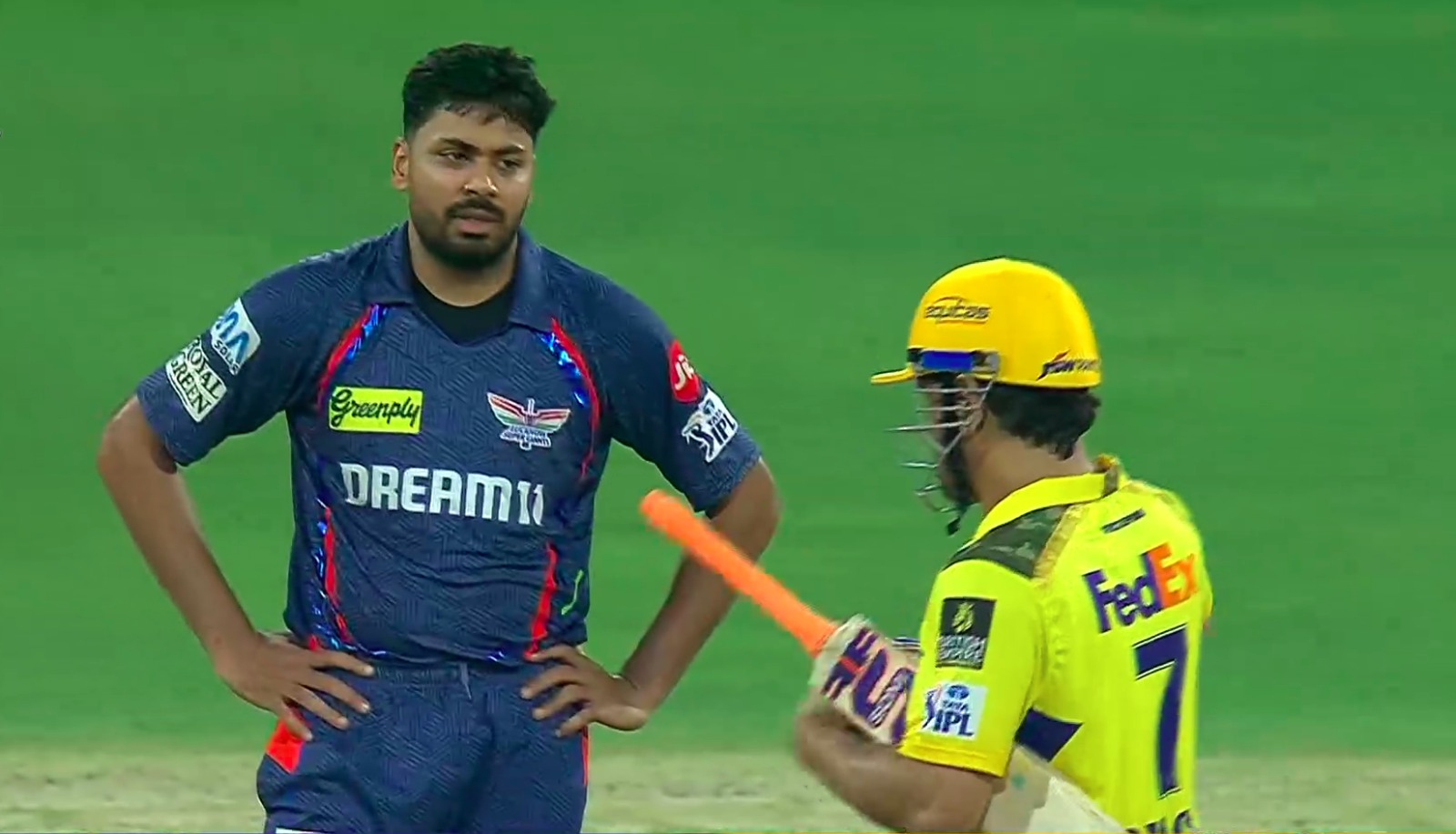
    Dhoni with his bat on ground and avesh khan stand there

    Honestly, if you’re a CSK fan, this match probably felt like breathing after being underwater for too long. After 5 straight losses, the yellow boys finally got their groove back — and what a way to do it. On April 14, 2025, they pulled off a tight 5-wicket win against Lucknow Super Giants (LSG), and just like that, the vibe flipped.

    It wasn’t just a match. It was a comeback. And somewhere in the middle of all this, Dhoni reminded us that age is just a number — especially when you’ve still got those helicopter shots in the tank.

    Before This? Things Weren’t Looking Good…

    Let’s be real — CSK was down bad. Five games lost back-to-back, team looking off, fans getting nervous. People started saying “maybe this season’s over” — but this is CSK we’re talking about. They’ve bounced back from worse.

    Meanwhile, LSG walked in looking strong. Rishabh Pant leading confidently, a balanced side, things in their favour. But cricket’s a funny game. And sometimes, just having Dhoni around — even if he’s not playing every ball — is enough to tilt things.

    That quiet confidence in the dugout? Yeah, it makes a difference.

    LSG’s Batting: Decent, But Not Enough

    Batting first, LSG managed 166/7. Decent score, but not scary.

    Pant played a solid knock — 63 off 49 balls, clean hitting, looked settled. But the rest? Meh. Markram (6), Pooran (8) – both fell early, and suddenly LSG was 23 for 2. Marsh and Badoni tried patching things up, and they did okay. But after that, the tail didn’t wag much.

    CSK’s bowlers looked better than usual. Jadeja grabbed 2 wickets, Pathirana also picked a couple, though he was a bit all over the place — 7 wides, not ideal. But Noor Ahmad was solid, just 13 runs in 4 overs, and no wickets, sure, but he kept it tight. That helped.

    One thought though — LSG clearly depended too much on Pant. If someone else had stayed in a bit longer, maybe they could’ve crossed 170. Just saying.

    CSK’s Chase: That Dhoni Magic, Back Again

    When CSK came out to bat, you could feel the intent. Rasheed and Rachin Ravindra gave a quick 48-run start — both batted with purpose. But things got shaky in the middle. Tripathi and Jadeja didn’t stay long, and suddenly it was 96/4.

    At that point, fans were probably thinking, “Not again…”

    But then Shivam Dube stepped up. Played a smart, calm knock — 43 off 37. And then came the man himself. MS Dhoni. 4 Fours and 1 six overall. 26 runs off 11 balls. Strike rate? Insane — 236+. It was like he time-travelled back to 2011. But this time Dube finish the match with 4s

    That crowd? Lost it. Yellow flags, whistles, and goosebumps everywhere.

    And yeah, LSG’s bowling didn’t help. Bishnoi tried his best — 2 wickets for 18 runs. But Shardul Thakur’s 56-run disaster from 4 overs hurt them. Can’t let that happen in tight games.

    Powerplay also helped CSK — 59 runs for just one wicket. That gave the momentum they needed.

    So… What Actually Clicked for CSK This Time?

    This wasn’t just fluke or luck. CSK played for this win.

    • Middle Order Fought Back: Even after early wickets, Dube and Dhoni stitched it together. That 72-run partnership in the end was gold.
    • Bowling Got Sharper: Jadeja’s control, Noor’s economy — made LSG work for every run.
    • Captain Cool Energy: Dhoni didn’t just bat well. His calm, that aura — it gave belief to the whole team.
    • LSG’s Death Bowling Flopped: You can defend 167 if your bowlers don’t leak runs at the end. But LSG didn’t hold up.

    All in all, this win felt like CSK getting serious again. No more confusion, no more hesitation — just classic, experienced cricket.

    Back in the Game: Dhoni & CSK Ain’t Done Yet

    This one win may not fix the whole season — but it surely changed the mood. Reminded fans of those dream runs in 2018 and 2021. It’s not about how you start. It’s about how you finish.

    And with Dhoni looking this good, even in his 40s — who knows? Playoffs aren’t that far.

    As for LSG — time to fix that death bowling. Otherwise, more heartbreaks waiting.

    Final Thoughts (Just Like Friends Chatting Post-Match)

    This game? It had everything. Drama, nerves, sixes, old-school Dhoni — the full CSK experience.

    Ending a 5-match losing streak like that? That’s what makes cricket beautiful. And that’s why, no matter what, CSK always brings hope. They’re never out until the very end.

    Let’s see how far this momentum takes them. For now, the yellow army’s drums are back, and the party’s on.

    So what do you think? Is CSK back for real? Or was this just one good day? Drop your thoughts and let’s keep the cricket talk going.
    CSk VS LSG Full Scorecard on cricbuzz :

  • Mehul Choksi: From Jewellery Tycoon to Most-Wanted Fugitive

    Mehul Choksi: From Jewellery Tycoon to Most-Wanted Fugitive

    A dramatic digital artwork of Mehul Choksi in a courtroom, surrounded by legal documents and Belgian flags, with a backdrop of Antwerp’s skyline and Indian justice symbols.

    If you follow the news, you’ve definitely heard this name Mehul Choksi. But if you’re wondering who he really is and how he ended up on India’s most-wanted list, here’s a simple breakdown. No jargon, no drama just what actually happened.

    So, Choksi was once a big deal in India’s jewellery scene. He ran Gitanjali Group, which had thousands of stores across the country. In fact, he had taken over the business from his dad back in 1985. Everything looked good on paper—successful brand, fancy image, big money. But behind all that shine, something shady was cooking.

    What Actually Went Down?

    Between 2011 and 2017, Mehul Choksi, along with his nephew Nirav Modi, pulled off something massive. They allegedly teamed up with some bank staff at Punjab National Bank (PNB) and managed to get fake Letters of Undertaking (LoUs). These are basically papers that help someone borrow money from abroad.

    But here’s the crazy partthese weren’t small loans. It was around ₹13,000 crore. That’s over 2 billion US dollars. And nobody caught it for years. Every time a new loan was needed, they just kept creating more of those fake documents.

    When the bank finally noticed, it was too late. Choksi had already left India—he flew out in January 2018, just before the scam became public.

    And Then… He Disappeared

    Now here’s where things get more complicated. Just a few months before the scam broke, Choksi managed to get citizenship in Antigua and Barbuda. He got it by investing money, through a scheme that allows rich people to settle there.

    He was in Antigua, living peacefully for a while. But in 2021, something strange happened. He suddenly vanished from Antigua and was later found in Dominica. Local police arrested him for entering their country illegally. Choksi, on the other hand, claimed he was kidnapped—literally said he was beaten up, dragged onto a boat, and taken there by Indian agents.

    Whether that’s true or not, nobody knows for sure. But eventually, Dominica allowed him to return to Antigua for medical treatment.

    Fast Forward to 2025 – Arrested in Belgium

    After years of back and forth, on April 12, 2025, Belgian authorities finally caught him in Antwerp. He was at a hospital, getting treatment for cancer. Indian agencies had been tracking him, and this time, they moved quickly. They had already filed requests with the Belgian government for his extradition.

    Turns out, Choksi had managed to get a residency card in Belgium too. He never told them he already had two other nationalities Indian (which he later gave up) and Antiguan. That didn’t help his case.

    Now he’s behind bars, and India wants him back.

    What India Wants

    Both the Central Bureau of Investigation (CBI) and the Enforcement Directorate (ED) are involved. They’re trying to bring him back under the India-Belgium extradition treaty, signed in 2020. But it’s not that easy. The treaty has its own rules like, Belgium can reject the extradition if they feel it’s a political matter or if the accused’s health is bad.

    Still, the agencies are hopeful this time. They’ve already seized properties worth ₹2,500 crore from him, and they’re trying to get him declared a “Fugitive Economic Offender”—a legal tag that lets them auction his assets even faster.

    Why This Story Matters

    See, this isn’t just about one guy running off with money. It’s about how a system failed. A major national bank couldn’t spot a scam for years. And even when they did, it took forever to catch the people involved.

    It also tells us how tricky international law can be. Just because someone is caught abroad doesn’t mean they’ll be sent back easily. Countries have different rules, and fugitives like Choksi know how to play the game.

    Will He Finally Be Extradited?

    Hard to say. His lawyer is already arguing that he’s sick and not fit to travel. But if Indian agencies keep up the pressure, and Belgium agrees, we might finally see him back in an Indian court.

    And if that happens, it will send a big message—no matter how far someone runs, if the system works, justice will catch up. Eventually.

    Want more on this topic? Check this out: Mehul Choksi Arrested

  • Waqf Act Controversy: What’s Happening in Murshidabad?

    Waqf Act Controversy: What’s Happening in Murshidabad?

    A tense street scene in Murshidabad, West Bengal, with a crowd of protesters holding banners against the Waqf Act, police in riot gear, and a smoky backdrop of burning vehicles, capturing the unrest’s intensity on April 12, 2025.

    Something’s been brewing quietly in Bengal for some time, and now it’s all out in the open. Last week, small towns like Dhuliyan, Samserganj, and Suti in Murshidabad saw their streets erupt in violence. And the reason? A new law the Waqf (Amendment) Act, 2025. It was meant to fix how Waqf properties are handled land and assets that are supposed to serve Muslim charitable needs. But instead of bringing clarity, it stirred up confusion, anger, and full-blown chaos.

    Now people are asking the obvious: how did a law meant for reform turn into such a mess? Why Bengal? And what does it reveal about the deep cracks political and communal running through the state?

    When a Reform Becomes a Spark

    The Waqf (Amendment) Act officially came into effect on April 8, 2025. According to the Centre, its goal was clear—more transparency, digitized records, fewer irregularities, and stronger state boards to manage Waqf properties. But in reality, things didn’t go as smoothly, especially in regions where a large number of people depend on these properties for livelihood or religious purposes.

    Take Murshidabad, for instance—over 66% of the population here is Muslim. So when the amendments were announced, people didn’t just see a law—they saw a potential threat. Rumours spread like wildfire—some claimed the government would take over mosque land, others said entire livelihoods were at stake. And with social media acting like petrol on fire, fear turned into fury. By April 4, small protests began after Friday prayers. Within a few days, those protests grew, fueled by hashtags like #RejectWaqfBill and amplified by local leaders and influencers.

    Was the government unprepared for such a backlash? Possibly. But given the political climate, especially in a state run by Mamata Banerjee who’s known to lock horns with the Centre, it’s surprising they didn’t anticipate this kind of eruption.

    Murshidabad Boils Over

    If you’ve ever walked through the tight lanes of Dhuliyan, you’d remember the lively sounds of local markets. But from April 8 to 12, all that was replaced by violence and destruction. Protesters didn’t just take to the streets—they blocked highways, squatted on railway tracks, and clashed with the police. Petrol bombs were hurled. Vehicles were set on fire. Even a police station in Suti was attacked.

    And then came the human cost. On April 12, in Jafrabad, two men—Haragobindo Das and his son Chandan—were brutally killed by an angry mob. In Suti, a teenager, 17-year-old Ezaz Ahmed Sheikh, was caught in the crossfire and shot dead. Till now, it’s unclear who fired the bullet—police or paramilitary. But that hardly matters to his grieving family. Over 150 people have been arrested so far, and raids are still going on in districts like Malda and Hooghly. Among the injured are at least 18 police officers.

    It’s heartbreaking to imagine what families like Ezaz’s are going through. A young boy, possibly out protesting for what he believed in, is now gone. And the larger question remains—how did a legal amendment meant for better governance turn into a blood-stained battle?

    Mamata’s Balancing Act

    In moments like this, political leadership is tested. And Chief Minister Mamata Banerjee didn’t waste any time making her stand clear. On April 12, she declared, “The Waqf Act will not be implemented in Bengal.” That one line set off a storm.

    To her supporters, she stood up for the people, especially minorities. To her critics, she was playing vote-bank politics with elections around the corner. BJP leaders slammed her—Suvendu Adhikari went as far as calling West Bengal “West Bangladesh,” while others demanded President’s Rule.

    But here’s the irony. The Act wasn’t hers to begin with—it came from the Centre. Yet, she was stuck between a rock and a hard place. If she enforced the law, she’d alienate large sections of the Muslim community. If she resisted, she’d be blamed for letting law and order fall apart.

    As things worsened, the Calcutta High Court had to step in on April 12. It ordered deployment of paramilitary forces—about 300 BSF troops and additional companies—to bring things under control. The internet was suspended in Jangipur, but online tensions continued. As of April 13, things had calmed somewhat, with police saying they’d restored order. Still, prohibitory orders remain in place and public trust has taken a big hit.

    Could Mamata have acted earlier to prevent all this? Maybe. But hindsight is always clearer than foresight.

    Layers Beneath the Surface

    To truly understand what’s happening, we need to look deeper. West Bengal isn’t new to communal tension. Murshidabad, with its rich Muslim heritage, is also a district struggling with poverty and underdevelopment. Land disputes here are sensitive, especially involving religious institutions. So any sudden change in the status quo—like the 2025 Waqf amendments—naturally feels like an attack on identity.

    And let’s not forget what else is brewing in Bengal. The massive education scam, where nearly 25,000 school jobs were scrapped by a Supreme Court ruling, has already left the youth frustrated and unemployed. That kind of anger needs only a small trigger to boil over.

    The national debate on Waqf isn’t new either. Back in 2006, the Sachar Committee had already pointed out major irregularities. But meaningful reforms were always delayed. The 2025 Act finally tried to fix that, backed by 211 MPs. But with 148 MPs opposing it, including voices from Bengal’s religious circles, it’s clear not everyone is convinced.

    Online, the battle is just as sharp. While some praise Mamata for protecting minority rights, others have been quick to throw around terms like “gazwa-e-hind,” which only deepen divides. The Supreme Court is set to hear the matter on April 16, and that decision might decide where this story heads next.

    What Lies Ahead for Bengal?

    Right now, Murshidabad is quiet but broken. Police and paramilitary forces are everywhere. Families are mourning their loved ones—Haragobindo, Chandan, and young Ezaz. Legal proceedings have begun for those arrested, but justice will take time. More importantly, healing will take even longer.

    I keep thinking about the youth involved in all this. What pushed them? Was it fear, disillusionment, or blind rage? Maybe all three. And as for Mamata Banerjee, she’s got a tightrope to walk—defending her people without fuelling more fires. She’s shaped Bengal for a decade, but this might be one of her biggest challenges yet.

    At the end of the day, this is not just a Bengal issue. It’s a reflection of how reforms are introduced in our country. Governance isn’t just about rules—it’s about empathy and timing. When laws are passed without listening to ground realities, we risk more such tragedies.

    We can’t afford another Ezaz. We can’t let more homes burn. If there’s a lesson here, it’s that we need to ask the right questions—start with the “why,” not just “who.”

  • UPI Outage on April 2025: Wake call for India’s Digital Payments

    UPI Outage on April 2025: Wake call for India’s Digital Payments

    An image of a frustrated user in India trying to make a payment through UPI on their smartphone, with an error screen displayed, and an urban backdrop featuring local shops affected by the digital payment issue.

    UPI (Unified Payments Interface) has long been hailed as one of the most revolutionary digital payment systems in India. Launched by the National Payments Corporation of India (NPCI), it has become the backbone of India’s cashless economy, enabling instant money transfers, bill payments, and more with just a few taps on a smartphone. In fact, UPI has grown so extensively that in January 2025 alone, the system recorded over 16.99 billion transactions amounting to a staggering Rs 23.48 lakh crore.

    However, on April 12, 2025, a massive UPI outage disrupted millions of transactions, leaving users frustrated and businesses stalled. Popular payment platforms like Google Pay, Paytm, and PhonePe were affected, and the incident quickly became a hot topic across social media. This outage has raised questions about the reliability of UPI as India continues its push toward a digital economy. What caused the April 12 outage, and what does this mean for the future of UPI and India’s digital payments ecosystem?

    The April 12, 2025, UPI Outage: What Went Wrong?

    The UPI outage on April 12 occurred around 11:30 AM IST, causing widespread disruption to payments across various platforms. As millions of transactions failed, users turned to social media to express their frustration, with many complaining about payments not being processed.

    According to NPCI, the outage was caused by “intermittent technical issues,” which were eventually resolved. However, for many users, this explanation felt vague, and the impact of the outage was far-reaching. In the fast-paced world of digital payments, downtime no matter how brief can cause major disruptions.

    So, what caused this failure? While the official statement from NPCI blamed technical glitches, several factors likely contributed to the outage.

    High Traffic and System Strain

    One of the main reasons for such outages is the increasing volume of transactions processed by UPI. According to experts, the system is under significant strain during peak hours. The rise in digital payments, especially around events like IPL 2025, results in a heavy load on the servers, which sometimes leads to performance issues. With millions of transactions being processed at the same time, the infrastructure can become overwhelmed, leading to failures.

    Infrastructure Limitations and Maintenance

    April 12 wasn’t the first time UPI faced such technical challenges. The system has often been pushed to its limits, and issues like system latency, maintenance delays, and overlaps in bank server activities have compounded these problems. On the day of the outage, some banks, including HDFC and Kotak Mahindra, were undergoing scheduled maintenance, which likely caused additional strain on the system. The combination of maintenance schedules and high transaction volumes may have been a recipe for disaster.

    Recent UPI Outages Identified

    While the April 12 outage was one of the most significant disruptions, it wasn’t the first instance of technical problems affecting UPI. Several outages have been reported over the past few months, with varying degrees of impact. Below is a table summarizing the most recent UPI outages in March and April 2025:

    March 26, 2025
    Time of Report: 7:50 PM IST
    Affected Apps: Google Pay, Paytm, PhonePe
    Complaints (DownDetector): A total of 2,750 complaints were registered, including 296 for Google Pay, 119 for Paytm, and 376 for SBI-related issues.
    NPCI Statement: “Intermittent technical issues, system stabilized.”

    April 2, 2025
    Time of Report: Not specified
    Affected Apps: Not detailed
    Complaints (DownDetector): Not specified
    NPCI Statement: “Latency in UPI network, issue resolved.”

    April 12, 2025
    Time of Report: 11:30 AM IST
    Affected Apps: Google Pay, PhonePe, Paytm
    Complaints (DownDetector): By 12:56 PM, 2,147 complaints were recorded, with nearly 80% related to failed payment transactions.
    NPCI Statement: “Intermittent technical issues, working to resolve.”

    These outages have highlighted the vulnerabilities in UPI’s infrastructure, and many users are questioning whether the system can handle the rapidly increasing demand.

    The Impact: Small Businesses and Everyday Users

    The disruption caused by the April 12 outage was not limited to individuals trying to pay for online shopping. Small businesses across the country, which rely heavily on UPI for transactions, faced significant losses. Many local vendors, such as vegetable sellers and auto-rickshaw drivers, found themselves unable to complete transactions, leading to frustration and lost income. For many small businesses, UPI is their primary payment system, and downtime means lost revenue and customer dissatisfaction.

    While large-scale businesses may have the resources to manage through such disruptions, small businesses have little to no backup plan. Without UPI, they often rely on cash payments, which is not feasible in today’s increasingly cashless world.

    UPI’s Global Aspirations: A System at the Crossroads

    India has ambitions to make UPI a global payment system. In fact, the system is already operational in countries like Singapore and the UAE, where it is used by Indian expatriates for sending money home. However, if India wants UPI to be adopted more widely, it must address the reliability issues that continue to plague the system.

    With the growing popularity of UPI internationally, frequent outages like the one on April 12 could undermine the trust global users have in the system. If India is serious about positioning UPI as a global standard, it needs to ensure that such outages are rare and swiftly addressed.

    How Can NPCI Improve UPI’s Reliability?

    There is no doubt that UPI has been a game-changer in India’s digital payment landscape. However, for it to remain a viable option for millions of users and businesses, the National Payments Corporation of India (NPCI) must address several key issues:

    1. Improved Infrastructure: NPCI needs to invest in better infrastructure to handle the growing volume of transactions. This includes improving server capacity, optimizing database management systems, and having better backup systems in place during peak periods.
    2. Clearer Communication During Outages: When a system fails, clear and transparent communication is key to maintaining user trust. NPCI should ensure that users are kept informed about the nature of the issue, the estimated time for resolution, and any alternate payment options available.
    3. Collaborative Solutions with Banks: Since many outages are caused by overlaps with bank maintenance schedules, NPCI must work more closely with financial institutions to avoid such issues. More coordination and advanced scheduling of system upgrades could prevent disruptions.

    Conclusion: A Call for Action

    The UPI outage of April 12, 2025, has once again highlighted the growing pains of India’s ambitious digital payment system. As UPI continues to gain ground in India and internationally, it is essential for NPCI to address these technical issues and ensure that the system can handle the increasing demand.

    India’s push for a cashless society hinges on UPI’s success, and any significant disruption could slow down the adoption of digital payments in the country. To truly unlock the potential of UPI, India must invest in scalable, secure infrastructure and ensure that UPI remains a reliable and efficient payment system for users across the globe.

    If you’re into this topic, you’ll definitely want to check this out too: South Asia Struggles Through Unseasonal Floods and Landslides

  • TCS Hike Delayed in 2025 — Just One More Hit for IT Folks?

    TCS Hike Delayed in 2025 — Just One More Hit for IT Folks?

    TCS corporate office with concerned employees, global map showing US-India tensions and falling economy charts in the background.

    So yeah, here we are in April 2025… and no hike from TCS this time. For lakhs of folks who work there, this news isn’t just disappointing it’s confusing, frustrating, and honestly, kind of expected too?

    Every year around this time, there’s that usual buzz “hike letters coming,” “expecting 10% this time,” etc. But this year? Silence. And then the official word came salary hikes paused, thanks to “global uncertainty” and, well, the whole US tariff mess.

    It’s not cancelled, they said. Just delayed. Still, that’s not much comfort, is it?

    Feels Like Déjà Vu

    Last year also had its share of slowdowns and hiring freezes. And here we are again. Different year, same story. This time, TCS is blaming it on things happening halfway across the world. Something about the US changing trade policies, budgets being cut, and clients holding back on spending.

    Sounds valid on paper. But if you’re someone working late nights, closing deliverables, and doing daily standups, this just feels unfair. You do the work, but the reward? Maybe later. Or maybe never.

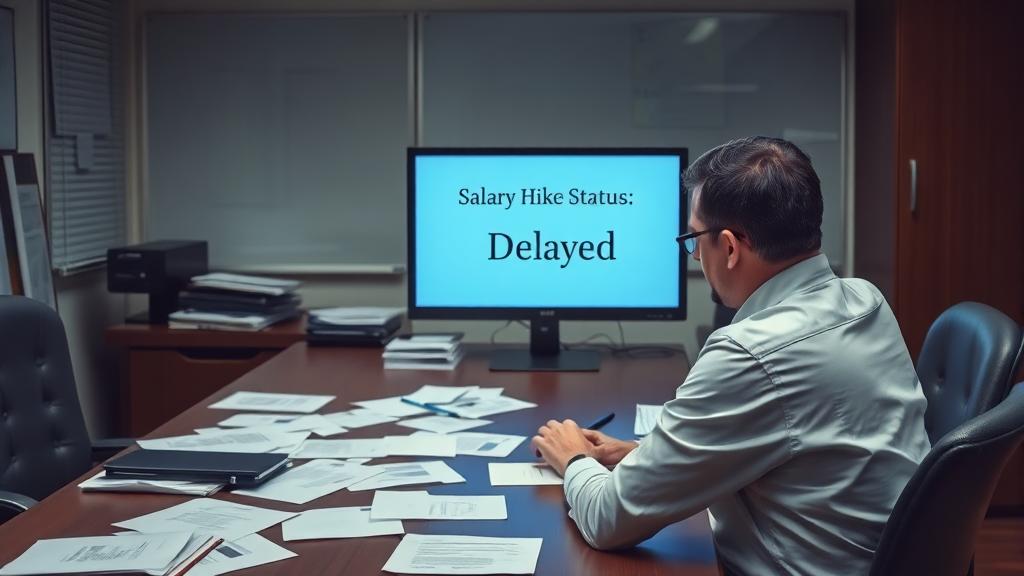
    Corporate employee staring at delayed salary hike message on office computer with frustration
    “When the screen says it all — hike delayed, mood deflated.”

    “We’re Hiring, But We’re Not Giving Hikes” – Make It Make Sense?

    What’s also weird is that hiring’s still on. Freshers are getting onboarded, some experienced roles are being filled too. So clearly, money is there.

    It’s not like TCS is broke. Far from it. Projects are running. Offices are open. There’s chai in the pantry.

    But when it comes to appraisals? Suddenly it’s all about “efficiency” and “cost optimization”.

    Honestly, sounds like corporate jugglery. Cut costs without calling it layoffs. Look “stable” to investors. Keep people in the loop, but not too happy. That’s what it feels like.

    What Employees Are Saying (Quietly)

    No one’s shouting, but the mood is low. On Slack, WhatsApp, Teams people are venting in DMs. Some were counting on the raise to plan EMIs, others were just hoping to catch up with inflation.

    Now it’s more like, “Let’s wait and see.”

    But the truth? This could easily become a trend. Delay this year, maybe trim it next year, and who knows what happens after that.

    But Is It Really Just About the US?

    Okay, sure, the global economy is shaky. Tariffs, elections, wars, AI killing budgets there’s a lot going on.

    But there’s also the inside story no one talks about openly. Companies want to show better profits. Margins were low last year. Cutting hikes makes the books look good. That’s not a conspiracy. That’s just how business works.

    You stop one hike, you save crores. Simple math.

    And if Infosys and Wipro are doing the same, well… there’s safety in numbers, right?

    What Can You Even Do?

    Honestly? Not much.

    But maybe don’t wait around hoping. Learn something new. Cloud, AI, DevOps whatever keeps you in demand.

    Start saving smart. Like seriously, don’t depend on appraisals to balance your budget. They’re not guaranteed anymore.

    And yeah, don’t blindly jump jobs either. Other companies might not be much better right now.

    Final Thought – Not The End, But Definitely a Signal

    This isn’t some tragic collapse. It’s not TCS shutting shop. But it is a warning.

    The market’s changed. The way companies work has changed. And hikes? They might not come as easily or as regularly as they used to.

    So yeah, hang in there. Upskill. Stay sharp. Keep your eyes open.

    Because if the world’s gonna throw curveballs, we better learn how to hit sixes too.

    This blog is just the start. Explore more with: TCS to delay salary hikes: We will decide within the …, says HR head