Blog

  • The Gaza Blockade: A Human Tragedy That’s Still Getting Worse

    The Gaza Blockade: A Human Tragedy That’s Still Getting Worse

    Gaza children starving for food

    Since March 2, 2025, Gaza has been completely sealed off. No food trucks, no medicine, no fuel — nothing is getting in. Over 2.3 million people are stuck with nowhere to go and no help coming their way. And even now, weeks later, the world still hasn’t done enough.

    This isn’t just another news headline. It’s a full-blown humanitarian disaster — one that’s only getting worse by the day.

    What’s Happening Inside Gaza?

    Gaza is facing a crisis like no other. The blockade has brought daily life to a full stop. Imagine every bakery in your city closing because there’s no flour or gas. That’s what’s happened in Gaza — all 25 bakeries that were supplying bread are now shut. There’s no fuel to power ovens and no wheat to make anything with.

    More than one million people haven’t received a food parcel in weeks. That’s not just hunger — that’s starvation. According to aid groups, supplies from the World Food Programme might run out in a matter of days if the blockade continues.

    Hospitals are barely functioning. They’ve got only 20% of the medical supplies they need. Clean water is almost gone — people are standing in long lines just to fill a bucket or plastic can. Some have no choice but to drink water that’s not even safe.

    In Rafah, the southernmost part of Gaza, buildings are gone. Rubble everywhere. Families are living in tents and makeshift shelters. Some kids are sleeping on cardboard sheets. It’s not just a food crisis — it’s a total collapse of basic human needs.

    And the violence hasn’t stopped either. Since October 2023, over 50,000 people have lost their lives. Just last week, Israeli airstrikes killed 23 more people in northern Gaza — 9 of them were children.

    Why Is This Blockade Happening?

    The conflict between Israel and Palestine isn’t new. But this blockade began after a ceasefire deal fell apart in early 2025. Israel claims the aid might reach Hamas, the armed group that controls Gaza. So, they’ve tightened the borders completely, saying it’s a matter of national security.

    But this kind of blanket blockade? It’s hurting ordinary people the most. Children, elderly people, pregnant women — they’re the ones paying the price. Imagine shutting down all the shops, pharmacies, petrol pumps, and hospitals in a city just to stop a few bad actors. That’s what’s happening here.

    The United Nations has raised alarm. Secretary-General Antonio Guterres called Gaza a “killing field.” He said people are stuck in what he called an “endless death loop.” The main route for supplies, the Rafah crossing, remains closed. And Israel still controls the other entry points.

    Some countries tried sending aid through airdrops, but many of those packages ended up in the sea or in areas people couldn’t even reach. There’s no proper system in place. Aid isn’t reaching the people who need it the most.

    What’s the Global Response?

    The world is watching, but not enough is being done. On social media, people are sharing images of starving kids and bombed-out buildings. Hashtags like #GazaCrisis and #EndTheBlockade have gone viral.

    International voices have started speaking up. France’s President Emmanuel Macron and the European Union are urging Israel to open the borders and allow aid. The UN, along with groups like UNICEF and the Red Cross, are pushing for a full ceasefire. But Israel continues to insist that Hamas is hijacking supplies — something many aid workers say doesn’t match what they’re seeing on the ground.

    Meanwhile, families in Gaza are still waiting. Waiting for food, medicine and the world to take action.

    Can Anything Be Done to Help?

    Yes, but time is running out.

    1. Pressure to open the crossings: More countries need to put pressure on Israel to reopen supply routes like the Rafah crossing. Every day matters.
    2. Push for a long-term ceasefire: Without a ceasefire, aid can’t be delivered safely. Rebuilding can’t even begin. Peace talks need to be serious this time.
    3. Improve how aid is delivered: Airdrops are failing. Aid groups need better planning and support to reach people inside Gaza. Whether it’s through safer routes or better technology, solutions must be found.
    4. Speak up and support: Even if you’re sitting thousands of kilometres away, your voice matters. Share the truth. Support trusted NGOs. Keep the issue alive.

    Final Thoughts

    This isn’t just about politics. It’s about people. Ordinary families who just want to eat, drink clean water, and live without fear. When we see children going to bed hungry in 2025 — something’s deeply wrong.

    In India, even in small villages, people come together when someone is suffering. That’s how we’ve always been — helping neighbours, feeding the hungry, standing up for the helpless.

    What’s happening in Gaza should shake us. It should move us to care. Whether it’s through donations, raising awareness, or just refusing to look away — we can all do something.

    Because when humanity fails in one place, it affects us all.

  • Managing Stress in Everyday Life – Like We Actually Live It

    Managing Stress in Everyday Life – Like We Actually Live It

    An Indian woman sitting peacefully on a terrace with plants, sipping chai in the evening sunlight, looking relaxed.

    Relief is possible — even if stress keeps showing up

    Let’s be real — stress is not some new-age thing that only people in suits or startups feel. Our parents, even their parents, have lived with it in different ways. Maybe not about office calls or social media, but they had their own tension — like harvest going wrong, kids falling sick, or dealing with guests for a full week without notice.

    I’ve seen it myself. During school exam time, I used to get proper stomach cramps — not because I didn’t study, but just out of nervousness. These days, I get that same feeling if I’m stuck in traffic in the middle of Bengaluru, battery at 1%, and no network to call anyone. Sound familiar?

    But over time, I’ve realised one thing — stress won’t disappear completely. It comes in new ways each year, like a regular bill. So better to learn how to manage it calmly, rather than wait for it to vanish.

    Why stress keeps visiting even without an invite

    Sometimes I feel stress is like that distant uncle who shows up at odd times. No warning, no reason — just appears. Be it summer’s heat messing with your sleep or Diwali work piling up suddenly, it finds a way.

    Few reasons it sticks around, in my view:

    • One deadline ends, another begins — work just multiplies
    • Money issues — some months are tight, no matter how hard you plan
    • Health stuff — even a small fever throws off your balance
    • Family matters — emotions, expectations, you name it
    • No alone-time — we’re always “on”, even at home

    Honestly, there’s no fixed season for stress. It doesn’t care if it’s summer or winter. That’s why we need year-round ways to deal with it — not just in January when resolutions are fresh.

    Stress relief that actually fits in real life

    You don’t need big budgets or fancy planners. Small habits work if you do them regularly. I’ve tried these myself, and they do help — in their own quiet way.

    1. Breathing like you’re pausing the world

    You don’t need yoga pants or a quiet beach. Just take a few slow breaths wherever you are.

    Try this: Breathe in for 4… hold for 4… breathe out slow for 6-7 seconds.
    Do this while waiting for your chai to boil or even while brushing your teeth.

    Somehow it resets your mood. Like you press a small ‘refresh’ button inside.

    2. Go for a walk — not for steps, just peace

    Evening walks — not the gym ones, but just casual strolls — really work. A short walk around your block, under the trees, watching kids play, even dogs barking… it changes your state of mind.

    Keep the phone aside. Just see the world around — leaves, sky, maybe aunty drying clothes on the line. It’s simple, but calming.

    3. Chai breaks that aren’t about chai only

    Ten minutes with your tea or filter coffee, just sitting and sipping slowly… it’s healing in a way.

    Especially near a window or on the steps of your house. No calls, no scrolling — just staring at nothing. That silence can be louder than any advice.

    4. Sleep — still the most ignored solution

    We all know it helps. Still, we scroll till 1 AM and then blame the weather for next day’s headache.

    Try keeping your phone across the room. Read a few pages of a book — not to finish, but just to relax your eyes and brain. And dinner by 8 PM actually helps more than you think.

    5. Talk — even if it’s just one sentence

    Sometimes you just want to say, “I’m tired of all this” — and not hear any solutions. That’s valid.

    I’ve messaged my friend just to say “I can’t handle today.” And that simple sentence feels like a load off. If nobody’s around, write it down. Notes app, diary, even scrap paper — just release it.

    6. Reduce screen-time in small patches

    Nobody’s asking you to live in a forest. But even small digital pauses can help.

    • No screen while eating
    • Mute family groups after 9 PM
    • One Sunday a month, use only physical books or newspapers

    Bit by bit, it helps your brain feel lighter. Like giving it small holidays.

    Old Indian ways that still calm the heart

    We don’t always need outside techniques. Many simple things from our own culture already work:

    • Tulsi plant at home — peaceful smell, good energy
    • Champi once a week — trust me, that oil massage works wonders
    • Morning bhajans or soft music — sets the day right
    • Eating while sitting on the floor — slows you down, grounds your mood

    We often ignore these because they seem too basic. But basic is what works.

    What I’ve learned, in short

    Managing stress doesn’t mean fighting it. It means recognising it and choosing small ways to ease it.

    Some days, I sing old songs while cooking. Other days, I just stare at the ceiling for 15 minutes with no guilt. That’s all.

    You don’t need permission to pause. Just take small steps today. Because if stress is your daily guest, then peace must also become your habit.

    Enjoyed this read? Continue the journey with The Ultimate Guide to Clean Eating on a Budget

  • What’s Going On Between the Supreme Court and the Waqf Act?

    What’s Going On Between the Supreme Court and the Waqf Act?

    Waqf Board

    If you’ve been catching bits of news lately or just overheard people chatting near a pan shop, chances are you’ve heard folks talking about this new Waqf Amendment Act of 2025. It’s not some random law—this one’s got communities across the country worried, debating, and honestly, pretty fired up.

    Now, I’m not a legal expert or anything, but growing up in a city like Kanpur, I’ve seen how Waqf lands are part of everyday life. That old mosque near the market, the graveyard we pass on the way to school, even the madarsa with the dusty courtyard—these aren’t just buildings. They’re part of people’s lives. So when Parliament passed a new law in April changing how these properties are managed, it shook things up.

    The Supreme Court stepped in and held back-to-back hearings on April 16 and 17. And suddenly, this whole thing feels much bigger than just rules and amendments.

    So, Why Did the Supreme Court Step In?

    Well, the new Waqf Act brought some bold changes. It says that even non-Muslims can now be part of the Waqf Boards. Also, the old “Waqf by user” idea—where a place is treated as Waqf just because it’s been used that way for decades—is now out. On top of that, District Collectors have been given the power to decide disputes about whether a piece of land is Waqf or not.

    If it sounds technical, trust me, the real impact is much deeper. We’re talking about over 8.7 lakh Waqf properties, together worth more than ₹1.2 lakh crore. That’s not small change. The Act sparked protests, trending hashtags like #RejectWaqfBill, and over 100 people went straight to the Supreme Court asking for help. Big names like Asaduddin Owaisi and Mohammad Jawed called it unfair to the Muslim community, while the government insists it’s all about stopping corruption and mismanagement.

    So, the Supreme Court—led by Chief Justice Sanjiv Khanna—stepped in like a neutral umpire in a very heated match.

    What Actually Happened in the Hearings?

    The Court didn’t cancel the Act, at least not yet. But they did look at it closely and asked some very pointed questions.

    Here’s what went down:

    • The judges considered freezing a few parts of the Act for now, like the bit about non-Muslims joining the Waqf Boards. But the government said, “Wait, let’s talk it through first.” So, the Court gave them a week to reply. Petitioners get five days after that to respond.
    • The next hearing is scheduled for May 5, and till then, the government has promised not to take any bold steps—like changing the Waqf Board structure or shifting property rights.
    • The Chief Justice also expressed concern about the violence that broke out in places like Murshidabad. He called it “disturbing,” and told everyone to calm down while the Court works through things.

    So for now, it’s like pressing the pause button. Not stop, just wait and watch.

    The Big Questions Nobody’s Ignoring Anymore

    Let me break down the main questions the judges asked—not in legal terms, but like we’re talking over an evening walk:

    1. What Happens to Old Waqf Places Without Documents?

    There are places—like small mosques in old parts of town—that have been Waqf for ages. But they don’t have paperwork. Back in the 1700s or 1800s, who even had sale deeds? The Court asked, “If we remove the ‘Waqf by user’ idea, will these places suddenly stop being Waqf?” That could mean a lot of community spaces might lose their status overnight.

    2. Non-Muslims on Waqf Boards – Fair or Not?

    The Court also raised eyebrows at the idea of non-Muslims being added to Waqf Boards. The Chief Justice asked a simple but sharp question—would anyone be okay with Muslims being added to boards managing Hindu temples? That hit a nerve. In many places, that idea alone could cause unrest. The government said non-Muslims would handle admin roles only, not religious matters—but the judges weren’t totally convinced.

    3. Can District Collectors Be Trusted Here?

    The Act says that District Collectors will decide if a land is Waqf or not. But the judges wondered—what if the Collector is under pressure from the government? What if there’s bias? Once a Collector gives a verdict, the land stops being Waqf. Is that fair? Can people even challenge it in court? All these questions came up.

    4. What About Ancient Waqfs Without Deeds?

    Again, the Court circled back to the paperwork issue. Many old dargahs and mosques were built long before British laws came in. There was no official deed system. The judges asked—are we now saying those places don’t count just because they don’t have a file with a stamp?

    5. And the Violence?

    Lastly, the Court didn’t stay quiet about the protests turning violent. In Murshidabad, things got out of hand. The Chief Justice firmly said such violence is unacceptable, especially while the matter is being heard. Everyone needs to cool down.

    Why All This Matters

    This isn’t just courtroom drama. It affects real people. I remember playing cricket outside a mosque near my school—today, that mosque could be at risk of losing its Waqf status because of paperwork. These places aren’t just walls and domes. They carry memories, traditions, and trust.

    The Court’s questions show they’re trying to balance both sides. They’re asking—are we being fair to the past, while also making rules for the future?

    My Take on It

    Personally, I think it’s a good thing that the Supreme Court stepped in. In places like Kanpur, I’ve seen Waqf properties slowly get taken over by shops or builders. Some rules need fixing, sure. Transparency is important. But we can’t just brush off centuries of history.

    Maybe the answer lies somewhere in between. Keep the positive steps, like better records and maybe even allowing women to join boards. But don’t scrap traditions that held things together for years. Also, if we say one religious body must include outsiders, then every religious trust should follow the same rule. No picking and choosing.

    Let’s see what happens on May 5. But at least now, the matter is being questioned—and that’s always better than silent acceptance.

    Releated to this articale:
    Enjoyed this read? Continue the journey with: Waqf Bill 2025: What’s Really Going On? Why So Much Noise?
    If this resonated with you, here’s something similar you might like: Disturbed With Violence During Protests Against Waqf Amendment Act : Supreme Court

  • How to Set and Achieve Realistic Fitness Goals

    How to Set and Achieve Realistic Fitness Goals

    Indian man in his 30s tying shoelaces before morning jog in a peaceful park with water bottle nearby

    Why Most Fitness Goals Don’t Stick Around

    Let’s be real, we’ve all done this. New Year rolls in, and suddenly we’re full of motivation. “This year, I’m hitting the gym daily!” we declare. But by the second or third week, that gym bag hasn’t moved, and those running shoes? They’ve now become fancy chappals for home.

    Truth is, the problem usually isn’t your willpower. It’s how we go about setting our goals. We dream too big, too soon. And then get tired halfway.

    The real trick? Setting fitness goals that feel real, ones that fit into your actual life, without making it a punishment.

    What Does a “Realistic” Fitness Goal Look Like?

    Realistic means something you can do even on a bad day. It’s not about being lazy; it’s about being smart.

    A goal that pushes you, sure, but doesn’t break you.

    Just to give you an idea:

    ✅ “I’ll take a 30-minute walk four times a week.” That’s realistic.

    ❌ “I’ll lose 10 kilos in one month.” That’s like trying to grow mangoes in winter. Doesn’t work.

    A Simple Way to Set Fitness Goals That Actually Work

    Forget those fancy fitness plans that make your head spin. Here’s a chill, 5-step way to start your journey one that won’t leave you tired or guilty.

    1. First, Know Why You Want to Get Fit

    Don’t just say, “I want to get fit.” Ask yourself why.

    Is it to feel less tired? To keep sugar levels in check? Or maybe just climb stairs without huffing?

    Whatever the reason, write it down somewhere. Your fridge, mirror, even your phone wallpaper. It’ll remind you why you started, especially on the tough days.

    2. Start Small, Think Long-Term

    You don’t have to lift weights or run 10k from Day 1. Start with tiny steps.

    A few ideas?

    • Cycle to market once a week
    • Skip the lift, take the stairs
    • Do 10 minutes of stretching in the morning

    It doesn’t sound grand, but it works. Like they say slow and steady actually wins here.

    3. Make Goals That Are SMART (And Not Just Fancy Talk)

    Yes, you might’ve heard about SMART goals. Sounds corporate, but it’s helpful.

    Break it down like this:

    • Specific: “Walk 5,000 steps” is better than “Exercise more.”
    • Measurable: So you can see your progress
    • Achievable: Something you won’t drop after 3 days
    • Relevant: It should actually help your health, not someone else’s
    • Time-bound: Add a small timeline like “next 2 weeks.”

    You don’t need a business degree to do this. Just a pen and paper will do.

    4. Track, But Don’t Obsess

    Some people go crazy with tracking step counters, calorie apps, fitness journals…

    All good. But don’t let it take over your life.

    Check in once a week. Are you walking more? Sleeping better? Feeling stronger? That’s enough.

    Use a simple app or even a diary. Whatever suits you.

    5. Celebrate the Small Wins, Boss

    You managed to walk daily for a whole week? That deserves a clap.

    Lost a kilo? Nice buy yourself a new water bottle or headphones.

    Reward the effort, not just the outcome. Because this journey is about showing up, even when you don’t feel like it.

    Some Mistakes People Often Make (And Then Quit)

    You might be doing your best, but a few small things can spoil the whole game.

    ❌ Comparing Yourself With Others

    Your body, your rules. That fitness influencer on Instagram? They’ve got a different life. Focus on your path.

    ❌ Only Thinking About Weight Loss

    Being fit isn’t only about weight. It’s about strength, energy, and peace of mind too.

    So set goals like “improve flexibility” or “sleep better,” not” just “lose 5 kg.”

    ❌ Trying to Do Everything At Once

    Today you bought dumbbells. Tomorrow you’re on a keto diet. Day after injuries.

    That’s not fitness. That’s panic. Start slow. Build a base.

    How to Stay On Track When Motivation Drops (And It Will)

    Let’s not pretend some days you won’t feel like doing anything. That’s normal.

    Here’s what helps:

    • Work out with a friend. A bit of gossip + exercise = win-win.
    • Try something fun Zumba, dance, trekking
    • Watch free workout videos online
    • Keep a mood journal, not just a fitness one
    • Focus on how you feel, not just how you look

    Final Thoughts: Do It Your Way

    Look, this is your body, your time, and your energy. So, the fitness journey should also be yours.

    No need to follow trendy diets or 6-pack workout plans. Just do what fits your lifestyle.

    Even a 10-minute evening walk is better than sitting all day.

    So don’t wait for Monday, or New Year, or that “perfect” moment.

    Start now. Start today. For yourself.

    If you found this blog interesting, you might enjoy this one too: Workout Routines for Men: The Ultimate Guide

    This blog pairs perfectly with: How to Build a Healthy Routine for Your Family

  • Are EVs Really Worth It in India? Real-Life Look at Cost vs Savings

    Are EVs Really Worth It in India? Real-Life Look at Cost vs Savings

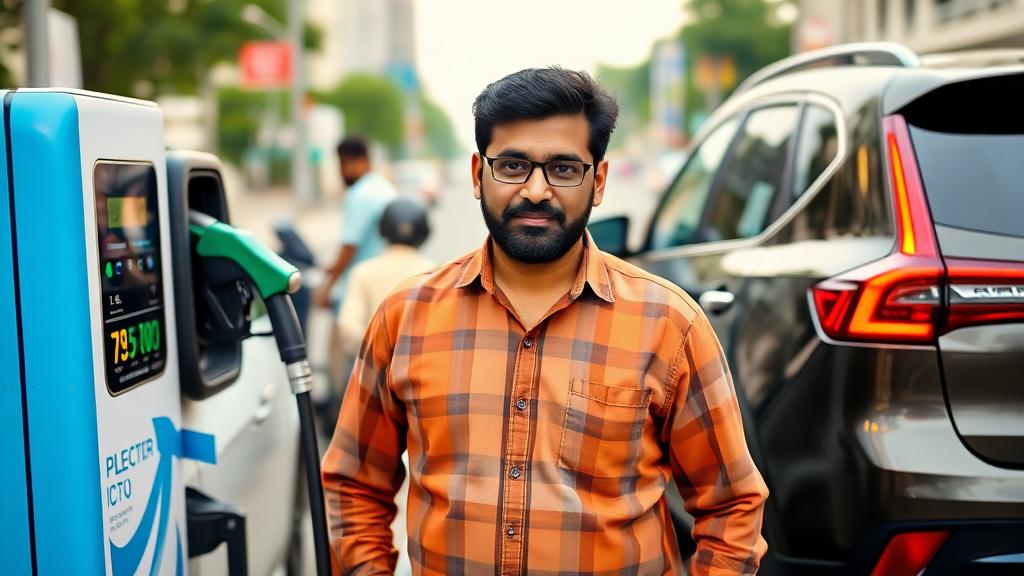
    An Indian man comparing fuel prices with electric charging, with a petrol car and an EV behind him, city background

    These days, you can’t scroll through the news or even go to a showroom without hearing about EVs. Everyone’s talking “EVs is the future”, “no more petrol headache”, and so on. But let’s be honest — when it comes to buying one, it’s not just about the hype. The real question most of us have is: Are EVs actually worth it in India? Or is it just another fancy trend that’ll pass?

    So let’s break it down in simple words, with real numbers and see if putting your hard-earned money on an electric vehicle makes sense in 2025.

    First Up — The Price Tag: Oof or Okay?

    Let’s face it, most EVs still come with a bit of a shock when you first look at the price. Take the Tata Nexon EV starts around ₹14.7 lakh. Meanwhile, the petrol version of Hyundai Venue? You can get that under ₹9 lakh.

    So yeah, you’re staring at a ₹3 to ₹5 lakh gap. Not small at all. But hang on don’t give up yet. There’s more to this story.

    What About Subsidies & Benefits?

    See, the government is really pushing EVs right now. Under schemes like FAME II and some state policies, you can get:

    • Direct discount on EVs (sometimes more than ₹1.5 lakh)
    • Reduced registration and road tax
    • Tax benefits on loans (Section 80EEB gives up to ₹1.5 lakh deduction on interest)

    So, when you add all that up, the price difference starts shrinking. It’s not cheap, but it becomes doable — especially if you’re planning long-term.

    Petrol vs Electricity: The Daily Savings Game

    Now this one’s a big factor. Fuel. You already know how painful petrol prices are. Let’s do a quick math:

    If you drive 15,000 km in a year:

    Vehicle TypeAvg. Cost/kmAnnual Fuel CostCost in 5 Years
    Petrol Car₹7/km₹1,05,000₹5,25,000
    EV₹1.2/km₹18,000₹90,000

    So that’s ₹4.3 lakh just saved on fuel in 5 years. That’s no joke.

    Maintenance: The Quiet Money Saver Nobody Talks About

    Petrol or diesel cars need regular servicing engine oil, filters, clutch, gearbox, exhaust, and whatnot. EVs? Most of that stuff doesn’t even exist.

    On average, EV owners save around ₹25,000 to ₹40,000 a year on maintenance. So in 5 years, that’s another ₹1.25 to ₹2 lakh that stays in your wallet. Basically, fewer headaches and fewer trips to the mechanic.

    But What About Charging?

    Let’s talk about the thing everyone worries about where will I charge this thing?

    Good news 2025 India isn’t the same as even 3 years ago. Charging stations are now in malls, offices, apartments even some kirana store parking lots! Apps like Statiq and Ather Grid make it easy to find chargers near you.

    If you’re staying in a city or big town, daily charging won’t be a problem. Even home charging setups are getting common. Sure, if you’re traveling to very remote areas, it can be tricky but for most daily commutes, you’re covered.

    Battery Life & Resale: Still a Gamble?

    Not really. Most new EVs come with 8-year battery warranties. And battery tech has improved degradation is just 1.5% – 2% per year now. That means even after 10 years, the car’s range is still quite usable.

    And resale? It’s not like before brands like Tata, MG, and Hyundai are holding decent value now. As EVs go mainstream, more buyers are trusting second-hand models too.

    So, Who Should Go for an EV in India?

    Honestly, if you:

    • Drive around 30–60 km daily (especially in city traffic)
    • Have a spot to charge at home or work
    • Plan to keep the car at least 5 years
    • Care about running cost more than top speed

    Then yes, it’s a good bet.

    But if:

    • You live in a remote area with poor charging access
    • You barely drive in a year (under 3,000 km)
    • Or you keep switching cars every 2–3 years

    Then maybe wait a bit or go hybrid.

    Final Thoughts: Are EVs Worth It in 2025 India?

    If you look beyond just the showroom price yes, 100%. The money you save on fuel and maintenance adds up fast. Plus, the driving experience is smooth, quiet, and kinda fun, honestly. And if helping the environment is your thing that’s a bonus.
    Are EVs Really Worth It in India? check here

    For many Indian families today, buying an EV isn’t just a “green” choice it’s a smart one.

  • Master Time Management with These Proven Techniques

    Master Time Management with These Proven Techniques

    An Indian college student or young professional working with a planner and laptop, chai cup nearby, sunlight through window

    Why Time Management Feels Like Such a Struggle in Real Life

    Let me be honest here everybody talks about Time Management like it’s some simple app trick or morning routine hack. But in real life? It’s messy.

    Most of my mornings used to begin with strong intentions. I’d sit with chai, open my planner, write down a dozen things… and by lunchtime, I’d barely tick off two. Something or the other always popped up—calls, noise from the street, random distractions, even my own mood swings.

    After a lot of trial and error, I realised something important—managing time isn’t about stuffing your day like a tiffin box. It’s about clearing space for the things that matter the most.

    Start Small: Just Pick Your Top 3 Tasks

    Here’s something that changed the game for me. Instead of writing 10-15 tasks in the morning, I now pick just three things that must get done that day.

    This “Big 3” idea works whether you’re a student or working full-time.

    For example:

    • A student might focus on:
      • Completing revision for Physics
      • Submitting a class assignment
      • Preparing notes for tomorrow
    • A working person might go with:
      • Team meeting prep
      • Finishing a budget review
      • Sending updates to manager

    Once these are done, anything extra is just bonus. It feels more doable and honestly, less stressful.

    Break Down Anything That Feels Too Big

    Some days, you just don’t start that important thing because it looks too huge. Like making a PowerPoint deck, studying a full chapter, or writing a report.

    So here’s a trick I use—split the work into bite-sized steps.

    Instead of saying “write blog,” I break it like this:

    • Pick a topic
    • Read 2-3 sources
    • Draft intro and outline
    • Write main part
    • Edit

    This way, I feel like I’m moving, even if it’s slowly. And every small step gives me that small win feeling.

    Shut Out Distractions (As Much As Possible)

    Let’s face it—in India, silence is rare. If it’s not traffic or someone yelling “karelaaaa,” then it’s a relative calling just to chat during work hours.

    Still, I found some desi hacks to stay focused:

    • Put phone on airplane mode when doing deep work
    • Use headphones (even with no music—it blocks outside sounds)
    • Set 25-min timers (I call it “focus sprint,” not Pomodoro)
    • Keep a sticky note on my desk with the current task written on it. If I try to open YouTube or Insta, that note stares at me.

    This simple system saved my mornings from being wasted.

    Say “No” Without Feeling Bad About It

    Now, this one’s tough. Most of us feel guilty saying no—especially to family, seniors, or friends. But slowly, I’ve learnt that time is not infinite. And if I don’t protect it, someone else will take it.

    Like when I was leading a college project, I used to end up doing everyone’s part. Now, I just say, “I’ll do this much—you handle that.”

    Even for favours, I’ve learnt to say: “Can we do this tomorrow? I’m stuck with work today.”

    Saying no doesn’t make you rude. It keeps your sanity intact.

    Be Flexible, But Also Recharge

    Not every day will go as planned. Sometimes, there’s a wedding next door with loud DJ, or there’s a power cut in the middle of a Zoom call.

    On such days, I try to adjust. But I don’t ignore rest anymore.

    A 20-min nap, a 10-min walk, proper food, or even stretching a bit during breaks—it helps your brain function better. Earlier, I thought working late meant I was being productive. But I was just tired all the time. Now, I stop when I can feel I’ve done enough.

    What Actually Worked for Me (And Might for You Too)

    Here’s what’s worked for me:

    • Start each day with 3 key tasks only
    • Break bigger tasks into smaller chunks
    • Use short “focus sprint” timers
    • Keep away from distractions (even your own thoughts)
    • Say no when it matters
    • Rest without guilt

    Final Thoughts – Just Take One Step at a Time

    Time management isn’t something you master overnight. It’s like fixing a leaking tap—you patch one spot, then find another. But slowly, you get better.

    I still mess up. Some days I waste hours. But the difference is—I don’t feel lost anymore. I know how to reset.

    And like I always say, tomorrow is always a fresh start. Just don’t forget your chai and that tiny list in the morning.

    🔗 Related Reads You’ll Love

    Enjoyed this read? Continue the journey with: 9 Proven Time Management Techniques and Tools | USAHS

    If you found this blog interesting, you might enjoy this one too: Develop the Logic Yourself: When AI Pushes Back