Category: Technology

  • Govt Launches ₹10,000 Cr Fund for AI and New-Age Tech Startups

    Govt Launches ₹10,000 Cr Fund for AI and New-Age Tech Startups

    Ai


    In early 2025, the Indian government unveiled a new ₹10,000 crore fund aimed at energizing the deep-tech startup ecosystem. Finance Minister Nirmala Sitharaman announced in the Budget (Feb 1, 2025) that a second tranche of the Startup India Fund-of-Funds (FoF) would be created with a fresh ₹10,000 Cr corpus. This scheme – to be managed by the Small Industries Development Bank of India (SIDBI) – is explicitly targeted at “new-age tech” ventures. Commerce and Industry officials say a major chunk of the fund will be dedicated to sectors like artificial intelligence (AI), deep-tech, and advanced manufacturing (“machine building”). In short, the government is mobilizing patient capital for high-capital, high-innovation startups that can drive India’s digital economy and self-reliance goals.

    Focus Areas: AI, Deep Tech and More

    The fund’s focus is on cutting-edge technologies requiring long gestation. Union Commerce Minister Piyush Goyal has listed AI and related areas among the top targets: “cutting-edge technologies like AI, robotics, quantum computing, machine learning, precision manufacturing and biotech” will be fostered by the new fund. In practice, this means startups in sectors such as:

    AI & Machine Learning: Core beneficiaries, including startups building AI platforms, analytics, and data-driven solutions​.

    Robotics & Automation: Companies innovating in industrial robots, drones, or automation systems​.

    Quantum Computing: Emerging ventures working on quantum hardware or software (cited as a priority alongside AI).

    Precision/Advanced Manufacturing: Firms in next-gen manufacturing and “machine building” (heavy-tech manufacturing) – areas explicitly mentioned by officials​

    Semiconductors & Hardware: Design and fabrication of chips, sensors, telecom hardware, etc. Analysts note semiconductors are strategic – the fund is expected to support startups in chip design and related R&D.

    Biotech & Life Sciences: Deep-tech startups in biotech, healthcare devices or agritech, also listed among “high-tech” domains​.

    Other Deep-Tech Fields: This catch-all includes areas like advanced materials, aerospace, and similar “hard-tech” sectors. The Budget even hints at a separate Deep Tech FoF to back such ventures​.

    In summary, the FoF is a targeted funding vehicle. Rather than a general startup fund, it will allocate a large portion to AI, deep-tech and new-age domains.

    Purpose and Strategic Goals

    The strategic purpose of the fund is to catalyze capital into segments that struggle to attract conventional funding. Early-stage deep-tech ventures often require patient capital and have long R&D cycles. By backing them via professional AIFs, the government aims to bridge this financing gap. As DPIIT Secretary Amardeep Bhatia explains, this scheme will cover “the large spectrum of startups which need longer duration of funds, … beyond the equity infusion”​. In effect, the FoF is intended to enable high-tech startups to scale up prototypes, invest in research, and accelerate go-to-market strategies – roles where traditional VCs or bank loans may fall short​.

    Implications for the Indian Startup Ecosystem

    The new fund is expected to have far-reaching effects on India’s tech startup landscape. By channeling government capital into AIFs, it should unlock more private investment as well. Deep-tech investors note that India’s startups in AI, quantum or hardware often face a series-B funding drought – they must go abroad for growth capital. For example, Chirag Gupta of 8X Ventures observes that “Indian deeptech startups currently look overseas for Series B and above funding, given the small size of domestic deeptech funds,” and believes the FoF could help fill this gap​timesofindia.indiatimes.com. With more domestic funds available, homegrown startups may scale faster, create more Indian unicorns, and reduce reliance on foreign VCs.

    On the ground, these funds will provide seed and growth funding for chosen startups. Officials have instructed SIDBI to reserve a significant portion of the new FoF for very early-stage ventures​​. This could mean more seed grants or accelerator funding, especially for promising teams

    Who Can Apply – Eligibility and Process

    It’s important to note that the Fund of Funds does not invest directly in startups. Instead, as under the existing Startup India FoF framework, it provides capital to SEBI-registered Alternative Investment Funds (AIFs) (often called “daughter funds”), which in turn invest in startups​. Thus, the immediate applicants to this scheme are venture fund managers, not entrepreneurs themselves.

    According to SIDBI guidelines, eligible applicants include:

    SEBI-registered AIFs (Category I or II): These must have a track record and a fund corpus below ₹1,000 Cr. They should be focused on startup investments and must commit to investing at least twice the FoF contribution in qualifying startups​.

    Fund Managers with clean records: All key fund personnel must meet eligibility requirements (e.g. no disqualifications under Indian company law)​.

    Those AIFs can apply online via SIDBI’s Fund of Funds portal​. (SIDBI VCF’s website provides full scheme guidelines and application forms.) Once approved, the government co-invests alongside the fund into startups through equity or equity-linked instruments​​.

    For further details, interested parties can refer to official sources. SIDBI maintains an FFS page with eligibility rules and an online application link​​. The Startup India website and DPIIT communications will also likely post updates on this new fund. (For example, SIDBI’s portal at vcfapplication.sidbi.in is where AIFs submit FoF applications​.)

    Alignment with India’s Digital Economy and Global Ambitions

    This fund is a clear signal that the government sees deep-tech as central to India’s digital economy strategy. By investing in AI, semiconductors, quantum etc., India aims to capture more value in high-tech supply chains rather than remain a user. Prime Minister Modi has often emphasized “digital India” and “Atmanirbhar Bharat” (self-reliant nation) – this FoF directly ties into both.

    International Context: How India’s Fund Compares

    India’s ₹10,000 Cr (~US$1.2 billion) FoF is part of a global trend of governments investing in next-gen tech. For perspective, in 2025 the European Commission launched calls totalling €140 million (about ₹1,300 Cr) for AI, advanced semiconductor and quantum projects​. Notably, the EU earmarked €55M for AI and semiconductor initiatives and €27M for training in quantum and AI​.

    Another example: countries like the UK, Japan, and South Korea have also launched multibillion-dollar plans for AI and deep tech research. Singapore and Canada similarly support AI innovation through grants and co-investment funds. Against this backdrop, India’s ₹10,000 Cr fund underscores its intent to join the ranks of major tech powers. It is part of a broader narrative – governments worldwide see control of AI, quantum and advanced manufacturing as a national priority and are using public funds to shape the outcome. India’s fund, therefore, brings its ecosystem in line with that global momentum.

    Conclusion

    The ₹10,000 Crore startup fund announced in 2025 is a clear commitment by India’s government to bolster its deep-tech and AI ecosystem. By focusing on advanced R&D sectors and providing long-term capital, the initiative aims to transform India’s startup landscape and strengthen its role in the global digital economy. Entrepreneurs and investors alike should watch this space closely: the new funds, coupled with other policy reforms, promise a more robust future for AI and high-tech innovation in India.


    Mehul Choksi: From Jewellery Tycoon to Most-Wanted Fugitive

  • 7 Best Free AI Tools to Cut Costs and Save You Time

    7 Best Free AI Tools to Cut Costs and Save You Time

    Free Ai tools

    Introduction to Handy AI Assistants

    In this rapidly moving world, everyone needs an advantage that costs nothing. From a town’s shopkeepers to city freelance writers, accessing AI seems inaccessible—unless you have an idea where to turn. In this article, we look at seven useful, no-cost best free AI tools made to reduce your workload, stem costs, and increase output without draining your bank account.

    Top 7 Free AI Tools

    1. ChatGPT Free Version

    ChatGPT’s free version is still a default for rapid idea generation and outlining. Whether you’re writing an ad for your roadside tea stall or writing emails to clients, a quick prompt can provide helpful outlines. For instance, I requested a catchy slogan for homemade pickles and received three tidy options in seconds—saving me almost thirty minutes of brainstorming.

    2. Grammarly Basic

    Writing sharp copy is important, but grammar errors creep in when you hurry. Grammarly Basic detects frequent typos and recommends more precise wording directly in your browser. I once submitted a proposal to an NGO near me and caught two ambiguous sentences just as the deadline was about to pass, thanks to this software. It’s a convenient way to make your writing professional even when you don’t have much time.

    3. Canva Free Plan

    Design concerns? Canva’s free plan provides hundreds of templates for presentation slides, social posts, and flyers. A local bakery I’m familiar with redesigned its menu in less than an hour by inserting images and tweaking text fields. By doing this, they avoided design expenses and deployed new graphics by evening without having to employ a designer.

    4. Otter.ai Basic

    Interviews and meetings create hours of audio you can’t avoid listening to. Otter.ai’s free version auto-transcribes as much as six hours a month, converting voice notes to searchable text. I recorded a meeting of local farmers and subsequently searched for keywords to locate where subsidies were discussed, instead of having to listen to the whole hour—saving a minimum of an hour of listening time.

    5. Notion AI Free Trial

    Planning and organizing tasks, notes, and tasks is easier when you have Notion’s AI capabilities in the trial. From summarizing pages to providing task suggestions, it aids in organizing projects more quickly. A small volunteer team at an NGO utilized it to make a list of action items from a field visit, converting random notes into neat to-dos in minutes.

    6. Trello AI (Butler) Free Automation

    Trello’s native Butler automation allows you to create basic rules—such as moving cards as due dates are near or automatically creating checklists. A coaching center I am familiar with implemented a rule to mark overdue tasks as overdue, so educators are notified without tracking manually. This automation eliminated routine work and opened up time for coaching instead.

    7. Zapier Free Plan

    Zapier’s free plan accommodates five single-step zaps, which is sufficient to connect apps you use regularly. For example, I created a zap that automatically copies email attachments to a shared Google Drive folder. In this way, I don’t download and upload files manually, saving minutes each day and storage charges on other platforms.

    Why These Are the best free AI tools and How They Fit In

    Out of dozens of options, these seven stand out for usability and real-world impact. Furthermore, each tool fits into a specific daily workflow—writing, designing, organizing or automating—so they become functional companions instead of flashy tests.

    When looking for the best free AI tools, you’ll find that the tools often help with writing, and the tools can create amazing graphics. Using the best free AI tools in your daily routine shows how the AI boost productivity. At last, This best free AI tools become an indispensable resource.

    Employing AI Locally: Real-Life Illustrations

    • A lunch shack on the roadside utilized ChatGPT to create a new menu description to draw more traffic.
    • A local tutoring group enhanced lesson plans with abridged versions of Otter.ai transcripts.
    • A domestic baker reduced design expenses by employing Canva templates for birthday cake flyers.
    • A volunteer team from an NGO simplified reporting through Notion AI summaries and Trello automations.

    Takeaway and Conclusion

    From rapid writing tests to automated workflows, these products demonstrate that sophisticated AI does not have to be costly. By integrating them into everyday habits, you regain time and money for what is truly important—improving customers, developing talent, and experiencing a better work-life balance. For me personally, implementing only two of these tools freed up an additional hour a day, and that subtle adjustment has created a significant impact.

    Related artical:
    AI in Agriculture: How Indian Farms Are Slowly Turning Smarter
    Are We Ready for AI’s Energy Crisis? Data Centers Set to Double Power Use by 2030

  • Tata Altroz Facelift 2025: New Features, Price & Design Upgrade

    Tata Altroz Facelift 2025: New Features, Price & Design Upgrade

    Tata Altroz Facelift 2025 front view with LED DRLs and new grille design

    A Quick Glimpse at What’s Coming

    Tata Motors is getting ready to launch the updated Altroz on May 9, 2025, and the price announcement will follow on May 22. If you’re someone who’s been eyeing a premium hatchback that blends looks, safety, and new-age features, this one’s worth checking. The new Altroz facelift is expected to start around ₹7 lakh, and honestly, it feels like Tata’s trying to raise the game without making the price shoot up too much.

    Now let’s dive in and see what’s changed, what’s new, and if it’s really worth the buzz.

    What’s New on the Outside?

    One look at the 2025 Altroz facelift, and you can tell it’s been to the stylist’s room.

    The front now looks sharper, thanks to all-LED headlamps with those smart-looking eyebrow-style DRLs. That old piano-black grille? Gone. In its place, you now get a 3D-style grille that actually gives the car a cleaner, more premium face.

    Another neat touch is the flush door handles something we saw earlier on the Tata Curvv. These aren’t just for style. They help with aerodynamics too. The sides now wear new alloy wheels that fit well with the overall design, and the rear lighting has been cleaned up with connected LED tail lamps. Slimmer and sleeker they look way better than before.

    To put it simply, the Altroz looks more modern now. Not flashy, but smart.

    Step Inside – Big Changes Here

    When you open the door and sit inside, you’ll feel it’s not just a small upgrade it’s a pretty decent refresh.

    There’s a 10.25-inch touchscreen infotainment system sitting in the middle, and it supports both Android Auto and Apple CarPlay wirelessly. For those who do long drives or spend time in traffic, this one helps a lot especially with music and navigation.

    Then comes the fully digital instrument cluster, which also measures 10.25 inches. Clear display, crisp info feels like something from a segment above. The steering wheel gets a glow-up too, with a lit-up Tata logo in the center.

    Another big win for Indian summers ventilated front seats. Honestly, in cities like Delhi or Nagpur, this is a blessing. On top of that, you get a powered driver’s seat, ambient lighting, and even an auto-dimming rear-view mirror. All these small touches give the Altroz a more lounge-like cabin feel.

    Safety & Features – Tata Is Not Holding Back

    Tata is clearly pushing safety, and that’s a big deal for buyers here.

    The new Altroz comes with six airbags as standard, which is rare in this price range. Apart from that, there’s talk of ADAS (Advanced Driver Assistance System) making its way in — features like lane assist, auto emergency braking, etc. If that’s true, it’s going to shake up the hatchback segment.

    There’s also an upgraded telematics system, so you can expect some level of smartphone integration maybe control lights or AC using your phone. Not fully confirmed, but possible.

    And yes, there’s a buzz about a dual-pane sunroof. While that’s still not official, even the idea is exciting, especially for long drives.

    Under the Hood – No Surprises, But That’s Okay

    The engine options stay the same and that’s not a bad thing.

    You’ve still got:

    • 1.2L petrol for daily users
    • 1.5L diesel for mileage-focused buyers
    • 1.2L turbo petrol for those who want that sporty punch (Racer variant)

    Transmission-wise, there’s 5-speed manual, 6-speed manual for turbo, and AMT for regular petrol. A 6-speed DCT (dual-clutch) might show up later, which would make city drives smoother.

    So whether you’re navigating tight lanes in Jaipur or cruising through NH44, you’ll find something that fits.

    Price, Variants & Competition

    The facelifted Altroz is expected to cost between ₹7.00 and ₹11.50 lakh (ex-showroom). It’ll go up against Hyundai i20, Maruti Baleno, and Toyota Glanza all strong names.

    Altroz still offers that tough build and now comes loaded with features that many others skip. It’ll have multiple variants from XE to XZ Plus S Lux and will be available in shades like White, Red, and Grey, some specific to variants.

    AspectDetails
    Expected Price Range₹7.00 – ₹11.50 Lakh (ex-showroom)
    Launch DatePublic Debut – May 9, 2025
    Price Reveal – May 22, 2025
    Available ColorsWhite, Red, Grey (variant-specific options)
    VariantsMultiple, from XE to XZ Plus S Lux
    CompetitorsHyundai i20, Maruti Suzuki Baleno, Toyota Glanza

    My Take on the 2025 Altroz Facelift

    To me, this upgrade is not just about fancy lights or bigger screens. It feels like Tata has listened to what users wanted more comfort, better tech, and solid safety.

    Sure, it’s still using the same engine, but the real charm lies in the overall experience. For people who want a hatchback that doesn’t feel “entry-level”, this facelifted Altroz is a solid pick. Especially if safety, style, and smart features are on your checklist.

    If you ask me, take a test drive when it hits showrooms. That’s the only way to know if it suits your kind of driving.

    🔗 You Might Also Like Reading These:

    👉 Maruti’s Big Electric Move!Explore the new e-VITARA electric SUV and see what it brings to the table.
    👉 Thinking of Switching to EVs?We break down if EVs really make sense in India with actual cost vs savings.

    🚗 Confused Between Hatchbacks?
    Check out our side-by-side take on Hyundai i20 vs Tata Altrozfeatures, comfort, and value compared clearly.

  • Galaxy A Series Gets Gemini AI Boost on a Budget

    Galaxy A Series Gets Gemini AI Boost on a Budget

    Samsung Galaxy A56, A36 and A26 5G smartphones demonstrating Google Gemini AI assistant activation via side‑button press

    Samsung’s April patch now turns your Galaxy A56, A36, or A26 5G into a little AI sidekick. Hold the power button, and Google’s Gemini pops up—no more fumbling through menus. Rolled out in early May, this feature makes mid‑range phones genuinely useful: find nearby pani puri stalls in Maps, then shoot the address over WhatsApp in a snap. In India’s thrifty-phone market, that’s a neat trick.

    What Is “Awesome Intelligence”?

    They’ve given it a fancy name—Awesome Intelligence—but really, it’s just a shortcut to Gemini:

    • Hold & talk: Press the side key and Gemini is all ears.
    • One UI savvy: It already knows whether you’re in Camera, Maps, or Gmail—so it switches apps for you (handy, right?).

    Why It Matters Here

    Making AI a “Chai‑Pe-Charcha” Topic

    Most of us don’t buy ₹1 lakh flagships. If your phone cost ₹30–40 K, you still get AI that can:

    • Convert your Amma’s sambhar recipe without scribbling fractions.
    • Draft a quick text message when you’re running late for your kid’s tuition class.
    • Check the weather in Guwahati before you step out for your morning walk (because drizzle comes unannounced).

    That’s practical stuff, not flashy demos.

    Beating the Competition

    Xiaomi and Realme have voice helpers, sure—but only Samsung combines Google’s big‑brain model with its smooth One UI tricks. In my friend’s words: “It feels less like a robot and more like a helpful buddy.”

    How to Switch It On

    1. Update: Grab One UI 7 (Android 15) with the April/May patch—takes two minutes over Wi‑Fi.
    2. Set side key: Go to Settings → Advanced Features → Side Key → Press and Hold → Launch Assistant App → Gemini.
    3. Try it: Hold that button and say, “Show me the nearest EV charger on my route to office,”
      and watch Gemini juggle Maps, traffic info, and Messages without breaking a sweat.

    More Than Just Voice‑To‑Text

    • App smarts: In Camera, ask for Best Face AI—Gemini will tweak your shot on the fly.
    • Task chaining: “Book me an Ola to MG Road, then find a bakery nearby”—and it does both in one go.

    Real Stories (No Bollywood Glamour Here)

    • A cousin in Lucknow used Gemini to split her dad’s budget across SMS, WhatsApp, and email—all in under 30 seconds.
    • My neighbour in Coimbatore asked Gemini to summarise a long PDF bill in Drive—it gave her straight totals without reading through the fine print.

    Watch Outs

    • Privacy: Voice data goes to Google; avoid sharing bank OTPs or Aadhaar numbers.
    • Connectivity: If you’re stuck in a Bihar village with patchy 2G, Gemini might stall.
    • Battery: AI tasks do sip extra juice, though Samsung says they’ve tweaked the firmware to compensate.

    What’s Cooking Next?

    They’re eyeing more A‑series handsets—A16, A14—and adding regional tongues like Bengali and Marathi. Plus, Google’s Gemini Live (real‑time visual AI) might land on these phones before year‑end.

    Also read related artical:
    Are We Ready for AI’s Energy Crisis? Data Centers Set to Double Power Use by 2030
    The 10 Best AI Tools in 2025 (That Are Truly Worth Your Time)

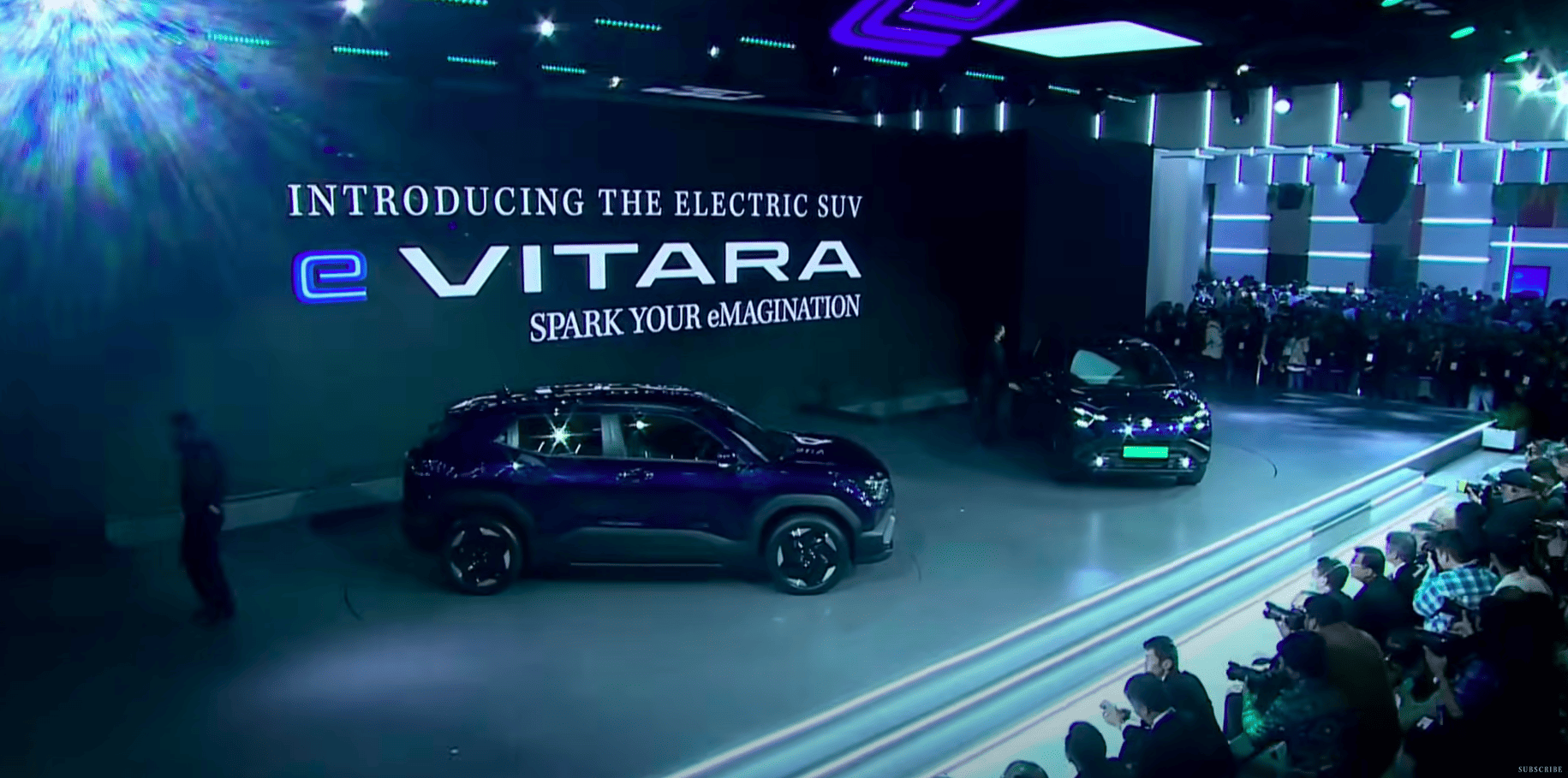
  • Maruti’s ₹90,000 Crore Bet on the e‑Vitara Electric Revolution

    Maruti’s ₹90,000 Crore Bet on the e‑Vitara Electric Revolution

    maruti suzuki vitara electric

    Maruti Suzuki has always been the go‑to name when you needed a reliable, pocket‑friendly car. Now, after turning heads at the Bharat Mobility Expo in Delhi with an e‑Vitara mock‑up instead of new paint jobs, the company is ploughing in a staggering ₹90,000 crore to go electric. Here, we’ll unpack why they’re betting big on EVs, what the e‑Vitara rollout looks like, and how this move could change the daily drive for folks from Kolkata’s Howrah Bridge to Chennai’s Marina Beach.

    Why ₹90,000 Crore Matters

    First off, that capex isn’t just a flashy number. Instead, it shows Maruti’s shift from petrol‑only roots toward a cleaner future. Moreover, Suzuki’s global bosses have already earmarked India as their EV cornerstone, promising over $4 billion by 2031. Consequently, factories in Haryana—like the new Kharkhoda plant—are getting extra production lines, and existing units are seeing high‑tech upgrades. All told, this spend should speed up both electric and conventional car output.

    e‑Vitara: The Firstborn EV

    By around September 2025, the e‑Vitara will roll off Maruti’s new Heartect‑e line. And honestly, 70,000 units in the first year sounds ambitious; still, given Maruti’s track record, it feels doable. Design whispers talk of a compact SUV stance with enough ground clearance to tackle our city’s potholes. Plus, battery management tweaks aim to ease that nagging range fear many of us have.

    Heavy on Exports

    You might not know, but Maruti already ships nearly 40 percent of India’s cars overseas. Now, with the e‑Vitara, they’re planning for roughly 70 percent of output to head abroad—places like Japan, Europe, and other markets hungry for small EVs. That way, even if local buyers take their time, Maruti can still hit production targets and keep the assembly lines humming.

    India’s EV Scene Today

    Even with FAME II incentives, EVs made up only about 2.5 percent of last year’s 4.3 million car sales. In truth, finding a charging point in smaller towns feels like hunting for a needle in a haystack. Meanwhile, battery costs keep sticker prices high, and many drivers worry about resale value down the road. Yet, Maruti’s vast showroom network and trusted service centres could narrow these gaps faster than others. Also, as global battery prices drop, the cost per kilometre should start looking more appealing.

    Hurdles Ahead

    Still, Maruti won’t have it all its own way. Tata, Hyundai and MG have already planted their EV flags. Hence, Maruti must not only keep prices low but also deliver decent range, fast charging, and a user‑friendly dashboard. On top of that, any trimming of subsidies or changes in GST could force price hikes. Finally, equipping over 3,000 dealers with chargers and training their teams won’t happen overnight—it’ll take careful planning.

    Read the more related artical here:
    Introducing Maruti Suzuki Electric SUV : e VITARA
    Are EVs Really Worth It in India? Real-Life Look at Cost vs Savings

  • Nothing’s CMF Phone 2 Pro Hits Indian Market: Premium Looks, Budget Price

    Nothing’s CMF Phone 2 Pro Hits Indian Market: Premium Looks, Budget Price

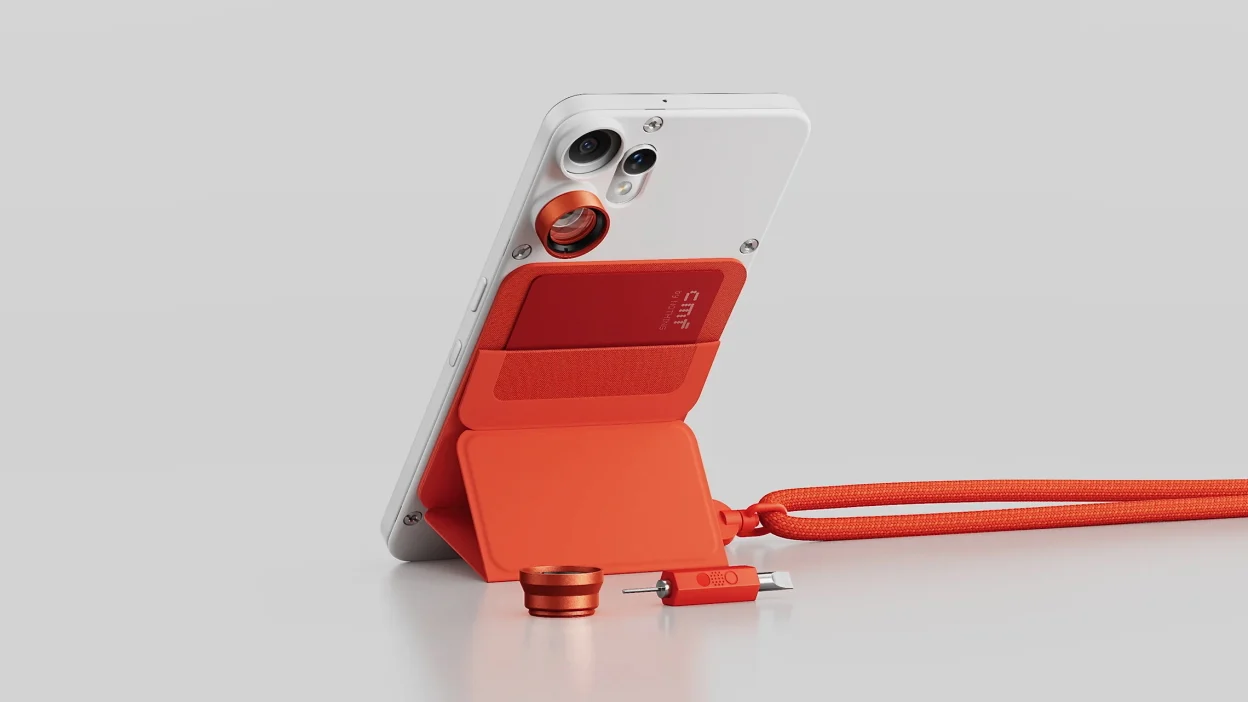
    CMF Phone 2 Pro featuring dual-tone Orange & White design with modular accessories.

    The CMF Phone 2 Pro slipped into our world on April 28, 2025, and suddenly everyone’s talking. At ₹18,999 (8 GB+128 GB) and ₹20,999 (8 GB+256 GB), it doesn’t feel like just another budget phone—it actually nails style, speed, and camera chops without emptying your wallet. Plus, it still comes with a charger in the box, which is almost a relic these days. In this write-up, I’ll walk you through what stood out, what could’ve been better, and why I reckon it’s worth a look.

    Design That Makes You Do a Double-Take

    Look, budget phones usually play it safe—plain black or gray, nothing to write home about. But the Phone 2 Pro dares to be different. That Orange-and-White duotone back with a subtle grippy texture? It feels solid, like it’s built for keeps. And those two little screws on the rear aren’t pointless decoration—they channel that rugged, industrial vibe. I dropped mine once (by accident, honesty), and apart from a tiny scratch, it soldiered on. IP54 splash resistance even saved me when water spurted from the garden hose—no panic, just wiped it off.

    Speed That Keeps Pace with Your Day

    Under the hood, there’s a Dimensity 7300 Pro chip—think small powerhouse. Multitasking, streaming, light gaming: no stutter. In fact, compared to its predecessor, it’s roughly 10 percent snappier on the CPU side and 5 percent smoother in graphics (as per Nothing’s tests). The 6.77-inch AMOLED screen at 120 Hz feels like velvet when you scroll—no judder, no lag. And sunlight? The peak 3,000 nits brightness never left me squinting on a sunny veranda. Toss in 5 G, Wi-Fi 6, and you’re set whether you’re in town or out in the fields.

    Camera Setup That Surprised Me

    Honestly, I didn’t expect much here—budget phones often skimp. But the Phone 2 Pro’s triple-lense array blew me away: 50 MP main, 50 MP telephoto (with real 2× optical zoom), plus an 8 MP ultra-wide. My cousin’s wedding was the real test—low-light shots under fairy lights came out crisp, colors didn’t wash, and those 2× snaps kept the bride’s expressions sharp from across the hall. Ultra-wide mode captured the entire dance floor in one go—no need to shuffle people. Front-cam selfies for family video calls looked just fine too.

    Battery Life and Software: No Surprises, in a Good Way

    5,000 mAh battery plus 33 W fast charging means I didn’t bother lugging a power bank. A quick half-hour charge got me through another evening of videos and messages. Software feels clean—Android 15 with Nothing OS 3.2 has no random apps clogging your home screen. Fingerprint under the display, face unlock—it all just works, none of that ghost-touch nonsense you sometimes find on cheap phones.

    Value Check: Where’s the Catch?

    Truth be told, you won’t find big cons. No headphone jack—fine if you’ve switched to Bluetooth. Hybrid SIM slot—so you pick between extra storage or a second SIM. If you live and breathe MIUI’s bells and whistles, you might miss them here. But for most of us—students, first-jobbers, or anyone who simply wants a solid daily driver—this is a deal. A charger in the box alone feels like a win.

    Summery:

    SpecificationDetails
    Price₹18,999 (8 GB+128 GB), ₹20,999 (8 GB+256 GB)
    Display6.77″ Flexible AMOLED, 1080 × 2392 px, 120 Hz, HDR10+, 3000 nits
    ProcessorMediaTek Dimensity 7300 Pro (4 nm), 2.5 GHz Octa-Core
    RAM8 GB + 8 GB Virtual RAM
    Storage128 GB / 256 GB, expandable via microSD up to 2 TB
    Rear Cameras50 MP Main (ƒ/1.88), 50 MP Telephoto (2× opt. zoom), 8 MP Ultra-Wide (119.5°)
    Front Camera16 MP (ƒ/2.45)
    Battery5000 mAh, 33 W Fast Charging, 5 W Reverse Charging
    OS & UIAndroid 15, Nothing OS 3.2
    Connectivity5 G, Wi-Fi 6, Bluetooth 5.3, USB-C 2.0
    Extra FeaturesIn-display fingerprint, Face Unlock, IP54 Splash-resistant, Charger included
    ColoursOrange & White dual-tone

    Interested in this? You’ll also want to read: CMF Phone 2 Pro Unboxing – Totally Different Phone !

    If this resonated with you, here’s something similar you might like: How to Choose the Best Smartphone for Your Needs