
Category: News & Affairs

  • Kunal Kamra vs Shiv Sena: When a Joke Lands You in Court

    Kunal Kamra vs Shiv Sena: When a Joke Lands You in Court

    Kunal Kamra vs Shiv Sena: Get the full scoop on the free speech debate

    India is a noisy country. From loudspeakers during elections to heated tea-stall debates we Indians don’t keep quiet easily. But somehow, when it comes to cracking jokes about politics, silence suddenly becomes golden. Especially if you’re someone like Kunal Kamra.

    Now, kunal Kamra is no stranger to controversies. His jokes often poke at political leaders, and let’s be honest not everyone enjoys that kind of humour. But this time, things have gone way beyond social media outrage.

    One Joke, Many Problems

    This whole mess began in Mumbai. Kamra was doing a live comedy show, just like always. And during the set, he called Maharashtra CM Eknath Shinde a “traitor”. It wasn’t random — it was tied to the big Shiv Sena split from back in 2022. You remember, right? The one that shook up Maharashtra politics like anything.

    Anyway, this small line didn’t sit well with Shiv Sena (Shinde group) MLA Sanjay Shirsat. He filed a complaint, and just like that, Mumbai Police jumped in. But here’s the twist not only did Kamra get summoned, even the audience members sitting there got notices from the cops.

    Yes, you heard that right. Just sitting and laughing at a joke might now need a lawyer.

    Kunal Kamra Claps Back

    Now, Kamra’s not someone who hides behind silence. He put the police notice on social media, calling the whole thing “institutional bullying.” His question was simple “So now even laughing at political jokes is a crime?”

    Honestly, he’s got a point. In a democracy like ours, shouldn’t people be free to speak and laugh?

    The Courts Step In

    The Bombay High Court saw what was happening and decided to get involved. On April 8, they asked Mumbai Police and MLA Shirsat to explain why this drama was even happening. They’ve set April 16 as the date to hear the matter properly.

    Kamra’s lawyers are saying this whole thing is a straight-up attack on free speech. They’re pointing to Article 19(1)(a) of our Constitution the one that says every Indian has the right to speak freely.

    Meanwhile, the Shiv Sena MLA says Kamra’s joke wasn’t comedy it was defamation. So now, we’ve reached that tricky spot where freedom and feelings are crashing into each other.

    The Business Side: Shows Disappear

    This case didn’t just stay in the legal zone. Some of Kamra’s upcoming shows were suddenly removed from ticketing apps. One major platform gave a very vague response something about “internal reasons.” But let’s be real, people aren’t buying that excuse.

    Many are calling it corporate censorship a quiet way of saying, “Stay away from troublemakers.”

    And for a comedian, losing shows like this is no small thing. It hits where it hurts.

    Public Reaction: Totally Divided

    Social media, as expected, went full-on Bollywood drama mode. Half the people are standing with Kamra. They’re saying things like:

    • “If comedians can’t joke about leaders, who can?”
    • “This is harassment, plain and simple.”

    But others? Not so happy. They believe Kamra crossed the line.

    • “There’s a difference between freedom and insult,” some said.
    • “You can’t say just anything and call it a joke.”

    Honestly, this fight reflects the larger mood of the country half of us want strong leaders, half of us want stronger voices.

    Not Just About Kunal Kamra

    This isn’t new. Kamra’s not the only one who’s been in trouble for cracking jokes. Munawar Faruqui, Agrima Joshua, Vir Das you name them, they’ve all faced some heat.

    It’s slowly becoming clear comedy is turning into a risky business in India. And when cracking a joke brings police, FIRs, and court hearings, you have to ask is this how we want things to be?

    Audience Summons: Seriously?

    But wait, let’s not forget the weirdest part of this whole drama the audience summons. Since when did sitting in a chair and laughing quietly make you guilty?

    It sets a bad example. Today it’s a show. Tomorrow, what? Watching a meme? Clapping during a skit? Will that be enough for the police to come knocking?

    Where does it stop?

    Final Thoughts: Not Just Laughter, It’s Freedom

    This whole thing is not just about Kamra. It’s about something bigger the right to joke, the space for humour, and the freedom to speak up without fear.

    We don’t have to love every joke. But we do need to protect the right to joke. Because when laughter gets filtered, truth gets filtered too.

    And if we stop laughing at those in power, we might stop questioning them altogether.

    So as the Bombay High Court hears this matter on April 16, let’s just hope we’re not becoming a country where even laughing needs permission.
  • Saudi Arabia’ Visa Shift Multiple-Entry Ban for 14 Countries

    Saudi Arabia’ Visa Shift Multiple-Entry Ban for 14 Countries

    Saudi Arabia’s Visa

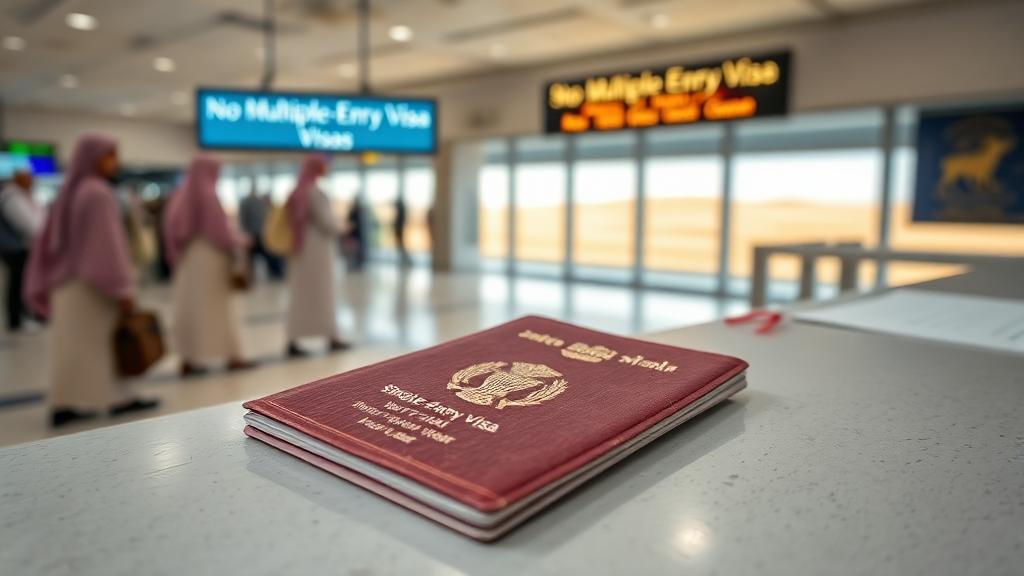
    Imagine that you’re all set for a year of trips to Saudi Arabia. Maybe some business deals, catching up with family, or just chilling in the desert. And then, boom, everything changes. On February 1, 2025, Saudi Arabia dropped big news: no more multiple-entry visas for people from 14 countries, including India. This isn’t some small thingit’s flipped travel plans for so many. So, what’s happening? Who’s in trouble? And how do you deal with it? Let’s break it down with some real talk, a bit of curiosity, and advice that actually works.

    What’s Changed in Saudi Arabia’s Visa Game?

    Saudi Arabia’s put a full stop; nobody knows for how long on those one-year multiple-entry visas. Here’s what’s gone now. Tourism visas? You used to come and go for 12 months, but now it’s one visit, 30 days tops. Business visas are the same story, just one entry, 30 days, no hopping around for meetings anymore. And family visits, like seeing your cousins in Riyadh? You’ll need a single-entry visa every time, good for a month.

    But don’t freak out if you’re going for Hajj or Umrah. Those visas are still okay, same with diplomatic stuff and residency permits. For regular travelers though, or people who fly there often, this is a proper curveball.

    Why Did Saudi Arabia Pull the Plug?

    Picture this scene of lakhs of people at Mecca for Hajj, heat blazing down, and total chaos. In 2024, over 1,200 lost their lives because of overcrowding and crazy temperatures. Saudi folks started noticing something fishy: some people were slipping in with these long-term multiple-entry visas, staying way past their time, and joining Hajj without the right papers. It’s not just about breaking rules; it was turning dangerous.

    So, Saudi Arabia said, “Enough’s enough.” By cutting these visas, they’re trying to keep things under control, make Hajj safer, and watch their borders better. Smart or too strict? Up to you to think about.

    When Did This Kick In?

    Put it in your diaryFebruary 1, 2025. That’s when the multiple-entry dream ended. They haven’t said when it’ll come back, if ever. So, for now, if you’ve got a trip lined up, don’t think you can waltz back in a month later without a fresh visa.

    Who’s Caught in the Crosshairs?

    This hits 14 countries, and it’s a mixed bunch. Here’s the list Algeria, Bangladesh, Egypt, Ethiopia, India, Indonesia, Iraq, Jordan, Morocco, Nigeria, Pakistan, Sudan, Tunisia, Yemen. If you’re from one of these, your travel plans just got shaken up. India’s got so many people going to Saudi Arabia business types, tourists, familiesit’s going to hit us hard.

    What Does This Mean for You?

    Let’s be honest this isn’t just paperwork it’s personal stuff. Maybe you’re an Indian guy sealing deals in Jeddah, or someone from Morocco visiting relatives in Dammam. Here’s the deal now. Plan ahead single-entry visas mean more forms every time, so apply early, don’t wait till the end. Stick to the rules of overstaying or sneaking into Hajj? Bad move. You’re looking at heavy fines, jail, or even a permanent ban from Saudi Arabia.

    And yeah, budget smarter more visa applications mean extra cash spent. My friend in Delhi, Anil, used to zip to Riyadh every few months for work. Now he’s moaning about the hassle, but he says it’s making him think harder about his trips. Less random running around, more focus maybe that’s not so bad.

    How to Stay in the Loop

    Saudi Arabia isn’t shouting this from the rooftops. You’ve got to check their official sites or call the embassy yourself. I learned it the tough way: don’t trust every travel blog you read (funny, right?). My cousin almost got stuck last year, but a quick chat with the consulate saved him.

    The Bigger Picture

    This isn’t just about visas it’s Saudi Arabia showing they’re serious. Hajj isn’t some small event; it’s a giant thing, and safety matters big time. Plus, with their Vision 2030 pushing tourism and all, they’re juggling being open with keeping order. It’s a tricky balance, and this ban’s a bold step.

    Tips for Travelers

    Double-check your visa type before booking anything, don’t mess that up. Watch Hajj dates too even if you’re not going, the crowd controls might mess with you. And talk to peoplecheck forums like X, see what other travelers are saying. This shift might feel rough, but it’s not over. Saudi Arabia’s still there just pack some extra patience with your bags.

  • Waqf Bill 2025: What’s Really Going On? Why So Much Noise?

    Waqf Bill 2025: What’s Really Going On? Why So Much Noise?

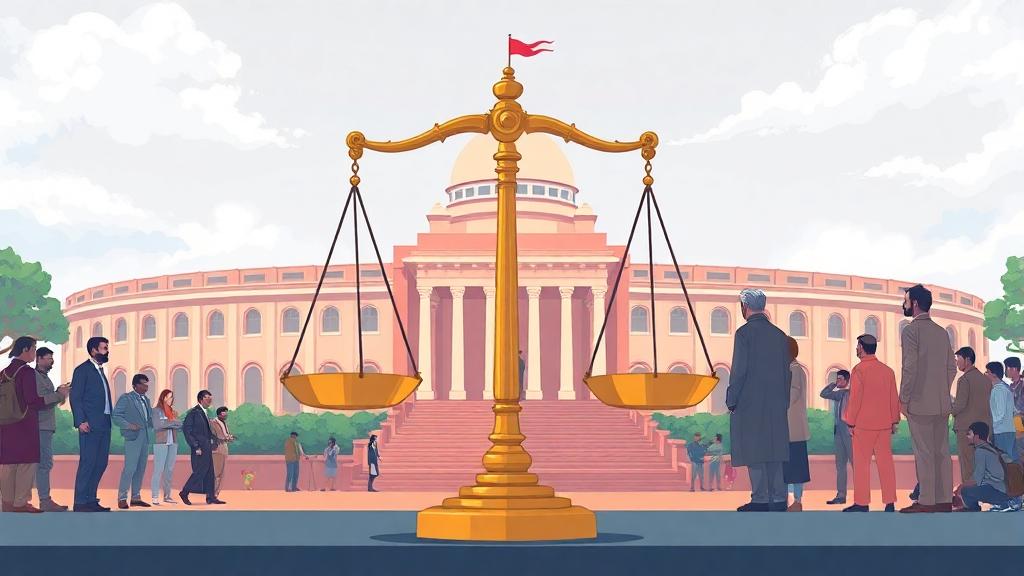
    An illustration showing a scale of justice balanced with people watching on both sides, in front of the Indian Parliament.

    First, what is this Waqf thing?

    Okay, before getting into the latest drama, let’s just understand what Waqf even means. It’s a kind of donation system in Islam — usually land, buildings, or anything valuable — that’s given away forever for religious or charity work. Think of land used for masjid, orphan homes, madrasas, clinics, even burial grounds. And these are not one-two pieces of land. We’re talking over 6 lakh Waqf properties across India. Valued in lakhs of crores.

    Now, Waqf Boards are supposed to manage all this. But over the years, things have gone all over the place. Too many fights over land, illegal takeovers, and in many places, complete mismanagement.

    Waqf Law: Earlier vs Now — What’s Waqf Bill 2025 Really Changing?

    Here’s how the new Waqf Bill is shifting things around, compared to the older Act from 1995:

    1. Dispute Settlement

    • Back then, if any fight happened over Waqf land, it went to Waqf Tribunals — a sort of special court. People had faith that legal steps would be followed.
    • Now, such disputes will go to the District Collector. That means, instead of a judicial process, an administrative officer will decide. This worries many, because the legal filter is now missing.

    2. Recognition of Waqf by Long Use

    • Earlier, even if there were no official papers, land used for Waqf purposes for many years could still be recognised as Waqf. It was based on usage and tradition.
    • Now, that won’t work. If the place isn’t registered properly with full documents, it will not be accepted as Waqf. That puts many old mosques and madrasas at risk of losing legal protection.

    3. Who Conducts Surveys

    • Earlier, surveys were done by officers appointed by the Waqf Board. These people usually had some understanding of local customs and religious use.
    • From now, surveys will be carried out by district officials like Magistrates or Revenue staff. The concern is, they may not always understand the full background of the property.

    4. Digital Records

    • The old system didn’t really push for online databases. Many files were still physical — and often, incomplete or scattered.
    • Now, it is compulsory to digitise all Waqf properties. This includes uploading documents and using geo-tagging. It sounds modern, but if older papers are missing, it could create confusion or loss.

    5. Authority Over Land Decisions

    • Before, Waqf Boards had more control in managing properties. They could look after decisions directly and guide through community members.
    • Now, decision-making power is being shifted more towards local bureaucrats. It means less say for the Waqf Board itself.

    6. Community Representation

    • Earlier, there were voices from the Muslim community directly inside Waqf Boards. They could represent the people and raise real concerns.
    • The new system seems to reduce that kind of involvement. There’s more centralised power, and less direct role for common citizens in Waqf matters.

    Why So Much Protest?

    Let’s be honest — it’s not just about rules. It’s about trust, and right now, there isn’t much.

    1. People feel targeted: Many in the Muslim community feel this law is like questioning their history and heritage. They say, “Our elders donated this land long ago. Now we need papers?”
    2. Old cases might come back: Imagine a masjid land from 1930. No one has full documents today. But now, that land can be reviewed again. People worry — what if it’s taken away?
    3. No more court-style justice: Replacing Tribunals with government officers doesn’t feel right to many. They say: What if an officer is biased? What if there’s pressure from above?
    4. Timing feels off: Some people are also pointing at the election season and asking — “Why now?” They feel it’s more about politics than reform.

    So What’s the Real-World Impact Waqf Bill 2025?

    This isn’t just about papers and files. Waqf properties fund schools, hospitals, orphanages. Small clinics in poor towns. Graveyards for those who can’t afford a plot. Remove that support and entire communities can suffer.

    Take a small madarsa running in a village for 50 years. No formal deed, just usage. Now, it’s at risk. What happens to the kids studying there?

    Is the Bill Completely Bad?

    No, no. It’s not like that. Let’s be fair. Some parts actually make sense:

    • Waqf Boards were messy. No proper data, no audits.
    • Many fake claims were made on land by just saying “This is Waqf.”
    • Tribunals were slow. Cases ran for 10-15 years.
    • Now with digital records, maybe fewer scams.

    So yes, cleaning the system is needed. But the way it’s being done? That’s what’s bothering people.

    What the Government Committee Found

    The Joint Parliamentary Committee had some interesting things to say:

    • Many state Waqf Boards don’t even have working digital systems.
    • Surveys were done so poorly that public land and Waqf land were overlapping.
    • Some states had cases dragging for decades due to slow Tribunals.

    The committee basically said — yes, clean the mess, but please talk to the people too.

    Final Thoughts: What Common People Think Waqf Bill 2025

    If you ask the average Indian citizen, many will say: “Fine, make things digital. Stop the misuse. But don’t take away rights without listening.”

    Among Indian Muslims, there’s real fear. Losing protection for old properties just because a paper is missing? It feels like a loss of identity, not just land. Reform is okay, but forcefully pushing changes without involving people — that never ends well.

  • Hyderabad’s Trees vs Bulldozers: Kancha Gachibowli

    Hyderabad’s Trees vs Bulldozers: Kancha Gachibowli

    bulldozer cutting trees

    These days, Hyderabad is often in the headlines for its IT boom and tall buildings. But behind the shine, there’s a quieter battle going on—one that’s about saving a patch of forest land, not building on it. In Kancha Gachibowli, near the University of Hyderabad, hundreds of acres of greenery have suddenly come under threat. And what followed? Protests, police action, and even a strong word from the Supreme Court.

    Let’s try to understand what’s happening—because this isn’t just about Hyderabad. It’s about how we treat nature while chasing development.

    Supreme Court to the Rescue (for Now)

    On April 3, 2025, something rare happened. The Supreme Court stepped in on its own, without anyone filing a case, and asked the Telangana government to stop all tree-cutting in the Kancha Gachibowli forest area. The court asked the kind of questions most of us have been wondering: “Why the hurry to clear land?” and “Did you even take permission before chopping trees?”

    Justice B.R. Gavai didn’t hold back. He reminded the officials that no matter how big someone’s position is, the law is still bigger. He even told the Chief Secretary to be ready for personal consequences if the order wasn’t followed. That kind of warning? It doesn’t come often.

    And it worked, at least for now. Chainsaws went quiet. The High Court registrar was sent to inspect the area. The trees—and the animals living there—got a temporary sigh of relief.

    The Students Who Refused to Stay Silent

    If anyone deserves real credit here, it’s the students of the University of Hyderabad. From April 1, they stood outside with placards. Some went on hunger strikes. They faced lathis, police barricades, and even injuries—but they didn’t stop.

    One student said something simple yet powerful: “We’re not just fighting for trees. We’re fighting for what Hyderabad will lose if we don’t act now.” And honestly, that’s the heart of the matter.

    Their movement picked up fast. Social media buzzed. Celebrities and environmental groups joined in. And when the court ruling came on April 4, students called it a “people’s win.” They even held a victory march. But they know this is not the end—it’s just one battle in a much longer fight.

    The Government’s Sudden U-Turn

    After the court’s intervention, Telangana’s government suddenly shifted tone. That same night, they formed a committee of ministers to “talk” to the university and civil society. They also told police not to use force against students anymore.

    Deputy CM Vikramarka and IT Minister Sridhar Babu gave a joint statement: “We believe in the Supreme Court. Justice will be done.”

    Sounds nice, but here’s the catch: the land in question is worth around ₹10,000 crore. It was given to the state in 2024 after a long court case. The plan? IT parks, real estate, better roads—the usual promises.

    So, is this new committee serious about listening to the public? Or is it just a delay tactic while the heat cools down? That’ll depend on what happens during the next court hearing on April 16.

    This Isn’t Just a Hyderabad Problem

    This entire episode reminds us of a larger issue. Why do we treat nature like it’s in the way of progress?

    Whether it’s Mumbai’s Aarey forest or Delhi’s ever-shrinking green spaces—every city is losing its lungs. Kancha Gachibowli is one of the last green buffers in Hyderabad. It’s not just about birds or deer—it’s about cleaner air, groundwater, and peace in a fast-growing city.

    The worst part? All this happened with no environmental impact study, no proper approvals. Just fast-paced destruction in the name of growth.

    Development is important. But cutting 100 acres of forest in just a few days, without a clear plan—that’s not smart development. That’s poor planning wrapped in shiny words.

    What Hyderabad Can Still Do

    If it were up to me, here’s what I’d suggest: stop everything and turn Kancha Gachibowli into a protected urban forest.

    Use it for environmental research. Let students run awareness programs. Build eco-tourism paths—not office towers. Show that a city can grow smart, without killing its roots.

    Will the government listen? Maybe. Maybe not. But one thing is clear: people are watching now. And the students have shown us that if you care enough, you can push back.