Category: Global Issues

  • Trump Tariffs & the Global Trade War: Impact on Indian Markets

    Trump Tariffs & the Global Trade War: Impact on Indian Markets

    Trump's Tariffs Will Increase Prices and Empty Shelves Within Weeks - Business Insider


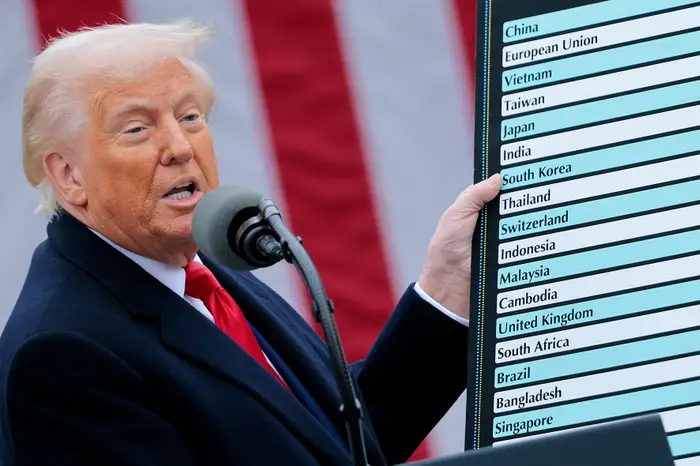
    Trump tariffs India markets: Beginning in 2018, the Trump administration unleashed a broad trade war. It slapped 25% tariffs on imported steel and 10% on aluminum, then applied a 10% surcharge on nearly all imports and much higher rates on key partners​. By April 2025, the US announced “reciprocal” tariffs targeting India (26%) along with China (54%), the EU (20%), Japan (24%) and others. These moves pushed America’s average import duty to the highest level since World War II​, sparking fears of a prolonged global recession. The World Trade Organization’s Pamela Coke-Hamilton warned that the turmoil could shrink world trade by about 3%, as supply chains reorient toward India, Brazil and other emerging markets​. In short, the new tariffs have dramatically raised prices and uncertainties worldwide, fueling volatile reactions in India.

    Impact on Indian Markets (Short Term)

    Indian stock markets plunged on news of the tariffs. BSE Sensex and Nifty 50 dropped about 5% in a single session​ – one of the worst falls in years. By April 7, 2025, BSE market capitalization had lost over ₹14–19 lakh crore (trillions of rupees)​. Broad indices were dragged down by heavy selling in companies tied to the US economy. For example, Tata Group firms (large US exposure) saw their combined market value shrink by ~₹2.4 lakh crore​. Other sectors hit hard included automobiles, metals, IT services, pharmaceuticals, textiles and gems​.

    Economists attribute this sell-off to panic over higher import costs and slower export demand. Foreign funds withdrew from Indian equities, and investors sought safer assets. Gold prices and government bonds rallied while the rupee slid to multi-month lows under the pressure. Analysts note that companies with large U.S. business (consumer goods, tech services, etc.) saw the steepest declines, as investors “offloaded shares of companies with US exposure” amid fears of a worldwide downturn​. Overall, the tariff shock triggered a bout of extreme volatility in Indian markets, wiping out years of gains in days.

    Stock Market Reaction

    Investors immediately turned bearish. Indian equities were hit by a wave of margin calls and panic selling. On April 7, 2025 Sensex and Nifty each fell roughly 5% in one day, only recovering some losses at the close​. That “Black Monday” erased decades of gains for the day, costing the average investor ₹14.2 lakh crore​. The drop was broad-based: every sectoral index saw multi-percentage declines, led by auto, metal, IT, pharma, textiles and gems​. Notably, firms with strong US revenue streams were sold off most aggressively​.

    This turmoil drove foreign portfolio outflows and a scramble for safe havens. The Bombay Stock Exchange warned that any global recovery or tariff roll-back could quickly reverse the slide​. Meanwhile, credit markets priced in higher risk: corporate bond spreads ticked up slightly and banks reported caution in new loans. Commodity prices also reacted – oil dipped on growth worries, while gold climbed as investors sought protection. Analysts emphasize that much of this damage is due to sentiment – fundamentals have not yet fully changed – suggesting a possible rebound if tensions ease​.

    India–US Trade Relations & Retaliation

    India’s trade with the US is significant: bilateral trade exceeds $190 billion/year, with India running a ~$50 billion surplus​. American officials point out that India’s average tariff on US goods (~17%) far exceeds the US rate (~3%). Washington justified its tariffs as “reciprocal” measures to correct this imbalance​.

    In practice, India has limited ability to retaliate symmetrically. A U.S. think-tank notes that many Indian imports (pharmaceuticals, certain foods) are low or zero-duty in the US​. Nonetheless, India originally announced its own tariffs on $900 million of US agricultural exports (apples, almonds, etc.) in response to 2018 steel and aluminum tariffs. Those duties were to mirror US rates but have been largely shelved pending talks​. For now, India is instead lobbying Washington (through WTO and diplomacy) to avoid a trade war. Prime Minister Modi’s government stresses that India and the US are “friends” and is seeking exemptions or a limited deal. In April 2025 the US paused additional duties on some Indian exports for 90 days (until July) in exchange for ongoing talks​.

    Still, bilateral relations are under strain. The US-China conflict and shifting alliances mean India must balance strategic partnership with protection of its own industries. Policymakers in New Delhi are unlikely to lower their tariffs easily – the very reason Trump imposed them in the first place. Any future concessions (on visas, data flows, etc.) may be tied to trade. In short, India is playing a delicate game: protecting exporters in the short term, while negotiating with the US to avoid an escalation​.

    International Comparisons

    India is not alone. China has been the main target of Trump’s trade campaign. Beijing now faces an effective 54% average tariff on its exports, and has retaliated in kind – imposing duties on around 800 US goods, totaling ~$20.6 billion in 2018 alone. In early April 2025 China announced a 34% tariff on all US imports in response to the new US levies​, prompting Trump to threaten a cumulative 104% tariff if China does not back down​. Stock markets in Hong Kong, Shanghai and Taiwan dropped more than 7–9% in one day​, illustrating the contagion.

    The EU and U.S. have a more mixed legacy. In 2018, when Trump slapped metal tariffs, Europe protested via the WTO and imposed ~$3.6 billion of counter-tariffs. By 2021 the Biden administration lifted those sanctions. However, under the new plan the EU was hit with ~20% on many goods. Canada and Mexico – originally exempt from steel/aluminum tariffs – eventually agreed to USMCA (replacing NAFTA) and saw those duties removed by mid-2019​. In this latest round, North American trade flows aren’t directly affected (the new US plan excluded USMCA countries), but Mexico’s factories do feel higher costs on Chinese inputs.

    Across the Indo-Pacific, most countries (aside from China) have so far avoided immediate retaliation​. Governments are instead exploring strategies like diversifying export markets, cutting domestic tariffs and engaging with Washington bilaterally. For example, Vietnam and ASEAN exporters are shifting sales to Europe, Korea and the Middle East​. A recent survey warns that unless global tensions ease, many economies could face long-term slowdowns and a fracturing of trade links​.

    Geopolitical & Economic Shifts

    Trump’s tariff policy – and the uncertainty around it – is catalyzing broader changes. Some emerging economies could gain export share as supply chains move out of China. Indeed, experts forecast that a lasting 3% drop in global trade would redistribute exports toward countries like India and Brazil​. India may attract more foreign investment in manufacturing as companies look for alternatives, though high Indian tariffs remain a hurdle. Domestically, the shock strengthens voices calling for reforms: lower import duties, faster infrastructure spending and new trade deals to insulate the economy.

    Geopolitically, the US moves have weakened trust in multilateral trade rules. The Administration’s tariff actions have prompted complaints to the WTO and may bolster rival trade blocs (e.g. China’s Regional Comprehensive Economic Partnership). Meanwhile, the Sino-US trade war and fears of “decoupling” have driven closer security ties between India and the US (Quad) – but also encourage India to hedge by deepening trade links with Europe, the Middle East and Russia. In sum, American tariffs are not just an economic lever but a strategic signal: that the global order is shifting to a more competitive, less cooperative era.

    Outlook


    In the short term, India’s markets will likely remain jittery. Analysts caution that inflation (from higher import prices) and slower growth are possible outcomes. However, many Indian exporters are already accustomed to volatility, and sectors like pharmaceuticals and IT services have some insulation. If a negotiated compromise emerges (or if tariffs are delayed), a sharp rebound in markets is possible. Longer-term, the experience may prod India to ease some trade barriers and accelerate moves toward a free-market economy – changes that could ultimately bolster resilience.

    Ultimately, Trump’s tariff barrage has shaken Indian markets and tested policymakers, but it has also underscored India’s role as a rising middle power. How New Delhi responds – through diplomacy, industry support and reforms – will shape its economic fortunes in a post-2025 world.

    Related articles

    Trump Tariffs 2025: Economic Impact on India, China & Beyond

  • Operation Brahma: India’s Lifeline to Earthquake-Hit Myanmar

    Operation Brahma: India’s Lifeline to Earthquake-Hit Myanmar

    Operation Brahma

    On the night of March 28, 2025, News began streaming in: “7.7 quake near Mandalay…buildings collapsed…people trapped.” In my hometown, we know how power cuts and storms can turn routine life upside‑down. Yet, nothing quite prepares you for a disaster of this scale in a neighbouring country. Still, within hours, India switched from watching the news to rolling out Operation Brahma—the country’s boldest push in years to help quake‑hit Myanmar.

    More Than Just Aid—A Promise of Renewal

    You see, naming it after Brahma—the creator—wasn’t just poetic. It was India’s way of saying, “We’ll help rebuild, brick by brick.” Actually, this mission became a symbol of how neighbours stick together: pooling resources, sharing expertise, even swapping stories late into the night about loved ones they lost in past disasters. It wasn’t a one‑off drop of blankets; it was a pledge to stand until communities breathe freely again.

    Ground Zero: Faces Behind the Figures

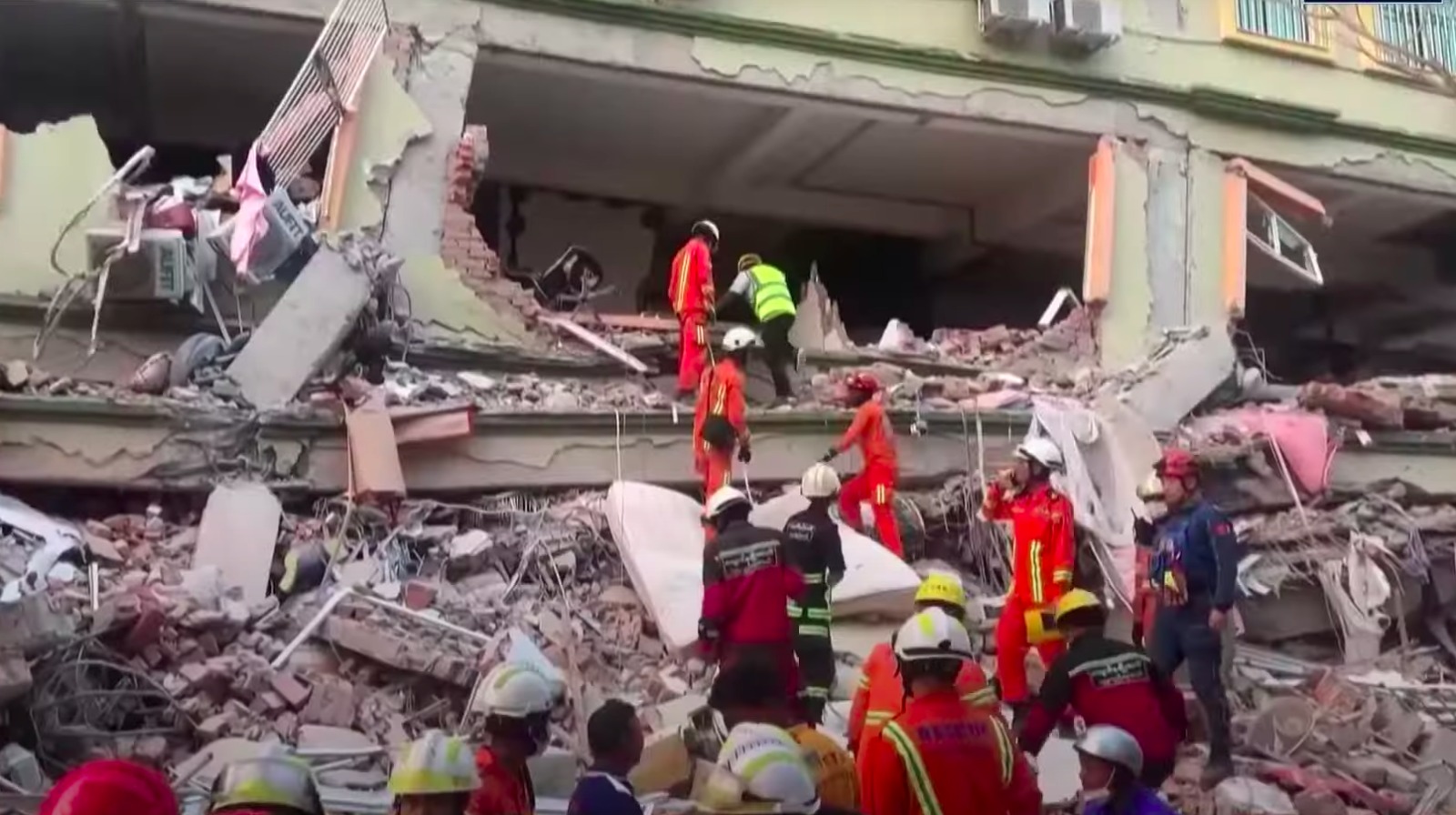
    Sure, statistics matter—1600 dead, 3400 injured, roads splitting like cracked plates, hospitals turned into piles of rubble. Yet, numbers alone feel flat. Let me share a scene from Sagaing: ten‑year‑old Thura lay buried for nearly 72 hours, only to be woken by an NDRF rescuer’s voice. He thought his family had forgotten him. Meanwhile, in Myinmu village, families formed human chains to pass water bottles into collapsed homes—because when official help couldn’t reach them, community spirit kicked in. These small acts kept hope alive until bigger teams arrived.

    First Response: Gearing Up in 48 Hours

    By dawn two days later, 80 NDRF “jawans” were cutting through concrete and steel with their tools. Then, without skipping a beat, a 118‑member medical battalion from the Army’s Shatrujeet Brigade pitched in, turning open fields into makeshift hospitals. You have to understand: setting up a 200‑bed facility in rugged terrain usually takes weeks. Yet, here they were, operating theatres ready, X‑ray machines clicking, and patients queued for treatment. Within five days, over 1,370 people had been bandaged, patched, and—thanks to 33 emergency surgeries—given a second chance at life.

    Moving Mountains of Relief

    But rescue isn’t just doctors and drills. It’s also fuel, food, tents, medicines—tons of them. India shipped 656 metric tons of supplies by Air Force C‑17s and naval vessels. One pilot joked his plane looked like a flying grocery store; rice sacks balanced next to oxygen cylinders. Then, there were the lorries that braved broken bridges and flooded roads, each carrying enough dal, rice, and water purifiers to feed entire villages. At times, these trucks crawled at 10 km/h, but still they moved because someone somewhere knew lives depended on every kilo.

    Tech to the Rescue: Robots and Drones

    In fact, this time India brought in gadgets too. Robotic mules—small, four‑legged machines—wove through debris, delivering bandages where no human could go. They looked almost playful, yet beneath their metal hides lay sensors to detect heartbeats. On the other hand, nano drones hovered above ruins, their thermal cameras spotlighting survivors trapped under concrete vaults. Local volunteers would guide them, shouting coordinates into walkie‑talkies, so rescue teams knew exactly where to dig. It was thrilling and nerve‑wracking, but it showed that innovation can jostle alongside compassion.

    When Diplomacy Meets Compassion

    Behind the scenes, diplomats burned the midnight oil. Indian envoys and Myanmar officials cleared customs for medical kits in record time. Meanwhile, community groups on both sides of the border used social media to coordinate drop‑off points—villagers in Manipur sharing maps, families in Sagaing confirming safety zones. In the scramble, trust grew. In fact, some ministers say that this joint effort could push bilateral trade past USD 30 billion by 2027. Yet, more than trade figures, it was the human bonds that mattered most.

    When Plans Go Sideways

    Of course, not everything went according to protocol. Communication blackouts meant rescuers lost contact with their teams. Then, torrential rains threatened to wash away camps, forcing volunteers to reinforce tents with sandbags borrowed from local paddy fields. I spoke to an engineer from Chennai who’d tested mobile cell towers on the Bay of Bengal—back then it was just a trial, but here, they became lifelines. Also, relying on village panchayats to secure land for camps taught government agencies the value of local wisdom.

    Why It Matters: More Than a Headline

    Let me be honest: media often focuses on numbers and headlines. Yet, Operation Brahma was proof that real aid happens in muddy trenches and midnight tents lit by kerosene lamps. It mattered because it reminded us that our safety often depends on neighbours we barely know. For many of us in India, coal and solar debates fill news pages, but when your neighbour’s roof caves in, talk of watts and tariffs fades away.

    My Two Cents: Imperfect but Heartfelt

    Staring at satellite images of shattered towns, I felt a mix of pride and humility. Pride because India didn’t hesitate; humility because no plan is perfect. Nonetheless, between robotic mules and rice sacks, what shone brightest was empathy. People not only volunteered medical skills but also shared cups of chai, stories of past storms, and a firm belief that, come what may, we stand together. And so, while Operation Brahma had its hiccups, it also taught us that sometimes a messy, urgent response—driven by real people—beats a flawless strategy stuck on paper.

    Read the full artical to analyse Myanmar Earthquake here.

  • The Gaza Blockade: A Human Tragedy That’s Still Getting Worse

    The Gaza Blockade: A Human Tragedy That’s Still Getting Worse

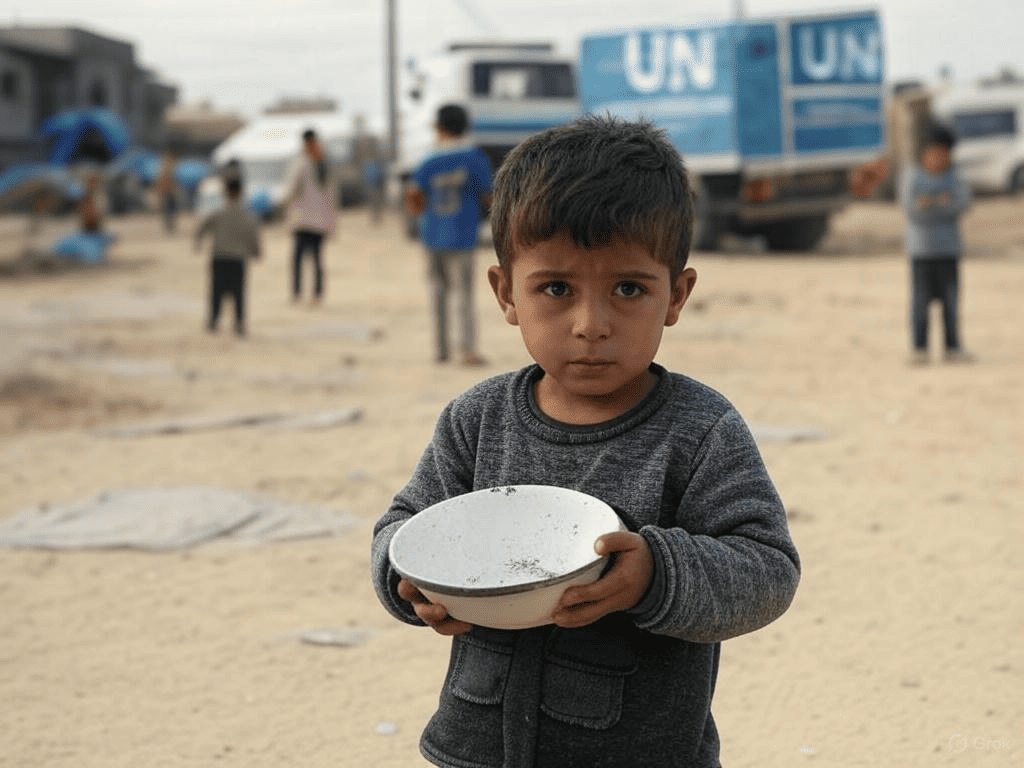
    Gaza children starving for food

    Since March 2, 2025, Gaza has been completely sealed off. No food trucks, no medicine, no fuel — nothing is getting in. Over 2.3 million people are stuck with nowhere to go and no help coming their way. And even now, weeks later, the world still hasn’t done enough.

    This isn’t just another news headline. It’s a full-blown humanitarian disaster — one that’s only getting worse by the day.

    What’s Happening Inside Gaza?

    Gaza is facing a crisis like no other. The blockade has brought daily life to a full stop. Imagine every bakery in your city closing because there’s no flour or gas. That’s what’s happened in Gaza — all 25 bakeries that were supplying bread are now shut. There’s no fuel to power ovens and no wheat to make anything with.

    More than one million people haven’t received a food parcel in weeks. That’s not just hunger — that’s starvation. According to aid groups, supplies from the World Food Programme might run out in a matter of days if the blockade continues.

    Hospitals are barely functioning. They’ve got only 20% of the medical supplies they need. Clean water is almost gone — people are standing in long lines just to fill a bucket or plastic can. Some have no choice but to drink water that’s not even safe.

    In Rafah, the southernmost part of Gaza, buildings are gone. Rubble everywhere. Families are living in tents and makeshift shelters. Some kids are sleeping on cardboard sheets. It’s not just a food crisis — it’s a total collapse of basic human needs.

    And the violence hasn’t stopped either. Since October 2023, over 50,000 people have lost their lives. Just last week, Israeli airstrikes killed 23 more people in northern Gaza — 9 of them were children.

    Why Is This Blockade Happening?

    The conflict between Israel and Palestine isn’t new. But this blockade began after a ceasefire deal fell apart in early 2025. Israel claims the aid might reach Hamas, the armed group that controls Gaza. So, they’ve tightened the borders completely, saying it’s a matter of national security.

    But this kind of blanket blockade? It’s hurting ordinary people the most. Children, elderly people, pregnant women — they’re the ones paying the price. Imagine shutting down all the shops, pharmacies, petrol pumps, and hospitals in a city just to stop a few bad actors. That’s what’s happening here.

    The United Nations has raised alarm. Secretary-General Antonio Guterres called Gaza a “killing field.” He said people are stuck in what he called an “endless death loop.” The main route for supplies, the Rafah crossing, remains closed. And Israel still controls the other entry points.

    Some countries tried sending aid through airdrops, but many of those packages ended up in the sea or in areas people couldn’t even reach. There’s no proper system in place. Aid isn’t reaching the people who need it the most.

    What’s the Global Response?

    The world is watching, but not enough is being done. On social media, people are sharing images of starving kids and bombed-out buildings. Hashtags like #GazaCrisis and #EndTheBlockade have gone viral.

    International voices have started speaking up. France’s President Emmanuel Macron and the European Union are urging Israel to open the borders and allow aid. The UN, along with groups like UNICEF and the Red Cross, are pushing for a full ceasefire. But Israel continues to insist that Hamas is hijacking supplies — something many aid workers say doesn’t match what they’re seeing on the ground.

    Meanwhile, families in Gaza are still waiting. Waiting for food, medicine and the world to take action.

    Can Anything Be Done to Help?

    Yes, but time is running out.

    1. Pressure to open the crossings: More countries need to put pressure on Israel to reopen supply routes like the Rafah crossing. Every day matters.
    2. Push for a long-term ceasefire: Without a ceasefire, aid can’t be delivered safely. Rebuilding can’t even begin. Peace talks need to be serious this time.
    3. Improve how aid is delivered: Airdrops are failing. Aid groups need better planning and support to reach people inside Gaza. Whether it’s through safer routes or better technology, solutions must be found.
    4. Speak up and support: Even if you’re sitting thousands of kilometres away, your voice matters. Share the truth. Support trusted NGOs. Keep the issue alive.

    Final Thoughts

    This isn’t just about politics. It’s about people. Ordinary families who just want to eat, drink clean water, and live without fear. When we see children going to bed hungry in 2025 — something’s deeply wrong.

    In India, even in small villages, people come together when someone is suffering. That’s how we’ve always been — helping neighbours, feeding the hungry, standing up for the helpless.

    What’s happening in Gaza should shake us. It should move us to care. Whether it’s through donations, raising awareness, or just refusing to look away — we can all do something.

    Because when humanity fails in one place, it affects us all.

  • Myanmar Earthquake: The Ground Shakes Again

    Myanmar Earthquake: The Ground Shakes Again

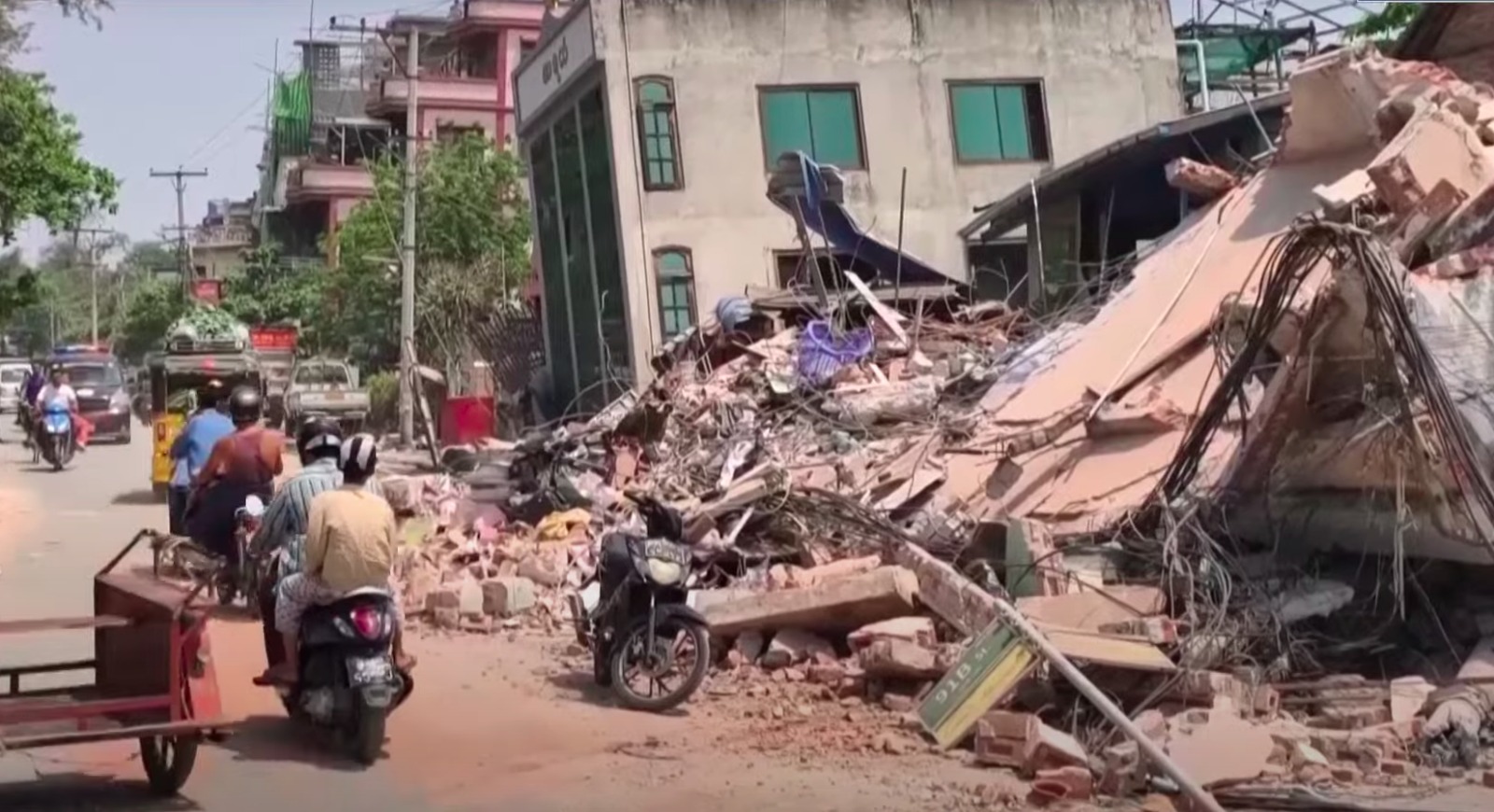
    People standing outside cracked buildings in Myanmar after earthquake, looking anxious and alert

    Another Shake, Another Shock

    Just when folks in Myanmar had started to catch their breath after that big March 28 earthquake, the ground gave another scary jolt. On April 13, around 8 in the morning, a fresh earthquake this time 5.5 on the scale hit close to Meiktila. That’s somewhere in the middle of Mandalay and Naypyitaw.

    Now, this wasn’t just another mild tremor. It was one of the strongest aftershocks since last month’s quake. People were already scared, and this one brought all that fear right back. Honestly, it’s not just about buildings shaking people’s hearts shook too.

    Where Exactly Did It Strike?

    This quake hit central Myanmar, about 28 km west of Meiktila. The US Geological Survey said the depth was roughly 10 km. Not too deep, so folks on the surface felt it strongly.

    And this area? It’s not just any spot. Meiktila has been under a lot of pressure recently, quite literally. Sitting between two big cities and along the Sagaing Fault Line, this zone has become a sort of tension point.

    Locals said they rushed out of their homes, markets, and tea stalls. “We didn’t even wait to switch off the stove,” one shopkeeper said. Some towns lost electricity for a bit, adding to the panic.

    But Why So Many Quakes All of a Sudden?

    See, Myanmar sits on the Sagaing Fault. It’s a major crack running through the country, part of a much larger fault system connected to the Indo-Australian and Eurasian plates. You must’ve heard of tectonic plates they’re like slow-moving giant slabs under our feet. When they grind or bump into each other, the earth shakes.

    Small tremors are common in this part, yes. But the recent ones? They’ve been stronger and happening more often. The March 28 earthquake was a 6.0 it damaged plenty of older buildings that weren’t built for such things. This April 13 one may be smaller, but it came at a time when people hadn’t even fully recovered from the last one.

    So the panic was understandable.

    People Ran—Again

    Eyewitness Bits

    In Meiktila, Than Htay, who runs a small tea stall near the main road, said, “We were just opening the shop, and suddenly everything started wobbling. First the spoons clinked, then the glasses toppled. We all just ran.”

    No major injuries were reported, thankfully. But fear? That was everywhere. Schools closed for the day. Hospitals moved patients outside. Nobody wanted to be inside any tall building. Can’t blame them, really.

    This Region’s Been On Edge

    This isn’t just about Myanmar. Few days back, Tajikistan faced a bigger 6.4 magnitude earthquake. All across Asia, it seems the plates below are shifting more than usual lately.

    And for Myanmar, this timing couldn’t be worse. The country is already handling political tension and an economy under pressure. Add repeated natural disasters to the mix, and it becomes a real struggle—for the government, and especially for common people.

    Are Authorities Doing Enough?

    Government folks did issue the usual earthquake safety tips:

    • Stay away from damaged walls and buildings
    • Keep a small emergency kit ready
    • Don’t use lifts when the ground shakes
    • Know which corner in your home is safest
    • Teach children and elders what to do

    All this is good. But people are asking for stronger action. “What’s the point of drills if the buildings collapse?” asked someone from Mandalay. And that’s a fair point.

    What’s needed now is not just awareness but strong buildings and quicker relief work. Because when the same fear keeps coming back every few weeks, it wears people down.

    A Bigger Lesson for Southeast Asia

    These repeated tremors—first in Myanmar, then Tajikistan are not just flukes. They’re signals. The whole region, from the Himalayas to Southeast Asia, sits on dangerous tectonic zones. Many cities in these parts still don’t have proper earthquake-proof buildings.

    Japan is one example where even big quakes don’t cause much harm because they’ve got solid systems in place. Strict building codes, educated citizens, proper drills. Other countries, including ours, need to follow suit.

    What Now?

    The people of Myanmar have seen more than their share of hardship. Political issues, economic troubles, and now, quakes. But somehow, they still hold on with courage.

    Yes, the earth shook again. But life didn’t stop. People helped each other. Strangers became family, if only for a few minutes.

    Hope is alive. But let’s not rely on hope alone. This is the time to:

    • Plan ahead
    • Build better
    • Stay informed
    • Watch out for one another

    Let’s not wait for a bigger disaster to make us act.
    If you found this blog interesting, you might enjoy this one too: Waqf Act Controversy: What’s Happening in Murshidabad?

    Interested in this? You’ll also want to read: Myanmar earthquake: What we know


  • Mehul Choksi: From Jewellery Tycoon to Most-Wanted Fugitive

    Mehul Choksi: From Jewellery Tycoon to Most-Wanted Fugitive

    A dramatic digital artwork of Mehul Choksi in a courtroom, surrounded by legal documents and Belgian flags, with a backdrop of Antwerp’s skyline and Indian justice symbols.

    If you follow the news, you’ve definitely heard this name Mehul Choksi. But if you’re wondering who he really is and how he ended up on India’s most-wanted list, here’s a simple breakdown. No jargon, no drama just what actually happened.

    So, Choksi was once a big deal in India’s jewellery scene. He ran Gitanjali Group, which had thousands of stores across the country. In fact, he had taken over the business from his dad back in 1985. Everything looked good on paper—successful brand, fancy image, big money. But behind all that shine, something shady was cooking.

    What Actually Went Down?

    Between 2011 and 2017, Mehul Choksi, along with his nephew Nirav Modi, pulled off something massive. They allegedly teamed up with some bank staff at Punjab National Bank (PNB) and managed to get fake Letters of Undertaking (LoUs). These are basically papers that help someone borrow money from abroad.

    But here’s the crazy partthese weren’t small loans. It was around ₹13,000 crore. That’s over 2 billion US dollars. And nobody caught it for years. Every time a new loan was needed, they just kept creating more of those fake documents.

    When the bank finally noticed, it was too late. Choksi had already left India—he flew out in January 2018, just before the scam became public.

    And Then… He Disappeared

    Now here’s where things get more complicated. Just a few months before the scam broke, Choksi managed to get citizenship in Antigua and Barbuda. He got it by investing money, through a scheme that allows rich people to settle there.

    He was in Antigua, living peacefully for a while. But in 2021, something strange happened. He suddenly vanished from Antigua and was later found in Dominica. Local police arrested him for entering their country illegally. Choksi, on the other hand, claimed he was kidnapped—literally said he was beaten up, dragged onto a boat, and taken there by Indian agents.

    Whether that’s true or not, nobody knows for sure. But eventually, Dominica allowed him to return to Antigua for medical treatment.

    Fast Forward to 2025 – Arrested in Belgium

    After years of back and forth, on April 12, 2025, Belgian authorities finally caught him in Antwerp. He was at a hospital, getting treatment for cancer. Indian agencies had been tracking him, and this time, they moved quickly. They had already filed requests with the Belgian government for his extradition.

    Turns out, Choksi had managed to get a residency card in Belgium too. He never told them he already had two other nationalities Indian (which he later gave up) and Antiguan. That didn’t help his case.

    Now he’s behind bars, and India wants him back.

    What India Wants

    Both the Central Bureau of Investigation (CBI) and the Enforcement Directorate (ED) are involved. They’re trying to bring him back under the India-Belgium extradition treaty, signed in 2020. But it’s not that easy. The treaty has its own rules like, Belgium can reject the extradition if they feel it’s a political matter or if the accused’s health is bad.

    Still, the agencies are hopeful this time. They’ve already seized properties worth ₹2,500 crore from him, and they’re trying to get him declared a “Fugitive Economic Offender”—a legal tag that lets them auction his assets even faster.

    Why This Story Matters

    See, this isn’t just about one guy running off with money. It’s about how a system failed. A major national bank couldn’t spot a scam for years. And even when they did, it took forever to catch the people involved.

    It also tells us how tricky international law can be. Just because someone is caught abroad doesn’t mean they’ll be sent back easily. Countries have different rules, and fugitives like Choksi know how to play the game.

    Will He Finally Be Extradited?

    Hard to say. His lawyer is already arguing that he’s sick and not fit to travel. But if Indian agencies keep up the pressure, and Belgium agrees, we might finally see him back in an Indian court.

    And if that happens, it will send a big message—no matter how far someone runs, if the system works, justice will catch up. Eventually.

    Want more on this topic? Check this out: Mehul Choksi Arrested

  • South Asia Struggles Through Unseasonal Floods and Landslides

    South Asia Struggles Through Unseasonal Floods and Landslides

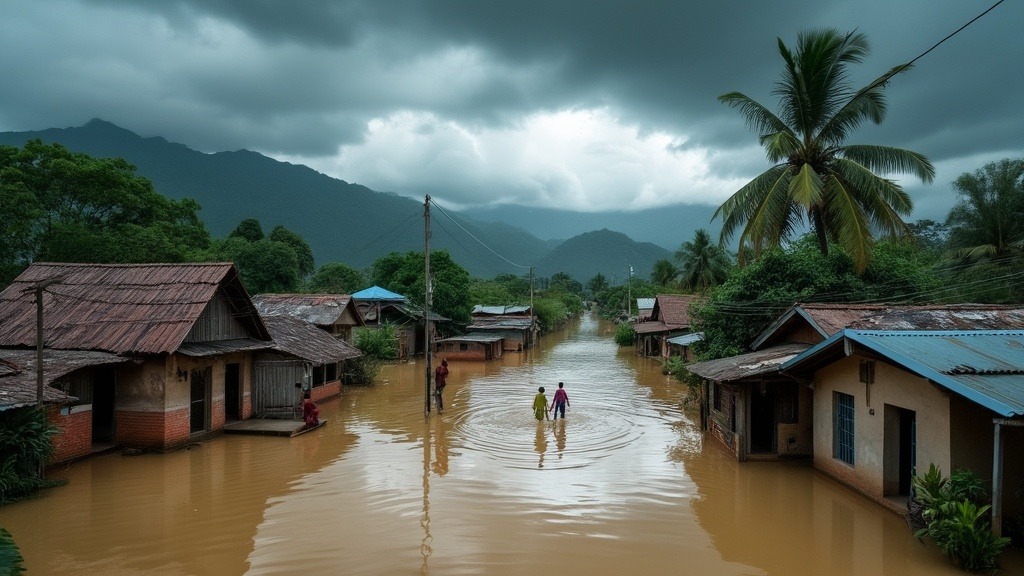
    A dramatic scene of a flooded village in Bihar, India, with muddy waters submerging homes, people wading through knee-deep water, and dark storm clouds overhead, contrasted by a distant landslide in Nepal’s mountains.

    April 2025 has been nothing short of devastating for South Asia. What was supposed to be a calm, pre-monsoon month turned into a nightmare as unexpected heavy rainfall led to massive floods and landslides across India and Nepal. According to a Reuters report on April 11, over 100 people have lost their lives. The worst-hit regions include Bihar and Uttar Pradesh in India, along with parts of Nepal. Honestly, as I went through the news, the gravity of it all hit me—this isn’t just another natural calamity. It’s yet another sign of how dangerously off-balance our climate has become, and how unprepared we still are to face it.

    A Disaster of Terrifying Proportions

    By April 12, the death toll had already crossed 100. Bihar alone reported between 64 and 82 deaths, while Uttar Pradesh recorded 18–20, and Nepal reported 8 deathsmostly due to flash floods, landslides, and lightning strikes. In Bihar, where people are no strangers to seasonal floods, this time entire villages went underwater. Families were displaced, farmlands were destroyed, and daily life was thrown into disarray.

    Uttar Pradesh, meanwhile, witnessed multiple deaths due to lightning a grim reminder of how unpredictable and deadly these weather events are becoming. In Nepal too, lightning took 8 lives, which doesn’t usually grab headlines but is just as dangerous, especially in rural and hilly areas.

    And if that wasn’t enough, Uttarakhand’s Chamoli district had its own share of misfortune. On April 9, a debris flow in Tharali village damaged homes and roads, cutting off access to several areas. It was caused by a sudden downpour after a spell of extreme heat something that simply doesn’t fit into our usual weather patterns. This change in timing and intensity of rainfall is becoming more common, and honestly, it’s deeply unsettling. It feels like we’re entering a new era where the old seasonal calendar no longer applies.

    What’s Really Causing This?

    It’s a mix of climate change and human error both feeding into each other. Scientists have been warning us for years. A study from World Weather Attribution looking at Nepal’s 2024 floods revealed that rainfall was 10% more intense due to human-driven climate change, and such extreme rainfall is now 70% more likely than in a world just 1.3°C cooler. This April’s flooding fits that pattern perfectly unseasonal, extreme, and deadly.

    But blaming it all on the weather would be oversimplifying things. Human actions have made these situations far worse. In Nepal, cities like Kathmandu have seen rampant construction along the Bagmati river floodplain, raising flood risks significantly. In India, places like Uttarakhand are losing their forest cover at alarming rates. For instance, some areas in Wayanad have seen a 62% drop in green cover. So when sudden rain hits, unstable slopes just give way.

    Poor urban drainage in cities like those in Uttar Pradesh turns a few hours of rain into a flood. Meanwhile, in rural India where over 80% of the population lives communities simply don’t have the infrastructure or resources to deal with such disasters.

    The Human and Economic Cost

    What’s truly painful is the human toll this disaster has taken. In Bihar, dozens have died and thousands more are likely displaced, though the full extent is still unclear. Farmers in Uttar Pradesh, working in the open fields, were caught unaware by lightning. In Nepal, mountainous terrain always poses extra danger during such events landslides can hit suddenly and with deadly force.

    On the economic front, the losses are going to be massive. While official numbers for this April’s events aren’t available yet, previous data gives us a rough idea. The 2024 floods in Nepal caused damage worth NPR 17 billion about USD 126 million including large-scale agricultural losses. Similarly, the 2024 floods in Assam wiped out crops across four lakh hectares. Given that Bihar is a crucial agricultural hub, the impact this time will likely be just as severe. Crops have been lost, infrastructure is damaged, and many rural communities are now cut off and waiting for help.

    In Uttarakhand, the debris flow left roads damaged and rescue work delayed. And in Nepal, where many areas still struggle with poor roads and basic rescue equipment, the same old problems have shown up againtoo little, too late.

    Government Response: Gaps Still Exist

    Both India and Nepal have response teams and budgets in place, but this disaster has again revealed some glaring shortcomings. India’s NDRF (National Disaster Response Force) is probably already deployed in Bihar and UP, just like during the 2024 Assam floods when they carried out over a thousand rescue ops. The government has allocated ₹26,841.60 crore for disaster relief in 2024–25, but the speed at which help reaches remote or rural areas is still a major issue.

    Nepal’s army rescued thousands during the 2024 floods, but outdated gear and blocked roads made the job harder than it should have been. The same bottlenecks are visible in 2025 as well. Early warning systems only give a three-day forecast, and many people displaced in previous disasters are still living in high-risk zones. India, too, has its own blind spots. Only 7% of its dams have Emergency Action Plans, which is a disaster waiting to happen if sudden water releases flood nearby villages.

    So while there’s effort, there’s a serious lack of long-term vision. Fixing potholes after the car crashes isn’t enough anymore—we need to be ahead of the curve, especially with disasters like these becoming more frequent.

    Why Isn’t the World Paying Attention?

    One thing that’s hard to ignore is how little global attention this disaster has received. Just a few days ago, on April 9, a nightclub collapse in the Dominican Republic killed 124 people—and it made international headlines. But here, with more than 100 lives lost across India and Nepal, the world has mostly stayed silent.

    This sort of bias isn’t new. South Asian disasters are often overshadowed by those in the West. It affects not just media coverage but also international aid and global awareness. On X (formerly Twitter), people like @SUNOFM894 are calling it a climate crisis, but deeper conversations about accountability, infrastructure, or preparedness are largely missing.

    If the global conversation continues to ignore South Asia’s challenges, how are we ever going to get the support we need? These stories must be told, and they must be heard.

    Looking Ahead: Can South Asia Adapt?

    This April’s floods are more than just a natural calamity—they are a warning siren. Yes, climate change is real and playing a major role. But so are our own decisions—deforestation, poor town planning, and lack of readiness. Together, they turn what could have been manageable rainfall into a full-blown crisis.

    The good news? There are some promising signs. Nepal’s National Adaptation Plan for 2021–2050 lays out a $47 billion roadmap for improving forecasting systems and promoting reforestation. India is working on agro-ecological zoning and building more resilient infrastructure, supported by agencies like the World Bank.

    But here’s the thing—none of it will matter if these efforts don’t reach the most vulnerable. That means the rural farmer in Bihar, the mountain villagers in Nepal, and the informal settlers living in flood-prone zones across South Asia.

    I do believe we can weather this storm—but only if we shift our mindset from reaction to prevention, from paperwork to action, and from top-down policies to ground-level change.

    Final Thoughts

    The April 2025 floods and landslides are a painful chapter in South Asia’s ongoing struggle with climate and disaster. More than 100 lives lost, countless homes wrecked, and dreams washed away—this is not just a one-time tragedy. It’s a call to do better. But if there’s one thing this region has shown time and again, it’s resilience. Amidst all the destruction, people will rebuild. But it’s up to all of us—governments, citizens, and even the global community—to stand with them, not just with sympathy, but with real support and change.

    Curious to dive deeper? Don’t miss this related post: More than 100 people killed after heavy rain hits India, Nepal

    Interested in this? You’ll also want to read: ₹6,839 Cr indian Border Plan: Security or Development?