Category: Economy & Law

  • ₹6,839 Cr indian Border Plan: Security or Development?

    ₹6,839 Cr indian Border Plan: Security or Development?

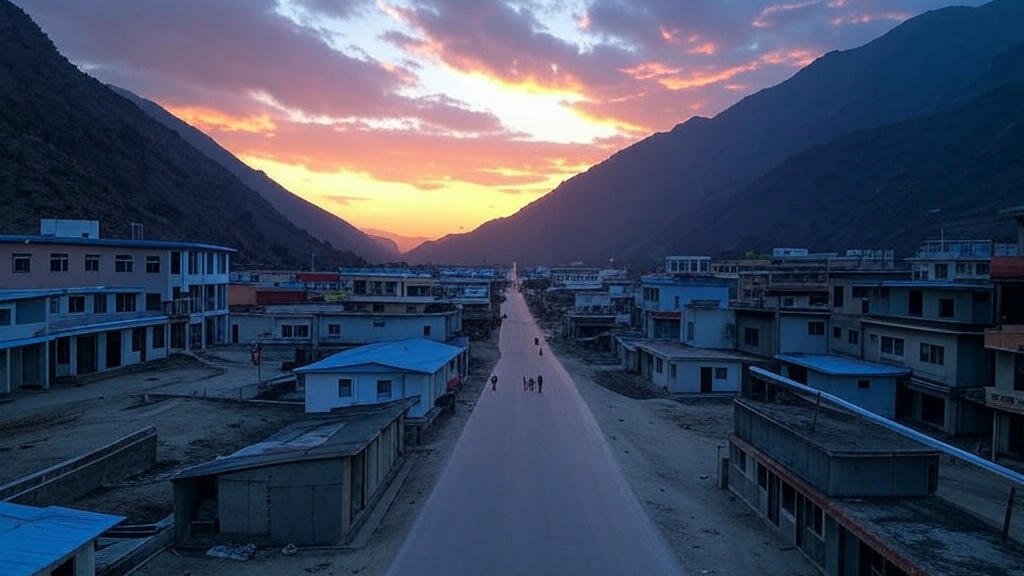
    A vibrant sunset scene over an Indian border village with new roads and SMART classrooms, flanked by rugged mountains and a faint Chinese border post, symbolizing hope and tension.

    Imagine a quiet village tucked between jagged mountain ranges, where the silence carries both tension and hope. Now picture that same place buzzing with new roads, smart classrooms, and tourists. On April 6, 2025, the Indian cabinet announced something massive—₹6,839 crore for the second phase of the Vibrant Villages Programme (VVP-II). Since then, the chatter hasn’t stopped. Some call it a bold move to tighten our borders against China, while others say it’s just another dream that may get buried under red tape.

    Let’s unpack what’s going on.

    The Big Push But What’s the Real Goal?

    Last Sunday, the cabinet, headed by Prime Minister Narendra Modi, gave the nod to pour ₹6,839 crore into villages along India’s international borders. This covers 17 states and union territories—from the valleys of Jammu & Kashmir to the edges of Arunachal and Rajasthan.

    The plan runs till 2028-29, and on paper, it sounds impressive: build all-weather roads, set up SMART classrooms, create tourism circuits, and launch livelihood schemes like cooperatives. It’s an upgrade to the original Vibrant Villages Programme that kicked off in 2023—but this time, with more money, more urgency, and maybe, more politics.

    The government says the goal is to integrate these distant communities into the national fabric—so they don’t just survive on the fringe but become the “eyes and ears” for the forces guarding our borders.

    But here’s the twist—opinions are split. Some are calling it a geopolitical masterstroke. Others are asking the obvious: will this money really reach the ground, or is it just another scheme that’ll get lost in the system?

    Security or Human Touch? That’s the Core Fight

    The heart of this debate is simple: is this about guarding the border, or is it about building lives?

    Security thinkers are all in. After the Galwan clash in 2020, India has been on high alert. Stronger roads help move troops faster. Better internet and mobile networks mean people living there can stay connected—unlike before when they were left in isolation, which China has used to its advantage. Making border villagers active participants in security sounds like a smart, people-powered shield. And given how much China has invested in its “Xiaokang” border villages, this is clearly India’s reply.

    But flip the view, and development-focused voices are asking tougher questions. This isn’t just about bunkers and boots on the ground. It’s about children walking miles for school, villages that still wait for drinking water, and entire communities that migrate for survival. If done right, this ₹6,839 crore could finally change that—giving them stable jobs, tourism income, and the dignity of staying where they belong.

    Yet, memories of past schemes linger. Vibrant Villages Phase I had ₹4,800 crore behind it, but many of those villages are still waiting for the promises to materialise. That’s where the doubt creeps in.

    It’s Not Just About Borders It’s About Belonging

    This debate isn’t just technical it hits right at India’s identity.

    Our borders aren’t just fences or lines on maps. They are living, breathing spaces. Villages in Ladakh, Arunachal, and Sikkim have held their ground despite years of neglect. Many of these places see more yaks than tourists. They’ve lost people to migration and have watched China quietly build railways, schools, and showpiece villages just across the fence.

    This ₹6,839 crore isn’t just an investment—it’s a statement. A way to say: we see you, we need you, and we’re with you.

    Globally too, this changes India’s pitch. While the U.S. gets tangled in tariff wars and China expands its influence brick by brick, India is saying: “We’ll hold our ground, but we’ll also grow our roots.” But it’s a tightrope. Focus too much on infrastructure, and the human side gets lost. Focus only on people, and security might fall behind. Striking the right balance is tricky—but necessary.

    What Can This Really Achieve?

    So here’s the big question: will this plan work?

    If executed well, it could be huge. Imagine 2,000+ villages with proper roads, digital classrooms, cooperative-based businesses, and cultural festivals pulling in tourists. That’s not just pride—it’s real progress.

    The government says it’ll use PM Gati Shakti to coordinate planning and cut red tape. But we’ve seen delays before—remember the Sela Tunnel? Projects on paper often take years longer on the ground.

    And ₹6,839 crore, while big, gets spread out thin once you account for terrain, logistics, and corruption. Execution is everything. The difference between a headline and real change lies in that one word.

    On the Ground, The Talk Is Real

    Online, the arguments are flying.

    Some folks are proud, posting about India finally “catching up” with China. Others are cynical, asking, “Where did the last ₹4,800 crore go?” It’s classic Indian discourse—half hopeful, half weary. And maybe both sides are right.

    My take? This could genuinely shift things—if the money flows past the files and into the villages. Picture a Ladakhi artisan selling woven goods to visiting trekkers, or a girl from Tawang learning science in a smart classroom without needing to migrate to a town 60 km away. That’s the kind of story worth building.

    As of April 10, the Clock Has Started Ticking

    This ₹6,839 crore isn’t just a number—it’s a bet on how we see our own people at the edge. Is it a protective shield against outside threats? Yes. Is it a chance to bring dignity and opportunity to some of India’s most forgotten citizens? Also yes.

    The real test? Between now and 2028-29. That’s when we’ll know whether this was just another press release or a proper turning point.

    Till then, the debate’s onand you should be part of it. What do you think: smart strategy or another empty promise? Pull up a chair, pour some chai, and let’s talk.

    Explore more insights with this related artical. clickhere

    If this topic caught your attention, here’s another one worth checking out: check here
  • Trump Tariffs 2025: Economic Impact on India, China & Beyond

    Trump Tariffs 2025: Economic Impact on India, China & Beyond

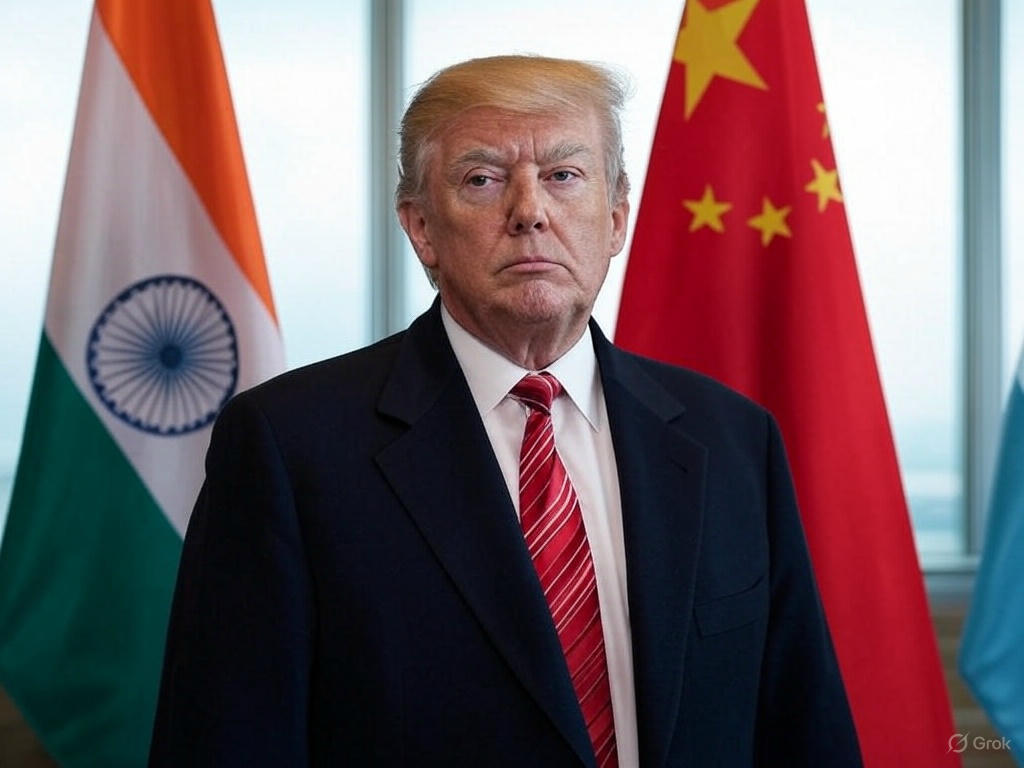
    Donald Trump standing between the flags of India and China, wearing a dark suit and red tie, with a serious expression, symbolizing trade policy discussions.

    A New Era of Trade Policy: What’s This Tariffs Drama in 2025?

    So, here we are again the world’s economy is at some kind of big crossroad, all because of Trump and his new tariffs in 2025. You’ve probably heard about that crazy 104% tax on Chinese stuff. And then he’s got these reciprocal tariffs hitting other countries left, right, and centre. Everyone’s got something to say big economists, politicians, even my neighbour who runs a small shop. Trump’s shouting it’ll bring jobs back to America. But some folks are like, “Wait a minute, this could land us all in a recession!” Honestly, I don’t know who to believe yet. So, let’s sit down and figure this out—what’s going to happen with prices, jobs, markets, all that jazz. It’s going to be a rough ride, so hold on tight.

    What’s the Deal with Tariffs Anyway?

    Look, tariffs are just taxes we slap on things coming from outside—like clothes, phones, whatever. The whole point? Make that foreign stuff cost more, so we start buying what’s made here. Trump’s saying this’ll get American businesses buzzing again, bring jobs home. Fair enough, sounds nice. But hang on—things aren’t that straightforward. Economics isn’t like a cricket match where one side wins and that’s it. It’s more like a big tangle of threads.

    People have been fighting over tariffs since forever. Some swear it’s the best way to save our factories and cut those trade gaps we keep hearing about. But then others pipe up, “No way, this just means everything gets expensive!” And yeah, they’re not wrong. When stuff from China or Europe costs a bomb, it’s not just fancy people feeling it—it’s me and you at the shop too. Plus, if those countries get annoyed and hit backlike China did with 84% on American goods—it’s trouble. Jobs might pop up in some places, sure, but in others like shops or farms—they could vanish. It’s a risky game, and we’re all watching to see who’s right.

    Prices Going UpThanks, Tariffs!

    Let’s talk real stuff now—inflation. You know how it is—when things cost more to bring in, the shop guy doesn’t just smile and take it. He puts the price up for us. People who study this stuff say Trump’s tariffs might make everything pricier soon. Think about it—factories need steel or those little phone chips from abroad. If that gets costly, the cars or gadgets they make? Boom, prices jump—maybe 10-20% more, depending how bad it gets.

    And it’s not stopping there. When daily things—like soap or shoes—cost more, we all start asking for bigger paychecks. That just keeps pushing inflation up! Some clever folks reckon it could go from 2.8% now to 4.4% by the end of the year. For families like mine, already stretching every rupee, that’s no joke—less money for fun, more worry. Trump’s like, “Relax, we’ll make more here soon.” But come on, building new factories isn’t quick—it’s years, not days. So, for now, it’s us regular people stuck with the bill.

    Supply and Demand—It’s a Messy Fight

    Tariffs don’t just mess with prices—they turn supply and demand into a proper wrestling match. On the supply side, it’s a headache. Say there’s a 50% tariff on Chinese electronics. Companies can’t keep buying from there—they’ll hunt for other places. But those new options? Either too expensive or not good enough. So, what happens? Things like chips get rare, and suddenly, your car or fridge isn’t ready when you want it. Prices don’t come down because there’s just not enough stuff.

    Then there’s demand. When prices climb, we all think twice—do I need that new shirt? Maybe not today. Businesses feel it too—they’re scared to spend big when nothing’s clear. But here’s the funny part—if local stuff gets cheaper than imports, maybe we’ll buy that instead. Could work, if they can make enough. Meanwhile, other countries hitting back with tariffs—like on our soybeans or planes—that’s bad news for farmers and factories here. It’s a big push-and-pull, and tariffs are making it wild. No wonder the markets are jumpy and we’re holding our cash tight.

    The Ugly Side of Tariffs

    Okay, tariffs sound like they’ll fix everything, but there’s a catch—plenty of bad stuff too. For one, the whole economy might slow down. Higher costs, less trade? That’s trouble brewing. Some folks who know this game say there’s a 45-60% chance America could hit a recession next year. Jobs in shops or delivery could disappear if people stop buying. And if countries like Canada or the EU keep throwing tariffs back—like China’s 84% on our goods—it’s a full-on trade fight. Everyone loses then.

    There’s even this weird thing called stagflation—prices keep going up, but the economy’s stuck. That’s a real pain for everyone, even the big shots at the banks. The worst part? If we all feel broke and scared, we stop spending. Businesses see that, and they’re like, “Why hire now?” It just keeps getting worse. Spooky, isn’t it?

    Markets Acting Crazy

    You should’ve seen the markets when Trump dropped this tariff bomb! The S&P 500 tanked over 10% in two days—same chaos in Asia, Europe, everywhere. Why? Nobody likes not knowing what’s next. Investors are like, “Will Trump push more or chill out?” Companies like Apple or Walmart, who grab stuff from all over, are sweating buckets. Costs are up, profits might drop. And when stocks crash, it hits people’s savings—especially the rich ones who spend big.

    But it’s not all gloom. Some local businesses—like steel guys—might get a boost if tariffs help them. Still, right now, it’s a rollercoaster. People are hoping the Fed cuts rates to ease the pain, but that’s just sticking a plaster on it, not fixing the mess.

    What’s Coming Next?

    So, where are we headed? The next few months are make-or-break. Prices for imported things will probably shoot up by summer—shops won’t wait to charge us more. Meanwhile, places like Japan and South Korea are talking to the U.S., trying to soften these tariffs. If that works out, trade might not crash too hard. But if we stop spending or businesses get nervous, recession’s knocking. Keep an eye on job news and growth stuff—it’ll show us the real picture.

    Trump’s dropping little hints he might change things, but his “be cool” talk? Sounds like he’s not backing down. If he does ease up, markets might relax a bit. For us regular folks, better start planning now—stick to what you need, maybe buy local if it’s cheaper. Businesses? Find new suppliers quick, before everyone’s scrambling. And if you’ve got stocks, don’t panic—spread it out, hang on. Markets always find a way, somehow.

    Any Hope Left?

    Look, it’s not all bad news. If tariffs go right, they might fire up American factories again. Trump’s also pushing tax cuts and fewer rules—could lift things up a bit. Maybe trade deals get better, and the U.S. comes out stronger. But that’s a big maybe—it’s a long road, and there’s heaps of trouble ahead. Still, a little hope keeps us going, right?

    Wrapping Up: Facing This Tariff Mess

    Look, Trump’s tariffs are a big, loud try at something—bold, sure, but who knows if it’ll work? Prices are probably going up, supply’s getting all tangled, and markets? They’re shaking like anything. For us regular folks and even the shop owners, it’s tough times ahead—everything’s getting costlier, and nobody’s sure what’s next. Still, there’s a way to push through, you know—maybe find new places to buy from, put some cash into our own stuff, or just hope the big guys sort out smarter trade rules.

    This whole tariff thing? It’s not going to settle in a day or two—it’ll drag on for months. Keep your ears open, make a plan, and don’t let all those scary news bits freeze you up. The economy’s like a river—it keeps moving, changing. The real question is, can we keep up with it or not?

  • Kunal Kamra vs Shiv Sena: When a Joke Lands You in Court

    Kunal Kamra vs Shiv Sena: When a Joke Lands You in Court

    Kunal Kamra vs Shiv Sena: Get the full scoop on the free speech debate

    India is a noisy country. From loudspeakers during elections to heated tea-stall debates we Indians don’t keep quiet easily. But somehow, when it comes to cracking jokes about politics, silence suddenly becomes golden. Especially if you’re someone like Kunal Kamra.

    Now, kunal Kamra is no stranger to controversies. His jokes often poke at political leaders, and let’s be honest not everyone enjoys that kind of humour. But this time, things have gone way beyond social media outrage.

    One Joke, Many Problems

    This whole mess began in Mumbai. Kamra was doing a live comedy show, just like always. And during the set, he called Maharashtra CM Eknath Shinde a “traitor”. It wasn’t random — it was tied to the big Shiv Sena split from back in 2022. You remember, right? The one that shook up Maharashtra politics like anything.

    Anyway, this small line didn’t sit well with Shiv Sena (Shinde group) MLA Sanjay Shirsat. He filed a complaint, and just like that, Mumbai Police jumped in. But here’s the twist not only did Kamra get summoned, even the audience members sitting there got notices from the cops.

    Yes, you heard that right. Just sitting and laughing at a joke might now need a lawyer.

    Kunal Kamra Claps Back

    Now, Kamra’s not someone who hides behind silence. He put the police notice on social media, calling the whole thing “institutional bullying.” His question was simple “So now even laughing at political jokes is a crime?”

    Honestly, he’s got a point. In a democracy like ours, shouldn’t people be free to speak and laugh?

    The Courts Step In

    The Bombay High Court saw what was happening and decided to get involved. On April 8, they asked Mumbai Police and MLA Shirsat to explain why this drama was even happening. They’ve set April 16 as the date to hear the matter properly.

    Kamra’s lawyers are saying this whole thing is a straight-up attack on free speech. They’re pointing to Article 19(1)(a) of our Constitution the one that says every Indian has the right to speak freely.

    Meanwhile, the Shiv Sena MLA says Kamra’s joke wasn’t comedy it was defamation. So now, we’ve reached that tricky spot where freedom and feelings are crashing into each other.

    The Business Side: Shows Disappear

    This case didn’t just stay in the legal zone. Some of Kamra’s upcoming shows were suddenly removed from ticketing apps. One major platform gave a very vague response something about “internal reasons.” But let’s be real, people aren’t buying that excuse.

    Many are calling it corporate censorship a quiet way of saying, “Stay away from troublemakers.”

    And for a comedian, losing shows like this is no small thing. It hits where it hurts.

    Public Reaction: Totally Divided

    Social media, as expected, went full-on Bollywood drama mode. Half the people are standing with Kamra. They’re saying things like:

    • “If comedians can’t joke about leaders, who can?”
    • “This is harassment, plain and simple.”

    But others? Not so happy. They believe Kamra crossed the line.

    • “There’s a difference between freedom and insult,” some said.
    • “You can’t say just anything and call it a joke.”

    Honestly, this fight reflects the larger mood of the country half of us want strong leaders, half of us want stronger voices.

    Not Just About Kunal Kamra

    This isn’t new. Kamra’s not the only one who’s been in trouble for cracking jokes. Munawar Faruqui, Agrima Joshua, Vir Das you name them, they’ve all faced some heat.

    It’s slowly becoming clear comedy is turning into a risky business in India. And when cracking a joke brings police, FIRs, and court hearings, you have to ask is this how we want things to be?

    Audience Summons: Seriously?

    But wait, let’s not forget the weirdest part of this whole drama the audience summons. Since when did sitting in a chair and laughing quietly make you guilty?

    It sets a bad example. Today it’s a show. Tomorrow, what? Watching a meme? Clapping during a skit? Will that be enough for the police to come knocking?

    Where does it stop?

    Final Thoughts: Not Just Laughter, It’s Freedom

    This whole thing is not just about Kamra. It’s about something bigger the right to joke, the space for humour, and the freedom to speak up without fear.

    We don’t have to love every joke. But we do need to protect the right to joke. Because when laughter gets filtered, truth gets filtered too.

    And if we stop laughing at those in power, we might stop questioning them altogether.

    So as the Bombay High Court hears this matter on April 16, let’s just hope we’re not becoming a country where even laughing needs permission.