Author: Sandeep A

  • South Asia Struggles Through Unseasonal Floods and Landslides

    South Asia Struggles Through Unseasonal Floods and Landslides

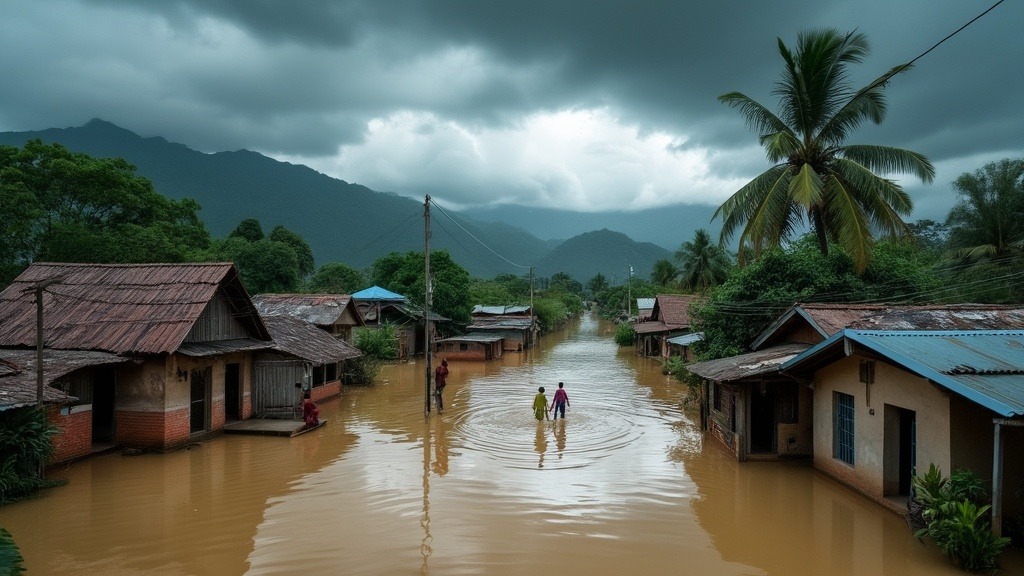
    A dramatic scene of a flooded village in Bihar, India, with muddy waters submerging homes, people wading through knee-deep water, and dark storm clouds overhead, contrasted by a distant landslide in Nepal’s mountains.

    April 2025 has been nothing short of devastating for South Asia. What was supposed to be a calm, pre-monsoon month turned into a nightmare as unexpected heavy rainfall led to massive floods and landslides across India and Nepal. According to a Reuters report on April 11, over 100 people have lost their lives. The worst-hit regions include Bihar and Uttar Pradesh in India, along with parts of Nepal. Honestly, as I went through the news, the gravity of it all hit me—this isn’t just another natural calamity. It’s yet another sign of how dangerously off-balance our climate has become, and how unprepared we still are to face it.

    A Disaster of Terrifying Proportions

    By April 12, the death toll had already crossed 100. Bihar alone reported between 64 and 82 deaths, while Uttar Pradesh recorded 18–20, and Nepal reported 8 deathsmostly due to flash floods, landslides, and lightning strikes. In Bihar, where people are no strangers to seasonal floods, this time entire villages went underwater. Families were displaced, farmlands were destroyed, and daily life was thrown into disarray.

    Uttar Pradesh, meanwhile, witnessed multiple deaths due to lightning a grim reminder of how unpredictable and deadly these weather events are becoming. In Nepal too, lightning took 8 lives, which doesn’t usually grab headlines but is just as dangerous, especially in rural and hilly areas.

    And if that wasn’t enough, Uttarakhand’s Chamoli district had its own share of misfortune. On April 9, a debris flow in Tharali village damaged homes and roads, cutting off access to several areas. It was caused by a sudden downpour after a spell of extreme heat something that simply doesn’t fit into our usual weather patterns. This change in timing and intensity of rainfall is becoming more common, and honestly, it’s deeply unsettling. It feels like we’re entering a new era where the old seasonal calendar no longer applies.

    What’s Really Causing This?

    It’s a mix of climate change and human error both feeding into each other. Scientists have been warning us for years. A study from World Weather Attribution looking at Nepal’s 2024 floods revealed that rainfall was 10% more intense due to human-driven climate change, and such extreme rainfall is now 70% more likely than in a world just 1.3°C cooler. This April’s flooding fits that pattern perfectly unseasonal, extreme, and deadly.

    But blaming it all on the weather would be oversimplifying things. Human actions have made these situations far worse. In Nepal, cities like Kathmandu have seen rampant construction along the Bagmati river floodplain, raising flood risks significantly. In India, places like Uttarakhand are losing their forest cover at alarming rates. For instance, some areas in Wayanad have seen a 62% drop in green cover. So when sudden rain hits, unstable slopes just give way.

    Poor urban drainage in cities like those in Uttar Pradesh turns a few hours of rain into a flood. Meanwhile, in rural India where over 80% of the population lives communities simply don’t have the infrastructure or resources to deal with such disasters.

    The Human and Economic Cost

    What’s truly painful is the human toll this disaster has taken. In Bihar, dozens have died and thousands more are likely displaced, though the full extent is still unclear. Farmers in Uttar Pradesh, working in the open fields, were caught unaware by lightning. In Nepal, mountainous terrain always poses extra danger during such events landslides can hit suddenly and with deadly force.

    On the economic front, the losses are going to be massive. While official numbers for this April’s events aren’t available yet, previous data gives us a rough idea. The 2024 floods in Nepal caused damage worth NPR 17 billion about USD 126 million including large-scale agricultural losses. Similarly, the 2024 floods in Assam wiped out crops across four lakh hectares. Given that Bihar is a crucial agricultural hub, the impact this time will likely be just as severe. Crops have been lost, infrastructure is damaged, and many rural communities are now cut off and waiting for help.

    In Uttarakhand, the debris flow left roads damaged and rescue work delayed. And in Nepal, where many areas still struggle with poor roads and basic rescue equipment, the same old problems have shown up againtoo little, too late.

    Government Response: Gaps Still Exist

    Both India and Nepal have response teams and budgets in place, but this disaster has again revealed some glaring shortcomings. India’s NDRF (National Disaster Response Force) is probably already deployed in Bihar and UP, just like during the 2024 Assam floods when they carried out over a thousand rescue ops. The government has allocated ₹26,841.60 crore for disaster relief in 2024–25, but the speed at which help reaches remote or rural areas is still a major issue.

    Nepal’s army rescued thousands during the 2024 floods, but outdated gear and blocked roads made the job harder than it should have been. The same bottlenecks are visible in 2025 as well. Early warning systems only give a three-day forecast, and many people displaced in previous disasters are still living in high-risk zones. India, too, has its own blind spots. Only 7% of its dams have Emergency Action Plans, which is a disaster waiting to happen if sudden water releases flood nearby villages.

    So while there’s effort, there’s a serious lack of long-term vision. Fixing potholes after the car crashes isn’t enough anymore—we need to be ahead of the curve, especially with disasters like these becoming more frequent.

    Why Isn’t the World Paying Attention?

    One thing that’s hard to ignore is how little global attention this disaster has received. Just a few days ago, on April 9, a nightclub collapse in the Dominican Republic killed 124 people—and it made international headlines. But here, with more than 100 lives lost across India and Nepal, the world has mostly stayed silent.

    This sort of bias isn’t new. South Asian disasters are often overshadowed by those in the West. It affects not just media coverage but also international aid and global awareness. On X (formerly Twitter), people like @SUNOFM894 are calling it a climate crisis, but deeper conversations about accountability, infrastructure, or preparedness are largely missing.

    If the global conversation continues to ignore South Asia’s challenges, how are we ever going to get the support we need? These stories must be told, and they must be heard.

    Looking Ahead: Can South Asia Adapt?

    This April’s floods are more than just a natural calamity—they are a warning siren. Yes, climate change is real and playing a major role. But so are our own decisions—deforestation, poor town planning, and lack of readiness. Together, they turn what could have been manageable rainfall into a full-blown crisis.

    The good news? There are some promising signs. Nepal’s National Adaptation Plan for 2021–2050 lays out a $47 billion roadmap for improving forecasting systems and promoting reforestation. India is working on agro-ecological zoning and building more resilient infrastructure, supported by agencies like the World Bank.

    But here’s the thing—none of it will matter if these efforts don’t reach the most vulnerable. That means the rural farmer in Bihar, the mountain villagers in Nepal, and the informal settlers living in flood-prone zones across South Asia.

    I do believe we can weather this storm—but only if we shift our mindset from reaction to prevention, from paperwork to action, and from top-down policies to ground-level change.

    Final Thoughts

    The April 2025 floods and landslides are a painful chapter in South Asia’s ongoing struggle with climate and disaster. More than 100 lives lost, countless homes wrecked, and dreams washed away—this is not just a one-time tragedy. It’s a call to do better. But if there’s one thing this region has shown time and again, it’s resilience. Amidst all the destruction, people will rebuild. But it’s up to all of us—governments, citizens, and even the global community—to stand with them, not just with sympathy, but with real support and change.

    Curious to dive deeper? Don’t miss this related post: More than 100 people killed after heavy rain hits India, Nepal

    Interested in this? You’ll also want to read: ₹6,839 Cr indian Border Plan: Security or Development?

  • Top 10 Budget-Friendly Travel Destinations for 2025

    Top 10 Budget-Friendly Travel Destinations for 2025

    Collage featuring budget-friendly travel destinations including Vietnam, Sri Lanka, and Turkey, with scenic landscapes, local currency symbols, and a backpacker-style traveler.

    Let’s face it we all dream of going abroad, clicking photos in some foreign galli, sipping chai in a mountain café, and feeling like we’re in a Bollywood travel song. But when we check our wallet or bank app… bas, mood kharaab.

    Still, if you’re clever with timing and don’t mind skipping luxury for some jugaad, 2025 can be your travel year. With the rupee holding up okay, and some good flight hacks and visa shortcuts, you can explore solid places without spending more than ₹1 lakh. And yeh koi “cheap-for-name” type nahi hai these are full paisa vasool spots.

    Here’s a list I made not copied from some travel site of 10 budget-friendly destinations that you can do, even if you’re on a middle-class salary and EMI life.

    1. Vietnam – Where ₹100 Feels Like ₹500

    Vietnam is that place where your INR feels like it’s wearing a Superman cape. Hanoi, Da Nang, Hoi An — each city has its own charm. The food? Wah bhai, street pho with mint chutney-type flavours. Hotels? You’ll get a proper room for less than what a Mumbai sandwich costs in Bandra.

    Rough Daily Budget: ₹2,500 – ₹3,000
    Visa: E-visa (online)
    Don’t Miss: Ha Long Bay cruise, old-school Hoi An lantern streets, and local coffee that’ll kick harder than our nukkad wali chai.

     2. Sri Lanka – Feels Like Goa Got a Makeover

    Just a hop away, Sri Lanka feels like that distant cousin who’s chill, well-dressed, and still desi at heart. Think of it as Goa with a bit more class and less crowd. Flights are super cheap if you keep checking for sales (especially from Chennai or Kochi).

    Rough Daily Budget: ₹2,000 – ₹3,000
    Visa: ETA (apply online)
    Don’t Miss: That dreamy Ella train ride, Sigiriya rock fort, and Mirissa’s peaceful waves.

    3. Georgia – Not America Wala, This One’s a Secret Gem

    People hear “Georgia” and think USA, but this one’s closer and way friendlier on the pocket. Mountains, cobblestone lanes, cozy cafés it’s like walking in a fairytale that didn’t charge entry fees.

    Rough Daily Budget: Around ₹3,500
    Visa: E-visa (if you have UAE/US/UK/Schengen visa)
    Don’t Miss: The Kazbegi hills and that cheesy khachapuri bread fills both heart and tummy.

    4. Nepal – No Passport, No Tension

    You know what’s great about Nepal? It feels both foreign and familiar. You cross the border, and suddenly you’re in front of the Himalayas, sipping thukpa, and thinking “Yeh sab toh itne paas tha!” And no visa drama either.

    Rough Daily Budget: ₹1,500 – ₹2,000
    Visa: Not needed for Indians
    Don’t Miss: Pokhara’s peaceful lakes, that bucket-list Mount Everest flight, and old Buddhist temples.

    5. Turkey – Desi Feel in Foreign Setting

    This one’s a full paisa vasool mix Europe and Asia in one thali. From chai by the Bosphorus to walking through ancient Roman ruins, Turkey has everything. And hot air balloon in Cappadocia? Arre, that’s straight out of a dream.

    Rough Daily Budget: ₹3,500 – ₹4,000
    Visa: E-visa (if you have US/UK/Schengen visa)
    Don’t Miss: Istanbul’s chaos, hammam baths, and the fairy chimneys of Cappadocia.

    6. Indonesia – Bali is Not Just for Honeymooners

    Bali used to be that honeymoon cliché, but now solo travellers and friend groups are owning it. Stay in hostels, rent a scooty, eat nasi goreng for 100 bucks it’s all budget-friendly if you skip the fancy resorts.

    Rough Daily Budget: ₹2,000 – ₹2,500
    Visa: Visa on arrival
    Don’t Miss: Ubud’s green paddy fields, monkey mischief, and beach sunsets that’ll melt your stress away.

    7. Egypt – Time Travel Without Time Machine

    Want to feel tiny next to history? Egypt is calling. Pyramids that’ve been around since before any country was born, plus tasty falafels and a Nile river cruise all without paying Euro prices.

    Rough Daily Budget: ₹3,000
    Visa: E-visa (simple online process)
    Don’t Miss: The Pyramids, Egyptian Museum, and floating peacefully down the Nile.

    8. Thailand – Always Reliable, Always Affordable

    Thailand is like that one friend who never lets you down. Whether you want beaches, parties, or temple trails it fits all moods. Also, no visa till mid-2025? That’s like a travel sale without discount codes.

    Rough Daily Budget: ₹2,000 – ₹2,500
    Visa: Free for Indians (till mid-2025)
    Don’t Miss: Street shopping in Bangkok, Chiang Mai’s mountains, and island-hopping fun.

    9. Philippines – Still Under the Radar

    If beach hopping is your vibe, Philippines should be on your radar. 7,000 islands, crystal water, and food that’s easy on the stomach and wallet. Just avoid peak seasons.

    Rough Daily Budget: ₹2,500 – ₹3,000
    Visa: E-visa needed
    Don’t Miss: Palawan, El Nido’s blue lagoons, and the unforgettable whale shark swim.

    10. Cambodia – Calm, Historic, and Pocket-Friendly

    Cambodia is not for the party crowd — it’s for people who want peace with a side of wow. Angkor Wat is surreal, and the pace of life here… slower than a rural Indian evening.

    Rough Daily Budget: ₹1,800 – ₹2,200
    Visa: Visa on arrival
    Don’t Miss: Sunrise at Angkor Wat, local fish curry, and the floating villages.

    Final Thoughts – You Don’t Need Big Money for Big Memories

    Let’s be real — you don’t need ₹5 lakh and first-class tickets to make memories. You just need the itch to explore, a little planning, and the guts to travel with less. Booking flights early, eating where locals eat, skipping luxury for stories — that’s the real desi traveller’s way.

    “Don’t wait till you’re rich to travel. Travel smart, and you’ll come back rich in memories.”

    What to Pack for a 2-Week Europe Trip from India check here

  • Best PC Games to Play in 2025

    Best PC Games to Play in 2025

    A futuristic PC gaming setup with neon lighting, featuring multiple monitors displaying fantasy, sci-fi, and post-apocalyptic game worlds. A sleek gaming chair, RGB keyboard, and scattered snacks add realism to the immersive scene.

    2025, boss, it’s turning out to be the year for PC gamers. Whether you’re into open-world stories, non-stop shooting, deep RPGs, or even slow, peaceful indies this year’s lineup is absolutely stacked.

    Developers are pushing boundaries, graphics look insane, and gameplay feels more real than ever. So if you’re thinking “What PC games should I play in 2025?”, you’re at the right place.

    Let’s dive into the best PC games you can (and should) play this year.

    🎮 Top PC Games You Shouldn’t Miss in 2025

    1. Baldur’s Gate 3 (Still Going Strong)

    Technically not a 2025 launch, but who cares? Baldur’s Gate 3 still feels fresh, especially with all the mods, updates, and community buzz.

    Why it’s still a must-play:

    • Every playthrough gives a new story
    • Mods keep adding more madness
    • Feels like you’re inside a fantasy movie

    2. Helldivers 2 – Pure Co-op Mayhem

    This one’s chaos in the best way possible. Team up with your friends, fight aliens, drop into enemy zones, and laugh your head off when your teammate “accidentally” nukes you.

    Why it’s a blast:

    • Missions are different every time
    • Friendly fire is on… for extra fun
    • Devs keep adding new content

    3. Dragon’s Dogma 2 – RPG Heaven

    Waited 10+ years for this? Totally worth it. Think Skyrim but more intense. You can’t just spam buttons and win. Dragons, goblins, cyclops you name it, it’s out to kill you.

    Why people are loving it:

    • Your companions (Pawns) learn and grow
    • World reacts to weather and time
    • Combat is heavy and satisfying

    4. Palworld – Pokémon With Guns?

    Yep, sounds wild. But Palworld is blowing up for a reason. It’s part survival, part shooter, part crafting game. Oh, and your cute creatures (Pals) can work and fight with you.

    What makes it click:

    • Craft, explore, and fight with your Pals
    • Build farms, factories, and full bases
    • Surprisingly fun once you start

    5. Starfield (But Modded to Perfection)

    At launch, Starfield was kinda meh for some people. But now, thanks to the modding community, it’s like a whole new game in 2025.

    Why it’s worth trying now:

    • Visual upgrades through mods
    • New quests, ships, and features
    • Feels more like “your” game than Bethesda’s

    🕹️ Upcoming PC Games to Keep an Eye On

    These games aren’t fully out yet but already getting serious hype:

    • S.T.A.L.K.E.R. 2: Heart of Chornobyl – Dark, moody, atmospheric survival game
    • Black Myth: Wukong – Looks stunning, action-packed, based on Chinese legends
    • Hades II – Early Access is out, and it’s already winning hearts

    💡 Hidden Gems & Indie Dhamakas

    Don’t sleep on indie games this year. Some of the best gaming experiences come from smaller teams with big ideas.

    Check these out:

    • Dave the Diver – Calm, funny, and addictive
    • Viewfinder – Mind-bending puzzle mechanics
    • Pizza Tower – Wacky platformer with serious speed

    Pro Tip: Steam’s New & Trending section is where you’ll find these gems.

    Before You Hit “Download”…

    🔧 Check Your Specs:
    Don’t get stuck at 10 FPS. Some of these games need a solid GPU.

    🧠 Read Real Reviews:
    Ignore sponsored hype. Check Steam reviews and Reddit threads for real talk.

    🎮 Try Free Demos:
    Especially for indie games test it before you commit.

    Final Thoughts: 2025 is Gaming Gold

    This year’s lineup is no joke. Whether you’re into fantasy RPGs, chaotic shooters, survival sims, or creative indie gems PC gaming in 2025 has something just for you.

    So grab your controller, update your drivers, and clear some space on your SSD. This is going to be a legendary year.

    Looking for more gaming and tech content? Check these out:

    If you’re looking for the best budget-friendly laptops for gaming in 2025, check out this blog on Best Budget Laptops Under ₹30,000 in India – 2025. It’s the ideal read if you want a gaming laptop that offers great value without compromising on performance.

  • How to Speed Up Your Laptop Without Buying a New One

    How to Speed Up Your Laptop Without Buying a New One

    Frustrated person staring at a slow laptop with speed and performance graphs in the background.

    1. Turn Off Startup Programs – Clean the Mess Before It Starts

    Ever wondered why your laptop acts lazy just after turning it on? That’s because it’s busy opening all sorts of random apps in the background. Half of them, you didn’t even ask for. Like, why is Zoom starting on its own when all you clicked was Chrome?

    No need to panic. Just do this:

    • Press Ctrl + Shift + Esc to open Task Manager
    • Head over to the Startup tab
    • Right-click and Disable whatever you don’t need urgently

    Tip: Keep your antivirus and system-related stuff ON. Rest, just remove the extra load.

    2. Remove Old Apps – Like That One Game You Played Once in 2019

    We all have this habit of keeping old apps “Shaayad kaam aa jaaye” type. But truth be told, most of them just sit and slow your laptop down.

    So better to do some cleaning:

    • Go to Settings > Apps > Installed Apps
    • Check what you haven’t used in months
    • Uninstall them without any mercy

    If you’re confused about any program, quickly Google it first. Better safe than sorry.

    3. Delete Temporary Files – Give Your Laptop a Fresh Breath

    Like we throw old wrappers and bills into the dustbin, your laptop also collects useless files over time. These “temporary” files do nothing but take space.

    Clear them like this:

    • Press Windows + R, type temp, and hit Enter
    • Delete all files shown there
    • Then do the same with %temp% and prefetch

    Feels nice, right? Like giving your laptop a warm bath after a long day.

    4. Keep Your System Updated – Those Annoying Updates Actually Help

    Yes, Windows updates show up at the worst times. Right before meetings or online exams. But skipping them only slows things down.

    Here’s what to do:

    • Go to Settings > Windows Update
    • Click Check for Updates
    • For drivers, go to Device Manager, update manually or use tools like Driver Booster

    Updates are like that bitter neem juice don’t like it, but it works.

    5. If Possible, Switch to SSD – The Best Upgrade for Speed

    Okay, this one costs a bit. But if you can save ₹2000-3000, then installing an SSD is like giving your old scooter a Bullet engine.

    Even slow laptops start running like new. Boot-up time drops like magic. Multitasking becomes smoother than desi butter on hot roti.

    If money is tight, no problem. But if you’ve got some spare cash, it’s worth it.

    6. Do a Malware Check – Hidden Enemies Slow You Down

    Sometimes your laptop acts weird slow, hanging, noisy fan. But no virus pop-up. Still, something’s wrong. That’s malware quietly doing mischief in the background.

    Don’t take a chance:

    • Use Windows Defender or trusted tools like Malwarebytes
    • Run a full scan every week
    • And please, avoid downloading shady files or pirated movies (haan haan, we’ve all done it once)

    7. Reduce Fancy Visuals – Shiny Effects Are Not Always Good

    Windows has too many animations opening, closing, shadow, zoom, etc. Looks nice, but it eats up speed.

    To tone it down:

    • Right-click This PC > Properties > Advanced System Settings
    • Under Performance, click Settings
    • Choose Adjust for best performance (or select what you don’t need)

    Your screen may look a little plain, but your laptop will breathe easy.

    8. Clean Your Desktop – Yes, That Mess Slows Things Too

    You’ve kept everything on the desktop photos, documents, project folders, even shortcuts from 2017.

    Time to clean up:

    • Move extra files into folders
    • Keep only 3-4 important icons outside
    • Also, switch off slideshow wallpaper. It looks cool, but eats up RAM

    Less clutter = faster loading.

    9. Restart Your Laptop Properly – Don’t Just Keep Putting It to Sleep

    Many of us just shut the lid and move on. But doing this for days builds up background processes.

    Make it a habit:

    • Restart your laptop every 2-3 days
    • It clears memory and refreshes the system

    Think of it like when we take off our slippers, wash our feet, and sleep well—same feeling for your machine.

    Final Words – Don’t Give Up on Your Laptop Yet

    Look, not every laptop problem needs a new laptop. Sometimes, a little cleaning, some jugaad, and basic care can make even a 5-year-old machine run smooth like fresh lassi on a hot day.

    So next time your laptop lags, don’t start blaming fate. Try these steps and see the magic.

    🔗 Related Reads You’ll Love

    If speeding up your laptop without spending a rupee felt like a win, you’ll also enjoy our post on Best Budget Laptops Under ₹30,000 in India – 2025. It’s perfect if you’re planning to upgrade without burning a hole in your pocket.

    And if you like solving everyday tech problems with simple hacks, check out Top 10 Must-Have Tech Gadgets in 2025.
    Both guides help you get the best performance without needing a computer degree—or a new wallet.

  • Waqf Bill 2025: What’s Really Going On? Why So Much Noise?

    Waqf Bill 2025: What’s Really Going On? Why So Much Noise?

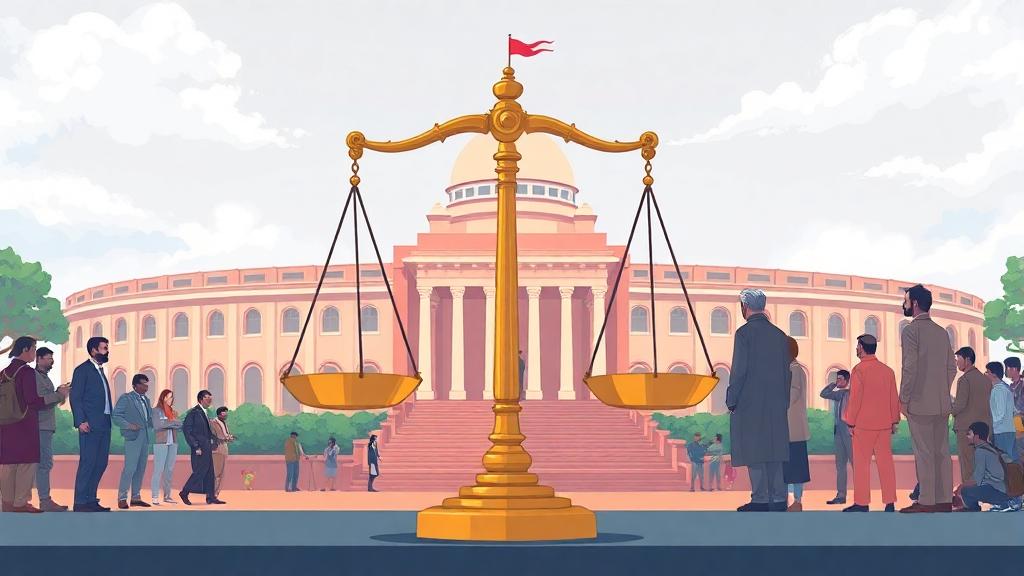
    An illustration showing a scale of justice balanced with people watching on both sides, in front of the Indian Parliament.

    First, what is this Waqf thing?

    Okay, before getting into the latest drama, let’s just understand what Waqf even means. It’s a kind of donation system in Islam — usually land, buildings, or anything valuable — that’s given away forever for religious or charity work. Think of land used for masjid, orphan homes, madrasas, clinics, even burial grounds. And these are not one-two pieces of land. We’re talking over 6 lakh Waqf properties across India. Valued in lakhs of crores.

    Now, Waqf Boards are supposed to manage all this. But over the years, things have gone all over the place. Too many fights over land, illegal takeovers, and in many places, complete mismanagement.

    Waqf Law: Earlier vs Now — What’s Waqf Bill 2025 Really Changing?

    Here’s how the new Waqf Bill is shifting things around, compared to the older Act from 1995:

    1. Dispute Settlement

    • Back then, if any fight happened over Waqf land, it went to Waqf Tribunals — a sort of special court. People had faith that legal steps would be followed.
    • Now, such disputes will go to the District Collector. That means, instead of a judicial process, an administrative officer will decide. This worries many, because the legal filter is now missing.

    2. Recognition of Waqf by Long Use

    • Earlier, even if there were no official papers, land used for Waqf purposes for many years could still be recognised as Waqf. It was based on usage and tradition.
    • Now, that won’t work. If the place isn’t registered properly with full documents, it will not be accepted as Waqf. That puts many old mosques and madrasas at risk of losing legal protection.

    3. Who Conducts Surveys

    • Earlier, surveys were done by officers appointed by the Waqf Board. These people usually had some understanding of local customs and religious use.
    • From now, surveys will be carried out by district officials like Magistrates or Revenue staff. The concern is, they may not always understand the full background of the property.

    4. Digital Records

    • The old system didn’t really push for online databases. Many files were still physical — and often, incomplete or scattered.
    • Now, it is compulsory to digitise all Waqf properties. This includes uploading documents and using geo-tagging. It sounds modern, but if older papers are missing, it could create confusion or loss.

    5. Authority Over Land Decisions

    • Before, Waqf Boards had more control in managing properties. They could look after decisions directly and guide through community members.
    • Now, decision-making power is being shifted more towards local bureaucrats. It means less say for the Waqf Board itself.

    6. Community Representation

    • Earlier, there were voices from the Muslim community directly inside Waqf Boards. They could represent the people and raise real concerns.
    • The new system seems to reduce that kind of involvement. There’s more centralised power, and less direct role for common citizens in Waqf matters.

    Why So Much Protest?

    Let’s be honest — it’s not just about rules. It’s about trust, and right now, there isn’t much.

    1. People feel targeted: Many in the Muslim community feel this law is like questioning their history and heritage. They say, “Our elders donated this land long ago. Now we need papers?”
    2. Old cases might come back: Imagine a masjid land from 1930. No one has full documents today. But now, that land can be reviewed again. People worry — what if it’s taken away?
    3. No more court-style justice: Replacing Tribunals with government officers doesn’t feel right to many. They say: What if an officer is biased? What if there’s pressure from above?
    4. Timing feels off: Some people are also pointing at the election season and asking — “Why now?” They feel it’s more about politics than reform.

    So What’s the Real-World Impact Waqf Bill 2025?

    This isn’t just about papers and files. Waqf properties fund schools, hospitals, orphanages. Small clinics in poor towns. Graveyards for those who can’t afford a plot. Remove that support and entire communities can suffer.

    Take a small madarsa running in a village for 50 years. No formal deed, just usage. Now, it’s at risk. What happens to the kids studying there?

    Is the Bill Completely Bad?

    No, no. It’s not like that. Let’s be fair. Some parts actually make sense:

    • Waqf Boards were messy. No proper data, no audits.
    • Many fake claims were made on land by just saying “This is Waqf.”
    • Tribunals were slow. Cases ran for 10-15 years.
    • Now with digital records, maybe fewer scams.

    So yes, cleaning the system is needed. But the way it’s being done? That’s what’s bothering people.

    What the Government Committee Found

    The Joint Parliamentary Committee had some interesting things to say:

    • Many state Waqf Boards don’t even have working digital systems.
    • Surveys were done so poorly that public land and Waqf land were overlapping.
    • Some states had cases dragging for decades due to slow Tribunals.

    The committee basically said — yes, clean the mess, but please talk to the people too.

    Final Thoughts: What Common People Think Waqf Bill 2025

    If you ask the average Indian citizen, many will say: “Fine, make things digital. Stop the misuse. But don’t take away rights without listening.”

    Among Indian Muslims, there’s real fear. Losing protection for old properties just because a paper is missing? It feels like a loss of identity, not just land. Reform is okay, but forcefully pushing changes without involving people — that never ends well.

  • Hyderabad’s Trees vs Bulldozers: Kancha Gachibowli

    Hyderabad’s Trees vs Bulldozers: Kancha Gachibowli

    bulldozer cutting trees

    These days, Hyderabad is often in the headlines for its IT boom and tall buildings. But behind the shine, there’s a quieter battle going on—one that’s about saving a patch of forest land, not building on it. In Kancha Gachibowli, near the University of Hyderabad, hundreds of acres of greenery have suddenly come under threat. And what followed? Protests, police action, and even a strong word from the Supreme Court.

    Let’s try to understand what’s happening—because this isn’t just about Hyderabad. It’s about how we treat nature while chasing development.

    Supreme Court to the Rescue (for Now)

    On April 3, 2025, something rare happened. The Supreme Court stepped in on its own, without anyone filing a case, and asked the Telangana government to stop all tree-cutting in the Kancha Gachibowli forest area. The court asked the kind of questions most of us have been wondering: “Why the hurry to clear land?” and “Did you even take permission before chopping trees?”

    Justice B.R. Gavai didn’t hold back. He reminded the officials that no matter how big someone’s position is, the law is still bigger. He even told the Chief Secretary to be ready for personal consequences if the order wasn’t followed. That kind of warning? It doesn’t come often.

    And it worked, at least for now. Chainsaws went quiet. The High Court registrar was sent to inspect the area. The trees—and the animals living there—got a temporary sigh of relief.

    The Students Who Refused to Stay Silent

    If anyone deserves real credit here, it’s the students of the University of Hyderabad. From April 1, they stood outside with placards. Some went on hunger strikes. They faced lathis, police barricades, and even injuries—but they didn’t stop.

    One student said something simple yet powerful: “We’re not just fighting for trees. We’re fighting for what Hyderabad will lose if we don’t act now.” And honestly, that’s the heart of the matter.

    Their movement picked up fast. Social media buzzed. Celebrities and environmental groups joined in. And when the court ruling came on April 4, students called it a “people’s win.” They even held a victory march. But they know this is not the end—it’s just one battle in a much longer fight.

    The Government’s Sudden U-Turn

    After the court’s intervention, Telangana’s government suddenly shifted tone. That same night, they formed a committee of ministers to “talk” to the university and civil society. They also told police not to use force against students anymore.

    Deputy CM Vikramarka and IT Minister Sridhar Babu gave a joint statement: “We believe in the Supreme Court. Justice will be done.”

    Sounds nice, but here’s the catch: the land in question is worth around ₹10,000 crore. It was given to the state in 2024 after a long court case. The plan? IT parks, real estate, better roads—the usual promises.

    So, is this new committee serious about listening to the public? Or is it just a delay tactic while the heat cools down? That’ll depend on what happens during the next court hearing on April 16.

    This Isn’t Just a Hyderabad Problem

    This entire episode reminds us of a larger issue. Why do we treat nature like it’s in the way of progress?

    Whether it’s Mumbai’s Aarey forest or Delhi’s ever-shrinking green spaces—every city is losing its lungs. Kancha Gachibowli is one of the last green buffers in Hyderabad. It’s not just about birds or deer—it’s about cleaner air, groundwater, and peace in a fast-growing city.

    The worst part? All this happened with no environmental impact study, no proper approvals. Just fast-paced destruction in the name of growth.

    Development is important. But cutting 100 acres of forest in just a few days, without a clear plan—that’s not smart development. That’s poor planning wrapped in shiny words.

    What Hyderabad Can Still Do

    If it were up to me, here’s what I’d suggest: stop everything and turn Kancha Gachibowli into a protected urban forest.

    Use it for environmental research. Let students run awareness programs. Build eco-tourism paths—not office towers. Show that a city can grow smart, without killing its roots.

    Will the government listen? Maybe. Maybe not. But one thing is clear: people are watching now. And the students have shown us that if you care enough, you can push back.