Author: Sandeep A

  • Myanmar Earthquake: The Ground Shakes Again

    Myanmar Earthquake: The Ground Shakes Again

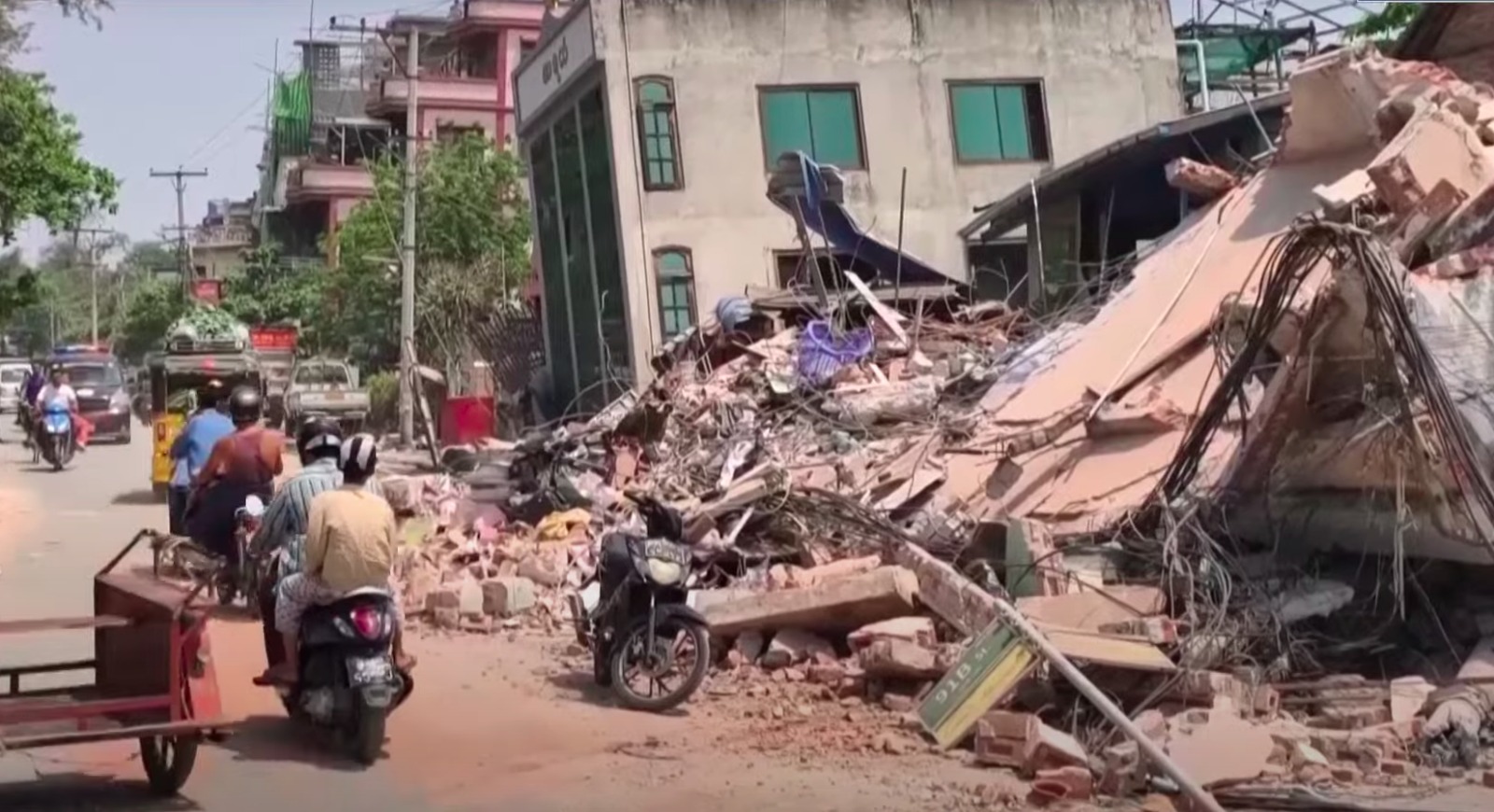
    People standing outside cracked buildings in Myanmar after earthquake, looking anxious and alert

    Another Shake, Another Shock

    Just when folks in Myanmar had started to catch their breath after that big March 28 earthquake, the ground gave another scary jolt. On April 13, around 8 in the morning, a fresh earthquake this time 5.5 on the scale hit close to Meiktila. That’s somewhere in the middle of Mandalay and Naypyitaw.

    Now, this wasn’t just another mild tremor. It was one of the strongest aftershocks since last month’s quake. People were already scared, and this one brought all that fear right back. Honestly, it’s not just about buildings shaking people’s hearts shook too.

    Where Exactly Did It Strike?

    This quake hit central Myanmar, about 28 km west of Meiktila. The US Geological Survey said the depth was roughly 10 km. Not too deep, so folks on the surface felt it strongly.

    And this area? It’s not just any spot. Meiktila has been under a lot of pressure recently, quite literally. Sitting between two big cities and along the Sagaing Fault Line, this zone has become a sort of tension point.

    Locals said they rushed out of their homes, markets, and tea stalls. “We didn’t even wait to switch off the stove,” one shopkeeper said. Some towns lost electricity for a bit, adding to the panic.

    But Why So Many Quakes All of a Sudden?

    See, Myanmar sits on the Sagaing Fault. It’s a major crack running through the country, part of a much larger fault system connected to the Indo-Australian and Eurasian plates. You must’ve heard of tectonic plates they’re like slow-moving giant slabs under our feet. When they grind or bump into each other, the earth shakes.

    Small tremors are common in this part, yes. But the recent ones? They’ve been stronger and happening more often. The March 28 earthquake was a 6.0 it damaged plenty of older buildings that weren’t built for such things. This April 13 one may be smaller, but it came at a time when people hadn’t even fully recovered from the last one.

    So the panic was understandable.

    People Ran—Again

    Eyewitness Bits

    In Meiktila, Than Htay, who runs a small tea stall near the main road, said, “We were just opening the shop, and suddenly everything started wobbling. First the spoons clinked, then the glasses toppled. We all just ran.”

    No major injuries were reported, thankfully. But fear? That was everywhere. Schools closed for the day. Hospitals moved patients outside. Nobody wanted to be inside any tall building. Can’t blame them, really.

    This Region’s Been On Edge

    This isn’t just about Myanmar. Few days back, Tajikistan faced a bigger 6.4 magnitude earthquake. All across Asia, it seems the plates below are shifting more than usual lately.

    And for Myanmar, this timing couldn’t be worse. The country is already handling political tension and an economy under pressure. Add repeated natural disasters to the mix, and it becomes a real struggle—for the government, and especially for common people.
    Are Authorities Doing Enough?

    Government folks did issue the usual earthquake safety tips:

    • Stay away from damaged walls and buildings
    • Keep a small emergency kit ready
    • Don’t use lifts when the ground shakes
    • Know which corner in your home is safest
    • Teach children and elders what to do

    All this is good. But people are asking for stronger action. “What’s the point of drills if the buildings collapse?” asked someone from Mandalay. And that’s a fair point.

    What’s needed now is not just awareness but strong buildings and quicker relief work. Because when the same fear keeps coming back every few weeks, it wears people down.

    A Bigger Lesson for Southeast Asia

    These repeated tremors—first in Myanmar, then Tajikistan are not just flukes. They’re signals. The whole region, from the Himalayas to Southeast Asia, sits on dangerous tectonic zones. Many cities in these parts still don’t have proper earthquake-proof buildings.

    Japan is one example where even big quakes don’t cause much harm because they’ve got solid systems in place. Strict building codes, educated citizens, proper drills. Other countries, including ours, need to follow suit.

    What Now?

    The people of Myanmar have seen more than their share of hardship. Political issues, economic troubles, and now, quakes. But somehow, they still hold on with courage.

    Yes, the earth shook again. But life didn’t stop. People helped each other. Strangers became family, if only for a few minutes.

    Hope is alive. But let’s not rely on hope alone. This is the time to:

    • Plan ahead
    • Build better
    • Stay informed
    • Watch out for one another

    Let’s not wait for a bigger disaster to make us act.
    If you found this blog interesting, you might enjoy this one too: Waqf Act Controversy: What’s Happening in Murshidabad?

    Interested in this? You’ll also want to read: Myanmar earthquake: What we know



  • Mehul Choksi: From Jewellery Tycoon to Most-Wanted Fugitive

    Mehul Choksi: From Jewellery Tycoon to Most-Wanted Fugitive

    A dramatic digital artwork of Mehul Choksi in a courtroom, surrounded by legal documents and Belgian flags, with a backdrop of Antwerp’s skyline and Indian justice symbols.

    If you follow the news, you’ve definitely heard this name Mehul Choksi. But if you’re wondering who he really is and how he ended up on India’s most-wanted list, here’s a simple breakdown. No jargon, no drama just what actually happened.

    So, Choksi was once a big deal in India’s jewellery scene. He ran Gitanjali Group, which had thousands of stores across the country. In fact, he had taken over the business from his dad back in 1985. Everything looked good on paper—successful brand, fancy image, big money. But behind all that shine, something shady was cooking.

    What Actually Went Down?

    Between 2011 and 2017, Mehul Choksi, along with his nephew Nirav Modi, pulled off something massive. They allegedly teamed up with some bank staff at Punjab National Bank (PNB) and managed to get fake Letters of Undertaking (LoUs). These are basically papers that help someone borrow money from abroad.

    But here’s the crazy partthese weren’t small loans. It was around ₹13,000 crore. That’s over 2 billion US dollars. And nobody caught it for years. Every time a new loan was needed, they just kept creating more of those fake documents.

    When the bank finally noticed, it was too late. Choksi had already left India—he flew out in January 2018, just before the scam became public.

    And Then… He Disappeared

    Now here’s where things get more complicated. Just a few months before the scam broke, Choksi managed to get citizenship in Antigua and Barbuda. He got it by investing money, through a scheme that allows rich people to settle there.

    He was in Antigua, living peacefully for a while. But in 2021, something strange happened. He suddenly vanished from Antigua and was later found in Dominica. Local police arrested him for entering their country illegally. Choksi, on the other hand, claimed he was kidnapped—literally said he was beaten up, dragged onto a boat, and taken there by Indian agents.

    Whether that’s true or not, nobody knows for sure. But eventually, Dominica allowed him to return to Antigua for medical treatment.

    Fast Forward to 2025 – Arrested in Belgium

    After years of back and forth, on April 12, 2025, Belgian authorities finally caught him in Antwerp. He was at a hospital, getting treatment for cancer. Indian agencies had been tracking him, and this time, they moved quickly. They had already filed requests with the Belgian government for his extradition.

    Turns out, Choksi had managed to get a residency card in Belgium too. He never told them he already had two other nationalities Indian (which he later gave up) and Antiguan. That didn’t help his case.

    Now he’s behind bars, and India wants him back.

    What India Wants

    Both the Central Bureau of Investigation (CBI) and the Enforcement Directorate (ED) are involved. They’re trying to bring him back under the India-Belgium extradition treaty, signed in 2020. But it’s not that easy. The treaty has its own rules like, Belgium can reject the extradition if they feel it’s a political matter or if the accused’s health is bad.

    Still, the agencies are hopeful this time. They’ve already seized properties worth ₹2,500 crore from him, and they’re trying to get him declared a “Fugitive Economic Offender”—a legal tag that lets them auction his assets even faster.

    Why This Story Matters

    See, this isn’t just about one guy running off with money. It’s about how a system failed. A major national bank couldn’t spot a scam for years. And even when they did, it took forever to catch the people involved.

    It also tells us how tricky international law can be. Just because someone is caught abroad doesn’t mean they’ll be sent back easily. Countries have different rules, and fugitives like Choksi know how to play the game.

    Will He Finally Be Extradited?

    Hard to say. His lawyer is already arguing that he’s sick and not fit to travel. But if Indian agencies keep up the pressure, and Belgium agrees, we might finally see him back in an Indian court.

    And if that happens, it will send a big message—no matter how far someone runs, if the system works, justice will catch up. Eventually.

    Want more on this topic? Check this out: Mehul Choksi Arrested

  • Waqf Act Controversy: What’s Happening in Murshidabad?

    Waqf Act Controversy: What’s Happening in Murshidabad?

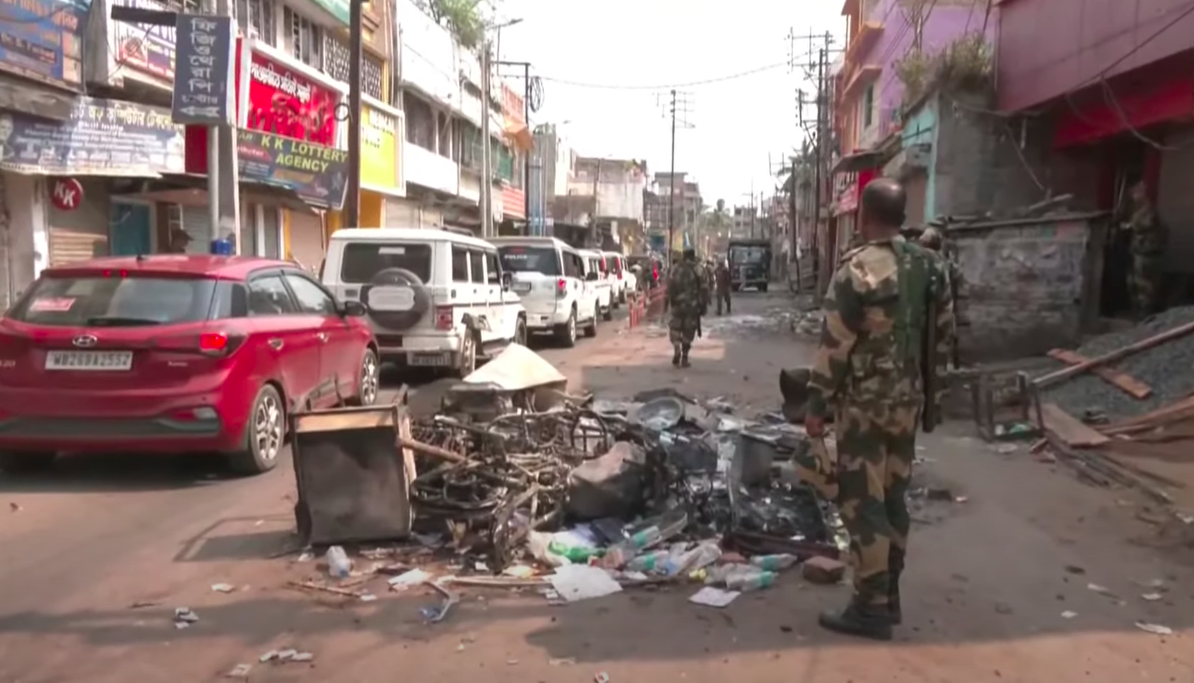
    A tense street scene in Murshidabad, West Bengal, with a crowd of protesters holding banners against the Waqf Act, police in riot gear, and a smoky backdrop of burning vehicles, capturing the unrest’s intensity on April 12, 2025.

    Something’s been brewing quietly in Bengal for some time, and now it’s all out in the open. Last week, small towns like Dhuliyan, Samserganj, and Suti in Murshidabad saw their streets erupt in violence. And the reason? A new law the Waqf (Amendment) Act, 2025. It was meant to fix how Waqf properties are handled land and assets that are supposed to serve Muslim charitable needs. But instead of bringing clarity, it stirred up confusion, anger, and full-blown chaos.

    Now people are asking the obvious: how did a law meant for reform turn into such a mess? Why Bengal? And what does it reveal about the deep cracks political and communal running through the state?

    When a Reform Becomes a Spark

    The Waqf (Amendment) Act officially came into effect on April 8, 2025. According to the Centre, its goal was clear—more transparency, digitized records, fewer irregularities, and stronger state boards to manage Waqf properties. But in reality, things didn’t go as smoothly, especially in regions where a large number of people depend on these properties for livelihood or religious purposes.

    Take Murshidabad, for instance—over 66% of the population here is Muslim. So when the amendments were announced, people didn’t just see a law—they saw a potential threat. Rumours spread like wildfire—some claimed the government would take over mosque land, others said entire livelihoods were at stake. And with social media acting like petrol on fire, fear turned into fury. By April 4, small protests began after Friday prayers. Within a few days, those protests grew, fueled by hashtags like #RejectWaqfBill and amplified by local leaders and influencers.

    Was the government unprepared for such a backlash? Possibly. But given the political climate, especially in a state run by Mamata Banerjee who’s known to lock horns with the Centre, it’s surprising they didn’t anticipate this kind of eruption.

    Murshidabad Boils Over

    If you’ve ever walked through the tight lanes of Dhuliyan, you’d remember the lively sounds of local markets. But from April 8 to 12, all that was replaced by violence and destruction. Protesters didn’t just take to the streets—they blocked highways, squatted on railway tracks, and clashed with the police. Petrol bombs were hurled. Vehicles were set on fire. Even a police station in Suti was attacked.

    And then came the human cost. On April 12, in Jafrabad, two men—Haragobindo Das and his son Chandan—were brutally killed by an angry mob. In Suti, a teenager, 17-year-old Ezaz Ahmed Sheikh, was caught in the crossfire and shot dead. Till now, it’s unclear who fired the bullet—police or paramilitary. But that hardly matters to his grieving family. Over 150 people have been arrested so far, and raids are still going on in districts like Malda and Hooghly. Among the injured are at least 18 police officers.

    It’s heartbreaking to imagine what families like Ezaz’s are going through. A young boy, possibly out protesting for what he believed in, is now gone. And the larger question remains—how did a legal amendment meant for better governance turn into a blood-stained battle?

    Mamata’s Balancing Act

    In moments like this, political leadership is tested. And Chief Minister Mamata Banerjee didn’t waste any time making her stand clear. On April 12, she declared, “The Waqf Act will not be implemented in Bengal.” That one line set off a storm.

    To her supporters, she stood up for the people, especially minorities. To her critics, she was playing vote-bank politics with elections around the corner. BJP leaders slammed her—Suvendu Adhikari went as far as calling West Bengal “West Bangladesh,” while others demanded President’s Rule.

    But here’s the irony. The Act wasn’t hers to begin with—it came from the Centre. Yet, she was stuck between a rock and a hard place. If she enforced the law, she’d alienate large sections of the Muslim community. If she resisted, she’d be blamed for letting law and order fall apart.

    As things worsened, the Calcutta High Court had to step in on April 12. It ordered deployment of paramilitary forces—about 300 BSF troops and additional companies—to bring things under control. The internet was suspended in Jangipur, but online tensions continued. As of April 13, things had calmed somewhat, with police saying they’d restored order. Still, prohibitory orders remain in place and public trust has taken a big hit.

    Could Mamata have acted earlier to prevent all this? Maybe. But hindsight is always clearer than foresight.

    Layers Beneath the Surface

    To truly understand what’s happening, we need to look deeper. West Bengal isn’t new to communal tension. Murshidabad, with its rich Muslim heritage, is also a district struggling with poverty and underdevelopment. Land disputes here are sensitive, especially involving religious institutions. So any sudden change in the status quo—like the 2025 Waqf amendments—naturally feels like an attack on identity.

    And let’s not forget what else is brewing in Bengal. The massive education scam, where nearly 25,000 school jobs were scrapped by a Supreme Court ruling, has already left the youth frustrated and unemployed. That kind of anger needs only a small trigger to boil over.

    The national debate on Waqf isn’t new either. Back in 2006, the Sachar Committee had already pointed out major irregularities. But meaningful reforms were always delayed. The 2025 Act finally tried to fix that, backed by 211 MPs. But with 148 MPs opposing it, including voices from Bengal’s religious circles, it’s clear not everyone is convinced.

    Online, the battle is just as sharp. While some praise Mamata for protecting minority rights, others have been quick to throw around terms like “gazwa-e-hind,” which only deepen divides. The Supreme Court is set to hear the matter on April 16, and that decision might decide where this story heads next.

    What Lies Ahead for Bengal?

    Right now, Murshidabad is quiet but broken. Police and paramilitary forces are everywhere. Families are mourning their loved ones—Haragobindo, Chandan, and young Ezaz. Legal proceedings have begun for those arrested, but justice will take time. More importantly, healing will take even longer.

    I keep thinking about the youth involved in all this. What pushed them? Was it fear, disillusionment, or blind rage? Maybe all three. And as for Mamata Banerjee, she’s got a tightrope to walk—defending her people without fuelling more fires. She’s shaped Bengal for a decade, but this might be one of her biggest challenges yet.

    At the end of the day, this is not just a Bengal issue. It’s a reflection of how reforms are introduced in our country. Governance isn’t just about rules—it’s about empathy and timing. When laws are passed without listening to ground realities, we risk more such tragedies.

    We can’t afford another Ezaz. We can’t let more homes burn. If there’s a lesson here, it’s that we need to ask the right questions—start with the “why,” not just “who.”

  • TCS Hike Delayed in 2025 — Just One More Hit for IT Folks?

    TCS Hike Delayed in 2025 — Just One More Hit for IT Folks?

    TCS corporate office with concerned employees, global map showing US-India tensions and falling economy charts in the background.

    So yeah, here we are in April 2025… and no hike from TCS this time. For lakhs of folks who work there, this news isn’t just disappointing it’s confusing, frustrating, and honestly, kind of expected too?

    Every year around this time, there’s that usual buzz “hike letters coming,” “expecting 10% this time,” etc. But this year? Silence. And then the official word came salary hikes paused, thanks to “global uncertainty” and, well, the whole US tariff mess.

    It’s not cancelled, they said. Just delayed. Still, that’s not much comfort, is it?

    Feels Like Déjà Vu

    Last year also had its share of slowdowns and hiring freezes. And here we are again. Different year, same story. This time, TCS is blaming it on things happening halfway across the world. Something about the US changing trade policies, budgets being cut, and clients holding back on spending.

    Sounds valid on paper. But if you’re someone working late nights, closing deliverables, and doing daily standups, this just feels unfair. You do the work, but the reward? Maybe later. Or maybe never.

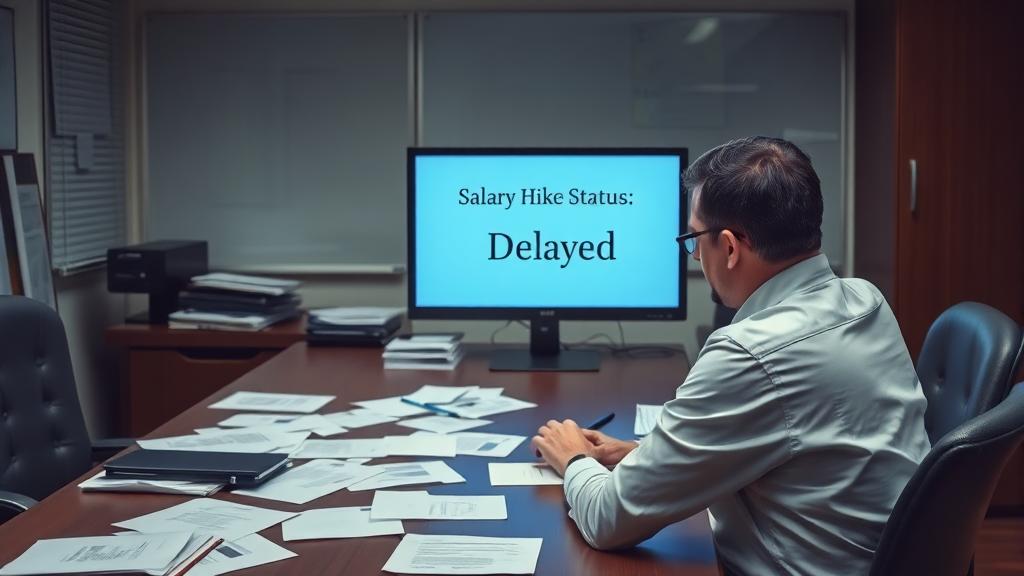
    Corporate employee staring at delayed salary hike message on office computer with frustration
    “When the screen says it all — hike delayed, mood deflated.”

    “We’re Hiring, But We’re Not Giving Hikes” – Make It Make Sense?

    What’s also weird is that hiring’s still on. Freshers are getting onboarded, some experienced roles are being filled too. So clearly, money is there.

    It’s not like TCS is broke. Far from it. Projects are running. Offices are open. There’s chai in the pantry.

    But when it comes to appraisals? Suddenly it’s all about “efficiency” and “cost optimization”.

    Honestly, sounds like corporate jugglery. Cut costs without calling it layoffs. Look “stable” to investors. Keep people in the loop, but not too happy. That’s what it feels like.

    What Employees Are Saying (Quietly)

    No one’s shouting, but the mood is low. On Slack, WhatsApp, Teams people are venting in DMs. Some were counting on the raise to plan EMIs, others were just hoping to catch up with inflation.

    Now it’s more like, “Let’s wait and see.”

    But the truth? This could easily become a trend. Delay this year, maybe trim it next year, and who knows what happens after that.

    But Is It Really Just About the US?

    Okay, sure, the global economy is shaky. Tariffs, elections, wars, AI killing budgets there’s a lot going on.

    But there’s also the inside story no one talks about openly. Companies want to show better profits. Margins were low last year. Cutting hikes makes the books look good. That’s not a conspiracy. That’s just how business works.

    You stop one hike, you save crores. Simple math.

    And if Infosys and Wipro are doing the same, well… there’s safety in numbers, right?

    What Can You Even Do?

    Honestly? Not much.

    But maybe don’t wait around hoping. Learn something new. Cloud, AI, DevOps whatever keeps you in demand.

    Start saving smart. Like seriously, don’t depend on appraisals to balance your budget. They’re not guaranteed anymore.

    And yeah, don’t blindly jump jobs either. Other companies might not be much better right now.

    Final Thought – Not The End, But Definitely a Signal

    This isn’t some tragic collapse. It’s not TCS shutting shop. But it is a warning.

    The market’s changed. The way companies work has changed. And hikes? They might not come as easily or as regularly as they used to.

    So yeah, hang in there. Upskill. Stay sharp. Keep your eyes open.

    Because if the world’s gonna throw curveballs, we better learn how to hit sixes too.

    This blog is just the start. Explore more with: TCS to delay salary hikes: We will decide within the …, says HR head

  • SRH Crush PBKS in IPL 2025: Blazing Batting Show in Hyderabad

    SRH Crush PBKS in IPL 2025: Blazing Batting Show in Hyderabad

    Abhisekh hold paper in hand after century agient PBKS

    A Night to Remember: SRH Pulls Off Unreal 246 Chase to Stun PBKS in Hyderabad

    April 12, 2025 – Hyderabad.
    This wasn’t just a cricket match, it was a run-fest that turned into a night of pure madness at the Rajiv Gandhi International Stadium. Sunrisers Hyderabad (SRH), chasing a massive 246 set by Punjab Kings (PBKS), pulled off the unthinkable. They romped home in just 18.3 overs with 8 wickets in hand—and yes, you read that right. Led by a thunderous 141 off just 55 balls by Abhishek Sharma, SRH chased down one of the biggest totals in IPL history. And now, the cricket world is wondering: is this fearless approach enough to take SRH all the way to the IPL 2025 trophy?

    PBKS Post a Mountain – 245/6 on the Board

    Batting after winning the toss, PBKS came out firing on all cylinders. Openers Priyansh Arya and Prabhsimran Singh were ruthless. Arya blasted a quick 36 off just 13 balls (strike rate: 276.92), while Prabhsimran kept the pressure on with 42 off 23. By the end of the 4th over, PBKS had already racked up 66 runs. Their powerplay score of 89/1 was their best of the season and put SRH’s bowlers on the backfoot from the get-go.

    Then came Captain Shreyas Iyer. He just took the game to another level—hammering 82 off 36 balls, including 6 sixes and as many fours. He and Prabhsimran stitched together a 164-run partnership that looked like it would seal the match then and there. Even though Iyer eventually fell to Harshal Patel in the 17th over, the momentum didn’t stop.

    Marcus Stoinis came in late but made his presence felt, smashing 34 not out off just 11 balls, including four sixes in the final over against Mohammed Shami. Shami had a rough night—ending with figures of 0/75 from 4 overs, the worst-ever in SRH’s IPL history, breaking Basil Thampi’s 0/70 record.

    Harshal Patel tried his best to contain the damage, picking 4 wickets for 42, including Nehal Wadhera and Shashank Singh. PBKS’s final total of 245/6 looked like more than enough. With short square boundaries (63m and 69m) and a true pitch, it was a batsman’s paradise—but surely even this was too much to chase? SRH had other plans.

    Abhishek Sharma Lights Up Hyderabad with 141

    Chasing 246? Most teams would crumble under pressure. But not this SRH side—not this version of them.

    Abhishek Sharma batted like a man possessed. His 141 off 55 balls, peppered with 14 boundaries and 10 sixes, was pure carnage. The moment he stepped in, it was clear SRH weren’t here to drag the chase—they were here to bulldoze it.

    He broke record after record—his 116 runs in boundaries is now the highest ever in IPL history, beating Jonny Bairstow’s previous best of 90. And those 10 sixes? That’s now the most ever by an SRH batter in a single innings.

    Travis Head gave him the perfect support, playing a classy hand of 66 off 37 balls. Together, they stitched a 171-run opening partnership in just 12.2 overs. SRH were already 83/0 at the end of the powerplay—matching PBKS blow for blow.

    Eventually, Head fell to Yuzvendra Chahal in the 13th over, but Abhishek kept going. After reaching his hundred in just 40 balls, he even pulled out a note from his pocket that read, “This one is for Orange Army.” It was that kind of night.

    His knock finally ended in the 17th over—caught at deep midwicket by Praveen Dubey off Arshdeep Singh. But the crowd gave him a standing ovation, and rightfully so. He walked off with SRH at 222/2, the match all but sealed.

    Klaasen (21* off 14) and Ishan Kishan (9* off 6) completed the chase, with Klaasen finishing things off in style with a boundary over point. Final score: 247/2 in 18.3 overs.

    PBKS bowlers, frankly, had no answers. Chahal went for 56 in 4 overs, Marco Jansen gave away 36 in just two, and even Yash Thakur conceded at 20 runs per over. The total run tally of 492 (245 + 247) became the highest in SRH vs PBKS history.

    SRH’s All-Out Batting: Match-Winning or Risky?

    This wasn’t a one-off strategy by SRH. Since the start of IPL 2025, they’ve been playing this ultra-aggressive style—hit from ball one, don’t hold back. Whether they bat first or chase, it’s all about intent.

    Abhishek Sharma and Travis Head are doing most of the damage up top, often racking up 80+ runs in the powerplay alone. Klaasen has been a reliable finisher. Against PBKS, this full-throttle method paid off handsomely.

    But the big question remains—can this approach win you an IPL trophy?

    Strengths That Stand Out

    • Abhishek Sharma: His 141 was not just a big score—it was a statement. He’s becoming SRH’s go-to match-winner.
    • Travis Head: His powerplay attacking style lays a strong platform for these chases.
    • Heinrich Klaasen: Quietly doing his job at the back end, ensuring no late stumbles.

    If these three continue to fire, there’s no doubt SRH can chase down or post any total. They’ve proven that now.

    But It’s Not All Rosy

    There’s a downside to this all-out approach too. If they lose two or three early wickets, their middle order hasn’t really been tested. Players like Nitish Kumar Reddy and Aniket Verma didn’t even get to bat against PBKS. What happens if Head and Abhishek fail early? Will the next batsman will try to build partnership or they will stick with there fearless approach?

    Also, the bowling is clearly a concern. Shami got smashed for 75. Cummins went for 40 in his quota. On a flatter deck, they might manage. But on slower pitches or big grounds, can they defend a score or control the flow?

    For SRH to actually lift the trophy, their bowlers need to step up. Cummins has to lead with better discipline. They’ll need more from their spinners and death-overs plans.

    Final Word

    This wasn’t just another match. It was an IPL classic that’ll be remembered for years, especially for Abhishek Sharma’s blistering 141. SRH’s eight-wicket win was more than just two points—it was a loud signal to the rest of the league: this team isn’t afraid to chase anything.

    Yes, it’s a gamble. But with the form their top order is in, and if the bowlers pull their weight, SRH might just turn this wild ride into a championship run. For now, Hyderabad is dancing, and the Orange Army is dreaming big—and rightly so.

    You can also check full score card at Cricbuzz.com
    Before you go, here’s another good one: CSK vs. KKR IPL 2025: A Crushing Blow That Hits Deep

  • CNG Kit vs EV Conversion Kit: Which Makes More Sense 2025?

    CNG Kit vs EV Conversion Kit: Which Makes More Sense 2025?

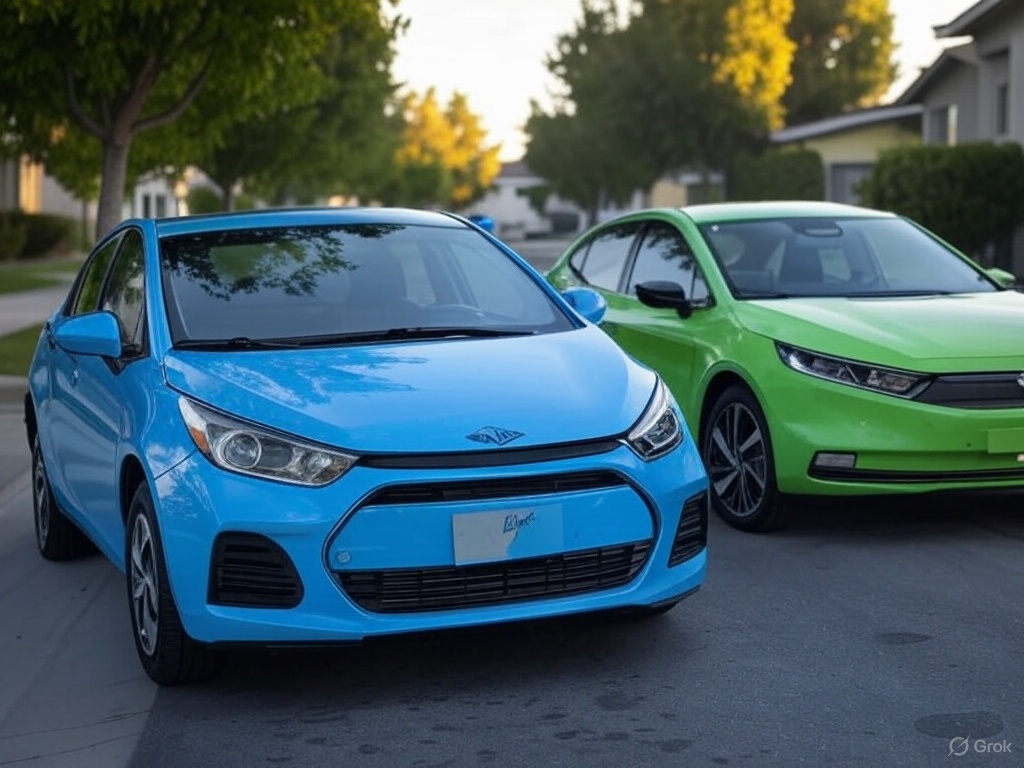
    Hilights 2 car one is CNG car onther is EV car

    Nowadays, everyone is trying to save fuel money. Petrol and diesel have become like gold ₹100 plus per litre, it’s just not affordable for daily travel anymore. On top of that, our cities are full of smoke and dust. So people are asking, “Should I go for a CNG kit or convert my car to EV Conversion?”

    That’s a fair question, honestly. Both options help you save money in the long run, and they’re also better for the environment. But they work in very different ways. So let’s try to make this simple without any big words or complicated lists.

    Why are so many people changing their cars these days?

    Let’s be real fuel price is the biggest reason. If you drive a petrol car every day, your pocket starts crying by the end of the month. And then there’s pollution. If you live in Delhi, Pune, or Bangalore, you know how bad the air has become. People want cleaner options that are also pocket-friendly.

    And that’s where CNG kits and EV Conversion kits come in.

    CNG Kit – Old but still working fine

    CNG kits have been around for years now. Especially in cities like Delhi or Mumbai, you’ll see autos, taxis, and even private cars running on CNG. The idea is simple you get a big cylinder fitted in your car’s boot, and instead of petrol, it runs on compressed natural gas.

    So, what’s good about it?

    • First of all, it’s cheap. Where petrol will cost you ₹8–10 per km, CNG runs at ₹2–3 per km.
    • You don’t need to change the whole engine or anything. Just fit the kit and you’re good.
    • And it’s still cleaner than petrol or diesel, though not as clean as EVs.

    But yeah, not everything is perfect.

    Some small problems with CNG kits

    • The gas cylinder takes up your boot space. So forget about keeping big bags or suitcases there.
    • You’ll feel that the car is slightly slower, especially when you switch on the AC.
    • And during busy times, you might have to stand in line at the CNG station for 20–30 minutes. That can get annoying.

    EV Conversion Kits – New and exciting, but still developing

    Now electric vehicles are the future everybody knows that. But buying a new EV can cost a bomb. Like, even the cheapest ones are above ₹10 lakhs. So instead, people have started converting their old cars into EVs using electric kits.

    With these EV conversion kits, you remove the fuel engine and fit a battery, motor, controller basically, all the stuff that makes it electric.

    Here’s why people are liking EV kits:

    • You get zero pollution. No smoke, no smell, nothing.
    • Cost per km is super low — around ₹1 or even less.
    • The ride becomes smooth and silent — no vibration, no noise.
    • And in some places, the government also gives support or subsidies.

    But again, like anything new, there are some roadblocks.

    A few issues with EV kits

    • They’re expensive right now. Most kits cost between ₹3 to ₹5 lakhs.
    • Not many companies are offering it, especially in smaller cities.
    • You need RTO permission, and that’s not always easy in all states.
    • Also, the battery lasts 5–7 years. Replacing it later is not cheap.

    Let’s Compare – EV Kit vs CNG Kit (Real Talk Table)

    FeatureCNG KitEV Conversion Kit
    Cost₹50,000 – ₹80,000₹3 – ₹5 lakhs
    Running Cost/km₹2 – ₹3₹0.8 – ₹1
    Installation Time1 day3–5 days
    SpaceBoot gets filledDepends on kit design
    RTO ProcessEasy and knownStill complicated
    Green FactorMediumVery high
    AvailabilityCommon in metrosLimited for now

    So yeah, if you’re short on budget and want to start saving immediately, CNG is still a good choice. But if you want to go fully electric and don’t mind the initial cost, then EV kits make more sense for the long run.

    What about Hybrid Kits?

    You might have heard this too some companies are now working on kits that can run on both electric and petrol or CNG. This sounds like a great idea, but it’s still in early stages. Very few models are available and testing is going on. If this becomes common, it could be a total game-changer.

    Who Should Go for What?

    There’s no one-size-fits-all answer. It depends on your needs.

    If you travel inside the city, don’t want to spend too much, and your car is in decent shape CNG can save you a lot every month.

    But if you want to go fully electric, reduce maintenance, and drive in peace without worrying about fuel prices, and you’re okay spending ₹3–4 lakhs upfront EV kits are a better bet.

    Where to Get EV Kits in India?

    You won’t find EV kits in every garage. You’ll need to go to certified people. Some good names right now are:

    • E-Trio
    • Boson Motors
    • Loop Moto
    • GoGoA1 – They’ve got RTO-approved kits for many cars.

    🔗 Check them here: GoGoA1 official site

    🧭 You can also check our blog on “Top EV Conversion Companies in India” for more info (internal link).

    Final Thoughts – What Should You Choose?

    CNG or EV — both are better than staying on petrol. But your choice should depend on how much you can invest, where you live, and how often you drive.

    👉 If you’re looking to start saving immediately and don’t want much hassle — go for CNG.

    👉 If you’re ready to go green, spend a bit more now, and think long-term — EV kits are your friend.

    In a few years, electric kits will become more common and cheaper too. So even if you go for CNG now, keep watching the EV space. The future is definitely electric.