Author: Jacob S

  • Embracing Dr. B.R. Ambedkar Vision for Equality

    Embracing Dr. B.R. Ambedkar Vision for Equality

    A vibrant digital painting of Dr. B.R. Ambedkar holding the Indian Constitution, with diverse people celebrating around him, set against Mhow’s serene backdrop

    Every year on April 14, people across India stop and remember a man who didn’t just talk about change he lived it. That man was Dr. Bhimrao Ramji Ambedkar, or as most of us lovingly call him, Babasaheb.

    Now, Ambedkar Jayanti isn’t just about garlanding a photo or putting up blue flags. It’s much more. It’s about honouring a man who stood tall, even when the world tried to push him down. You’ll see rallies, processions, and people shouting “Jai Bhim!” from rooftops and no, it’s not just noise. It’s pride. It’s emotion. It’s remembrance.

    In 2025, even the Chief Minister of Madhya Pradesh, Mohan Yadav, went to Mhow, Indore Babasaheb’s birthplace. He paid his respects, of course, but also ended up sparking a bit of a political storm with a few of his remarks. Happens every year. But still, the main thing is that the day brings everyone together cross caste, class, and region to remember a man whose words still echo in every corner of this country.

    So, Who Exactly Was Babasaheb Ambedkar?

    Dr. Ambedkar was born back in 1891, in Mhow, in a time when caste ruled everything who you spoke to, where you sat, even whether you were allowed to drink water from the same tap.

    He was born into the Mahar community, and from day one, he knew what discrimination felt like. But that didn’t stop him. In fact, it just lit a fire inside him.

    He studied like there was no tomorrow Elphinstone College, Columbia University, then London School of Economics. The man wasn’t just smart he was brilliant. And he didn’t collect degrees just to hang them on a wall. He used them. He used every bit of his knowledge to fight for those who were always told they didn’t matter.

    The Fight That Shaped a Nation

    From Humiliation to Hope

    As a child, he wasn’t allowed to sit on benches with others in school. Even drinking water was a struggle. But his father, who worked in the military, made sure young Bhimrao had access to books. And that love for learning changed everything.

    He went from dusty schoolyards to the world’s top universities, and when he came back, he didn’t look for comfort. He looked for justice.

    Building the Constitution

    You know that big book that decides how India runs? Yeah, Dr. Ambedkar was the chief architect of it. As the head of the Drafting Committee, he filled those pages with ideas of equality, freedom, and fraternity.

    Thanks to him, we have things like Article 17, which put an end to untouchability at least on paper. There’s still work to do, but that’s the foundation he laid.

    He Spoke for the Silent

    Dr. Ambedkar wasn’t just about paperwork and law books. He was on the ground too. In 1924, he started the Bahishkrit Hitakarini Sabha, trying to help Dalits get access to education and public services.

    In Mahad, he led a movement just to claim the right to drink from a public tank. That’s how bad things were. But he didn’t back down.

    Later, in 1956, he embraced Buddhism not the version with rituals, but a fresh, clean start. He called it Navayana, and lakhs followed him. It was a silent revolution.

    His Work Went Beyond Castes

    Ambedkar had his hands in many areas. He gave solid input on India’s economic policies, especially regarding currency and labour. He even formed a political party, the Scheduled Castes Federation, to push for proper representation.

    And that famous book Annihilation of Caste wasn’t just words. It shook society’s roots and forced people to think.

    Life Lessons from Babasaheb That Still Hold True

    Honestly, his life teaches more than any self-help book today. If we had to pick just a few lessons, here’s what they’d be:

    1. Education Isn’t Just for Exams

    Ambedkar chased knowledge because he knew it opened doors. He didn’t stop at one degree — he kept learning, always.

    2. Don’t Be Quiet When Things Go Wrong

    Whether it was water rights or speaking in Parliament, he called out injustice. Loudly. Fearlessly.

    3. Turn Your Struggles into Strength

    He didn’t hide his pain. He turned it into purpose. That’s how real change begins.

    4. Unity Matters More Than Labels

    He wasn’t just for Dalits. He spoke for everyone who faced unfairness. His Constitution aimed to unite, not divide.

    5. Kindness Is Powerful

    Underneath all that sharpness was compassion. Every law he framed had one goal to give people dignity.

    Why His Ideas Still Hit Home

    Even today, when we see news about caste-based violence or social inequality, Babasaheb’s words feel fresh. His famous line
    “I measure the progress of a community by the progress women have achieved” still makes you stop and think.

    And let’s be real we’ve come far, but not far enough. The road ahead is still bumpy. But the tools he gave us education, organization, agitation they still work if we use them right.

    So, What Can You Do on Ambedkar Jayanti?

    You don’t have to go to a rally. Even reading a few pages of his speeches or discussing his work with friends can make a difference.

    Try to live the values he stood for equality, justice, empathy. That’s how we carry his dream forward.

    Not just for one day. But every day.

    Looking for the next step? Try this: B. R. Ambedkar

  • Iran-Israel Conflict Heats Up: Missile Warnings Raise Global Alarm

    Iran-Israel Conflict Heats Up: Missile Warnings Raise Global Alarm

    A tense Middle Eastern skyline at dusk with missile trails in the air, an oil rig in the foreground, and a UN flag waving, symbolizing conflict and diplomacy.

    Tensions between Iran and Israel are growing again. On April 9, 2025, Iran’s Revolutionary Guard gave a warning that they might launch missiles toward Israel. This warning came after repeated disputes over airspace and ongoing military actions from both sides. Many around the world are now concerned — is this just pressure tactics, or is it leading to something serious?

    Situation After the Warning

    This recent statement from Iran isn’t an isolated one. In the last few months, both sides have taken strong steps. In October 2024, Israel carried out airstrikes which damaged parts of Iran’s missile program. Iran is now showing signs of replying with force.

    Some reports, including international ones, suggest that Iran might soon carry out a large missile strike. The U.S. is also reacting — a second aircraft carrier group has moved into the region. There are growing talks about possible strikes on Iranian nuclear facilities if things get worse. Sources close to Iran’s top leadership say there is internal tension. Some fear that if talks fail, the government may face bigger issues inside the country.

    Disputes Over Airspace Continue

    Iran has accused Israel of violating its airspace through drones. On the other side, Israel says Iran’s proxies like the Houthis are also disturbing regional skies. This has made the situation worse.

    Now, Iran is also believed to be sending powerful missiles like Arqab and Jamal 69 to militia groups in Iraq. This means attacks could happen from different places, not just directly from Iran. While governments say these are defensive moves, people are worried it may be an excuse to launch a bigger war. Some also feel politics may be involved, especially with U.S. elections coming.

    Global Concerns Over Oil and Stability

    The reaction from around the world has been mixed. Some countries are calling for peace and warning about the risks of further conflict. Others are preparing for oil shortages and economic effects.

    In India, people are mostly talking about fuel prices. Brent crude oil is already around $90 per barrel. If this conflict increases, prices may go even higher. That means higher fuel costs, more inflation, and pressure on the Indian economy. Many fear that new public projects like the railway expansion and border development fund may slow down or lose funding due to rising oil import bills.

    Some people support the U.S. for backing Israel. Others feel that this might worsen the situation. Iran says it is only acting in self-defense. But experts believe it may also be a warning to stop any attacks on its nuclear program.

    Wider Effects Beyond the Region

    This conflict is not just about two countries. The effects can spread globally. If oil prices go up, many economies may face trouble. Trade routes and supply chains might get disturbed. The world economy is already unstable, and this could make it worse.

    Israel is ready with defense systems like the Iron Dome. But Iran still has strong support from groups like Hezbollah and other militia forces. If those groups join the conflict, it could turn into a larger war. The U.S. recently carried out airstrikes in Yemen to weaken Iran’s network, but nothing is certain.

    For India, this is also a serious issue. Rising oil prices can affect transport, industries, and household budgets. Any further escalation may disturb the progress of infrastructure projects. Even Pakistan may react, depending on how things develop.

    What Happens Next?

    The next few days are crucial. If Iran carries out a missile attack, Israel has already said it will respond strongly. It may even target Iran’s nuclear sites, despite warnings from the international community. There are talks that negotiations may happen soon in Doha, but it’s unclear whether they’ll succeed.

    If the situation calms down, oil prices may stabilise. But if not, crude oil could cross $100 per barrel. That would affect almost every country, including India. Iran’s government is also under pressure. A direct attack on its facilities could cause internal problems, or lead to a bigger war.

    For now, everything depends on what the leaders decide in the coming days. The world is watching. Peace talks are the only option that can stop this from going out of control.

    This blog is just the start. Explore more with: Iran raises alert level amid fear of war with Israel
    Want more on this topic? Check this out: A Tahawwur Rana Is Finally Here But-Is Justice Really Closer?

  • Trump’s Tariff Pause: South Korea Talks, India Watches Closely

    Trump’s Tariff Pause: South Korea Talks, India Watches Closely

    A dynamic chessboard mid-game with a paused golden pawn labeled ‘Tariffs,’ flanked by Indian rupees and South Korean won pieces, against a vibrant trade port backdrop with ships and skylines

    A Global Chessboard Gets a Reset

    Imagine a high-stakes chess game where every move ripples across continents. That’s the global trade scene right now, and Donald Trump just slid a pawn back, giving everyone a breather. On April 9, 2025, Trump hit pause on his tariff blitz—those hefty import levies he’d rolled out a week earlier—offering a 90-day window for talks. South Korea’s trade envoy cheered it like a lifeline, while here in India, we’re rubbing our hands, wondering how to turn this timeout into our checkmate moment. Let’s break it down.

    The Tariff Rollercoaster: What Just Happened?

    Trump kicked off April with a bang, slapping a 10% baseline tariff on all imports, then piling on extras like toppings at a chaat stall—25% for South Korea, 27% for India, and a jaw-dropping 125% for China (up from 104% on April 9). Markets tanked—$6 trillion wiped out globally in a week—and the world screamed. By April 9, Trump blinked, pausing the higher rates (except China’s) and keeping the 10% base. South Korea, whose auto giants like Hyundai were sweating bullets, saw hope. Their trade minister, Cheong Inkyo, practically danced, saying it’s “room to negotiate.” Meanwhile, India’s pharma lords, who dodged the worst, are whispering, “What’s in this for us?”

    South Korea’s Big Chance

    Here’s where it gets juicy. South Korea’s racing to the bargaining table with an emergency task force led by Acting President Han Duck-soo. Their auto exports—$34.74 billion to the U.S. last year—took a hit with the 25% tariff, and this pause is their shot to claw back. Asian stocks soared on April 10—Nikkei up 9%—as the news eased recession fears. On the flip side, China doubled down, slapping 84% tariffs on U.S. goods, turning the trade war into a slugfest. South Korea’s move could set the tone—success or stumble—for others watching, including us.

    India’s Quiet Confidence

    India’s in a sweet spot. Our pharma exports—$9 billion to the U.S. last year—stayed mostly unscathed thanks to drug exemptions. While China’s reeling from its tariff hike, India’s stock rose (pharma shares jumped 5% on April 3). Modi’s been playing nice with the U.S., cutting tariffs on Harleys and bourbon back in February for that trade deal we’ve been simmering since then. The Reserve Bank’s governor threw a wet blanket on April 9, warning tariffs could nick our growth by 20 basis points. But if we play this right, that’s just a speed bump. The U.S. market’s a goldmine—$180 billion in trade last year—and this pause might widen the door.

    Plotting India’s Next Move

    So, what’s our play? First, we keep calm—no knee-jerk tariffs like China’s. Second, we push that trade deal hard. February’s agreement aimed for an autumn finish, and this pause is our tailwind. Pharma’s our ace, but tech and diamonds could sweeten the pot. Third, we watch South Korea like hawks. Their talks could be our blueprint—or a warning. Picture Modi and Trump shaking hands by July over a deal slashing our 27% tariff to, say, 15%. The U.S. gets cheaper drugs and tech; we get jobs and growth. Win-win, right?

    The Clock’s Ticking

    The spice in this curry? Timing. Trump’s pause ends July 8, 2025—89 days to hustle. South Korea’s got a head start, but India’s got grit. Remember how we turned COVID into a pharma export boom? This could be that, but bigger. Of course, there’s a flip side. If talks stall, or Trump doubles down post-pause, we’re back to square one—higher tariffs, tighter wallets. Oil prices are wobbling from recession fears; a trade flop could tank them further, hitting our import bill. But I’d bet on India’s street-smart hustle over gloom any day.

    A Game Worth Watching

    As I write this on April 10, the internet’s alive with chatter. South Korea’s optimism is contagious, but India’s quiet confidence feels like a tiger crouched to leap. This tariff timeout isn’t just a breather—it’s a chessboard reset. South Korea’s making its move; India’s plotting ours. By July, we’ll know who’s king—or at least who’s still in the game. For now, grab some chai and watch this unfold—it’s going to be one heck of a ride.

    Trump Tariffs 2025: Economic Impact on India, China & Beyond check here
    What’s next?

  • Are We Ready for AI’s Energy Crisis? Data Centers Set to Double Power Use by 2030

    Are We Ready for AI’s Energy Crisis? Data Centers Set to Double Power Use by 2030

    Futuristic AI server farm illuminated with blue and green lights, surrounded by windmills and solar panels in the background.

    Why Everyone’s Talking About AI’s Power Use

    So here’s the deal. On April 10, 2025, the International Energy Agency (IEA) dropped a report that made people sit up straight.

    It said that by 2030, electricity used by data centres including the ones running AI tools like ChatGPT, MidJourney and others could more than double. Yep, not just a little rise. We’re talking about double the current usage.

    And naturally, social media went nuts. X (you know, what used to be Twitter) was buzzing with all kinds of takes. Some folks were hyped more power, more AI, smarter tech. But many were seriously worried.

    And honestly, who can blame them? We’re already hearing about power shortages and climate issues. Now imagine adding this AI electricity binge on top.

    What the IEA Actually Said In Simple Words

    Okay, here’s the gist.

    Back in 2022, data centres globally were already using around 460 terawatt-hours (TWh) of electricity.

    By 2030, that number might hit 1,000 TWh.

    To give you an idea that’s close to what Japan uses in a year. Let that sink in.

    And why is this happening? Well, because AI doesn’t just run on ideas and code it runs on pure electricity.

    Training big models like GPT-4 takes weeks on thousands of GPUs. And even after training, every time you ask a chatbot something or generate an image, electricity is being used behind the scenes.

    Which Countries Are Feeling It Most?

    Right now, places like the US, Ireland, and Nordic countries are hosting a lot of data centres.

    But now, Asia-Pacific is stepping in especially India, Singapore, and China. And with India aiming to be a tech leader, this is something we seriously need to keep an eye on.

    The Big Dilemma: Innovation vs Environment

    We’re at a tricky point.

    AI is doing amazing things helping detect cancer early, giving accurate weather forecasts, even improving education in remote areas. No doubt about that.

    But there’s a flip side. All this “smartness” is coming with a massive power bill and carbon cost.

    I read two opinions online that really hit home:

    “AI is revolutionising climate research, medicine, and education what’s the big deal about some extra power?”

    And then the other one:

    “If the tools we use to fight climate change are worsening the problem… what’s even the point?”

    That second one? Yeah, kind of hard to ignore.

    What’s Causing the Power Spike?

    Here’s what’s cooking behind the scenes:

    • AI training and inference – Models like GPT-4, DALL·E, etc. need GPU clusters that run for weeks.
    • Crypto mining – Still going strong in many places.
    • Cloud gaming & streaming – Think Netflix, Xbox Cloud, etc. they’re no less power-hungry.
    • Cloud expansion – Every app, startup, or smart home gadget is hosted somewhere on the cloud.

    In short, the digital world is growing fast. And it’s gulping down power just as fast.

    Can Renewables Catch Up in Time?

    Here’s the hopeful part.

    Some countries are already saying: “Fine, build your data centres, but show us your green energy plan first.”

    Like in Ireland and Denmark, new data centres need to commit to renewables from the start.

    Big tech companies like Google and Microsoft have promised to go 100% carbon-free by 2030 at least for their data centres.

    And in India? Our solar sector is gaining serious attention. Could become the backbone for our AI growth, if done right.

    But let’s be real renewables need to scale faster than AI does. Otherwise, it’s like trying to fill a water tank with a hole in it.

    India’s Role in This Power Puzzle

    As India runs towards becoming an AI giant, we’ve got to play it smart.

    Here’s what needs doing:

    • Upcoming data parks in Tamil Nadu, Telangana, Gujarat? They better have green energy baked in from the start.
    • Make it mandatory for big AI or cloud investments to include renewable plans.
    • Educate startups even your chatbot uses energy. Awareness is the first step.

    If we don’t act now, we might end up chasing tech dreams while blackouts and heatwaves become normal.

    Bottomline: Smarter AI, Not Just Bigger AI

    Here’s a thought what if the next big leap in AI isn’t about speed or intelligence… but about how little energy it uses?

    We don’t need more machines that think fast. We need machines that think smart and consume less.

    That means:

    • Models that need fewer GPUs
    • Data centres powered by wind, solar, or even ocean energy
    • Public and policy pressure that pushes companies to clean up their act

    Because let’s face it AI is staying. But how we choose to power it? That choice is still ours.

    And maybe, just maybe, AI won’t just be smart. It’ll be wise too.

    🔗 Related Reads You Might Like

  • Trump Tariffs 2025: Economic Impact on India, China & Beyond

    Trump Tariffs 2025: Economic Impact on India, China & Beyond

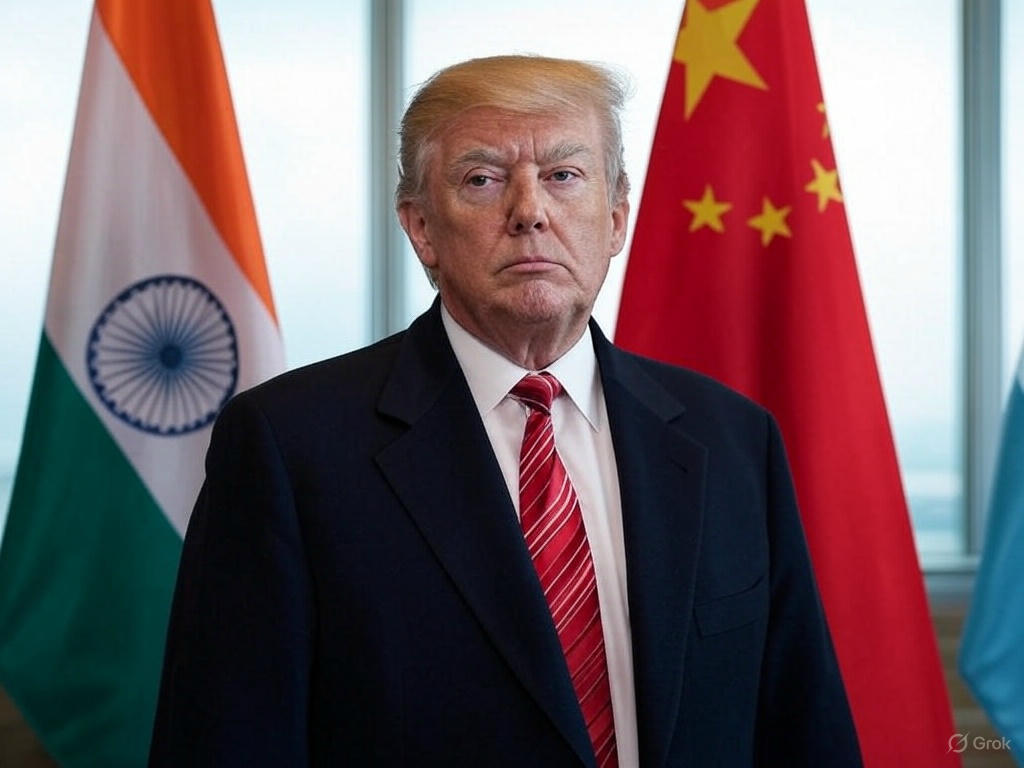
    Donald Trump standing between the flags of India and China, wearing a dark suit and red tie, with a serious expression, symbolizing trade policy discussions.

    A New Era of Trade Policy: What’s This Tariffs Drama in 2025?

    So, here we are again the world’s economy is at some kind of big crossroad, all because of Trump and his new tariffs in 2025. You’ve probably heard about that crazy 104% tax on Chinese stuff. And then he’s got these reciprocal tariffs hitting other countries left, right, and centre. Everyone’s got something to say big economists, politicians, even my neighbour who runs a small shop. Trump’s shouting it’ll bring jobs back to America. But some folks are like, “Wait a minute, this could land us all in a recession!” Honestly, I don’t know who to believe yet. So, let’s sit down and figure this out—what’s going to happen with prices, jobs, markets, all that jazz. It’s going to be a rough ride, so hold on tight.

    What’s the Deal with Tariffs Anyway?

    Look, tariffs are just taxes we slap on things coming from outside—like clothes, phones, whatever. The whole point? Make that foreign stuff cost more, so we start buying what’s made here. Trump’s saying this’ll get American businesses buzzing again, bring jobs home. Fair enough, sounds nice. But hang on—things aren’t that straightforward. Economics isn’t like a cricket match where one side wins and that’s it. It’s more like a big tangle of threads.

    People have been fighting over tariffs since forever. Some swear it’s the best way to save our factories and cut those trade gaps we keep hearing about. But then others pipe up, “No way, this just means everything gets expensive!” And yeah, they’re not wrong. When stuff from China or Europe costs a bomb, it’s not just fancy people feeling it—it’s me and you at the shop too. Plus, if those countries get annoyed and hit backlike China did with 84% on American goods—it’s trouble. Jobs might pop up in some places, sure, but in others like shops or farms—they could vanish. It’s a risky game, and we’re all watching to see who’s right.

    Prices Going UpThanks, Tariffs!

    Let’s talk real stuff now—inflation. You know how it is—when things cost more to bring in, the shop guy doesn’t just smile and take it. He puts the price up for us. People who study this stuff say Trump’s tariffs might make everything pricier soon. Think about it—factories need steel or those little phone chips from abroad. If that gets costly, the cars or gadgets they make? Boom, prices jump—maybe 10-20% more, depending how bad it gets.

    And it’s not stopping there. When daily things—like soap or shoes—cost more, we all start asking for bigger paychecks. That just keeps pushing inflation up! Some clever folks reckon it could go from 2.8% now to 4.4% by the end of the year. For families like mine, already stretching every rupee, that’s no joke—less money for fun, more worry. Trump’s like, “Relax, we’ll make more here soon.” But come on, building new factories isn’t quick—it’s years, not days. So, for now, it’s us regular people stuck with the bill.

    Supply and Demand—It’s a Messy Fight

    Tariffs don’t just mess with prices—they turn supply and demand into a proper wrestling match. On the supply side, it’s a headache. Say there’s a 50% tariff on Chinese electronics. Companies can’t keep buying from there—they’ll hunt for other places. But those new options? Either too expensive or not good enough. So, what happens? Things like chips get rare, and suddenly, your car or fridge isn’t ready when you want it. Prices don’t come down because there’s just not enough stuff.

    Then there’s demand. When prices climb, we all think twice—do I need that new shirt? Maybe not today. Businesses feel it too—they’re scared to spend big when nothing’s clear. But here’s the funny part—if local stuff gets cheaper than imports, maybe we’ll buy that instead. Could work, if they can make enough. Meanwhile, other countries hitting back with tariffs—like on our soybeans or planes—that’s bad news for farmers and factories here. It’s a big push-and-pull, and tariffs are making it wild. No wonder the markets are jumpy and we’re holding our cash tight.

    The Ugly Side of Tariffs

    Okay, tariffs sound like they’ll fix everything, but there’s a catch—plenty of bad stuff too. For one, the whole economy might slow down. Higher costs, less trade? That’s trouble brewing. Some folks who know this game say there’s a 45-60% chance America could hit a recession next year. Jobs in shops or delivery could disappear if people stop buying. And if countries like Canada or the EU keep throwing tariffs back—like China’s 84% on our goods—it’s a full-on trade fight. Everyone loses then.

    There’s even this weird thing called stagflation—prices keep going up, but the economy’s stuck. That’s a real pain for everyone, even the big shots at the banks. The worst part? If we all feel broke and scared, we stop spending. Businesses see that, and they’re like, “Why hire now?” It just keeps getting worse. Spooky, isn’t it?

    Markets Acting Crazy

    You should’ve seen the markets when Trump dropped this tariff bomb! The S&P 500 tanked over 10% in two days—same chaos in Asia, Europe, everywhere. Why? Nobody likes not knowing what’s next. Investors are like, “Will Trump push more or chill out?” Companies like Apple or Walmart, who grab stuff from all over, are sweating buckets. Costs are up, profits might drop. And when stocks crash, it hits people’s savings—especially the rich ones who spend big.

    But it’s not all gloom. Some local businesses—like steel guys—might get a boost if tariffs help them. Still, right now, it’s a rollercoaster. People are hoping the Fed cuts rates to ease the pain, but that’s just sticking a plaster on it, not fixing the mess.

    What’s Coming Next?

    So, where are we headed? The next few months are make-or-break. Prices for imported things will probably shoot up by summer—shops won’t wait to charge us more. Meanwhile, places like Japan and South Korea are talking to the U.S., trying to soften these tariffs. If that works out, trade might not crash too hard. But if we stop spending or businesses get nervous, recession’s knocking. Keep an eye on job news and growth stuff—it’ll show us the real picture.

    Trump’s dropping little hints he might change things, but his “be cool” talk? Sounds like he’s not backing down. If he does ease up, markets might relax a bit. For us regular folks, better start planning now—stick to what you need, maybe buy local if it’s cheaper. Businesses? Find new suppliers quick, before everyone’s scrambling. And if you’ve got stocks, don’t panic—spread it out, hang on. Markets always find a way, somehow.

    Any Hope Left?

    Look, it’s not all bad news. If tariffs go right, they might fire up American factories again. Trump’s also pushing tax cuts and fewer rules—could lift things up a bit. Maybe trade deals get better, and the U.S. comes out stronger. But that’s a big maybe—it’s a long road, and there’s heaps of trouble ahead. Still, a little hope keeps us going, right?

    Wrapping Up: Facing This Tariff Mess

    Look, Trump’s tariffs are a big, loud try at something—bold, sure, but who knows if it’ll work? Prices are probably going up, supply’s getting all tangled, and markets? They’re shaking like anything. For us regular folks and even the shop owners, it’s tough times ahead—everything’s getting costlier, and nobody’s sure what’s next. Still, there’s a way to push through, you know—maybe find new places to buy from, put some cash into our own stuff, or just hope the big guys sort out smarter trade rules.

    This whole tariff thing? It’s not going to settle in a day or two—it’ll drag on for months. Keep your ears open, make a plan, and don’t let all those scary news bits freeze you up. The economy’s like a river—it keeps moving, changing. The real question is, can we keep up with it or not?

  • Top 5 Budget Electric Cars in India (2025)

    Top 5 Budget Electric Cars in India (2025)

    A modern city road with 5 different budget electric cars lined up, with clear brand logos, electric charging stations in the background, and a clean green environment. Car number plates must be in green


    – For Folks Who Want to Go Electric cars, Without Going Broke

    Let’s be honest, petrol rates have been dancing like wedding DJs lately. Every time you fill the tank, it feels like your wallet lost weight. So naturally, more and more folks are thinking, “Should I try an electric car now?” But then comes the big question: Are electric cars even affordable in India?

    Now earlier, EVs were kind of like those fancy gym memberships — looked good, but not for everyone’s pocket. But times are changing, slowly-slowly. In 2025, you’ve actually got quite a few electric cars in India that don’t need you to break your savings or sell your gold chain.

    So if you’re someone with a limited budget (under ₹15 lakhs), and you’re just looking for a good, reliable, eco-friendly ride, I’ve picked out the 5 best electric cars that actually make sense.

    1. Tata Tiago EV — India’s Most Pocket-Friendly EV

    💰 Price: ₹7.99 to ₹11.89 lakh
    🔋 Range: Up to 315 km
    🔌 Battery: 19.2 or 24 kWh, based on which model you pick

    If someone asked me, “Which EV should I buy first?”, I’d say — start with the Tiago EV. It’s like that dependable cousin who shows up on time, doesn’t overcharge, and knows how to get things done.

    Tata’s kept it simple — neat look, solid battery, enough features, and a price that doesn’t shock the middle-class heart. You also get drive modes, fast charging, and that same Ziptron tech they use in the Nexon EV.

    Best for: City folks, daily office goers, or even college kids who want a reliable ride but don’t want to borrow money from dad.

    2. MG Comet EV — Small Size, Big Style

    💰 Price: ₹6.99 to ₹9.14 lakh
    🔋 Range: 230 km
    🔌 Battery: 17.3 kWh

    You’ve seen it. That cute little boxy EV that zips around town like a kitten on Red Bull? That’s the MG Comet.

    It’s small, yes — but it knows what it’s doing. You get big dual screens inside, LED lights outside, and a cabin that actually feels high-tech. This car doesn’t pretend to be fancy. It’s confident in its compact skin.

    Best for: First-time EV buyers, college kids, or even aunties who need a fuss-free second car for groceries and kitty parties.

    3. Tata Tigor EV — Sedan Vibe, Middle-Class Approved

    💰 Price: ₹12.49 to ₹13.75 lakh
    🔋 Range: Up to 315 km
    🔌 Battery: 26 kWh

    If you’re someone who thinks hatchbacks look a bit chotu, and you want a proper car with boot space and comfort — the Tigor EV is worth checking.

    You get that sedan feel, a safe 4-star safety rating, and all the regular Tata features like regen braking and driving modes. Honestly, it’s one of those “family-friendly but not boring” type of cars.

    Best for: Working couples, small families, or anyone who likes a bit more legroom and luggage space.

    4. Citroen eC3 — Stylish EV with French Tadka

    💰 Price: ₹11.50 to ₹12.68 lakh
    🔋 Range: Around 320 km
    🔌 Battery: 29.2 kWh

    Now this one’s a little offbeat. Citroen eC3 isn’t the most common name you hear in Indian homes, but once you see it on the road, it does turn heads.

    It has a very “European” vibe — quirky design, smooth ride, and that chill crossover body. The infotainment screen is wide, and the driving feel? Light and fun.

    Best for: Folks who don’t want the usual — want something stylish, but still under budget.

    5. Mahindra XUV400 EC — Big, Bold, and Battery-Packed

    💰 Price: Around ₹15.49 lakh (but discounts may apply)
    🔋 Range: 375 km
    🔌 Battery: 34.5 kWh

    If you want an SUV that’s electric, spacious, and doesn’t eat up your salary in EMI, then the XUV400 EC should be on your shortlist. It’s one of the few EVs that actually feels big — like proper road presence types.

    You get a large boot, good acceleration, and fast charging. It’s not just for show — it actually works well on highways too.

    Best for: Big families, folks who love long drives, or anyone upgrading from petrol SUVs.

    So, Which One’s Right For You?

    Well, there’s no “one-size-fits-all” answer, but I’ll try to help:

    • Tight budget or city driving? Go for MG Comet or Tiago EV
    • Want sedan comfort? Tigor EV
    • Craving something stylish? eC3
    • Need big space and long range? XUV400 EC

    No matter what you pick, each one of these electric cars offers value, savings, and a quiet ride (no engine noise!) that petrol vehicles just can’t match anymore.

    So, next time you think about EVs, remember you don’t need to be rich. You just need to be smart about it.

    After Tiago EV specs, You can also check out more on the official Tata Tiago EV site for model comparisons and updates.

    Are EVs Really Worth It in India? check here