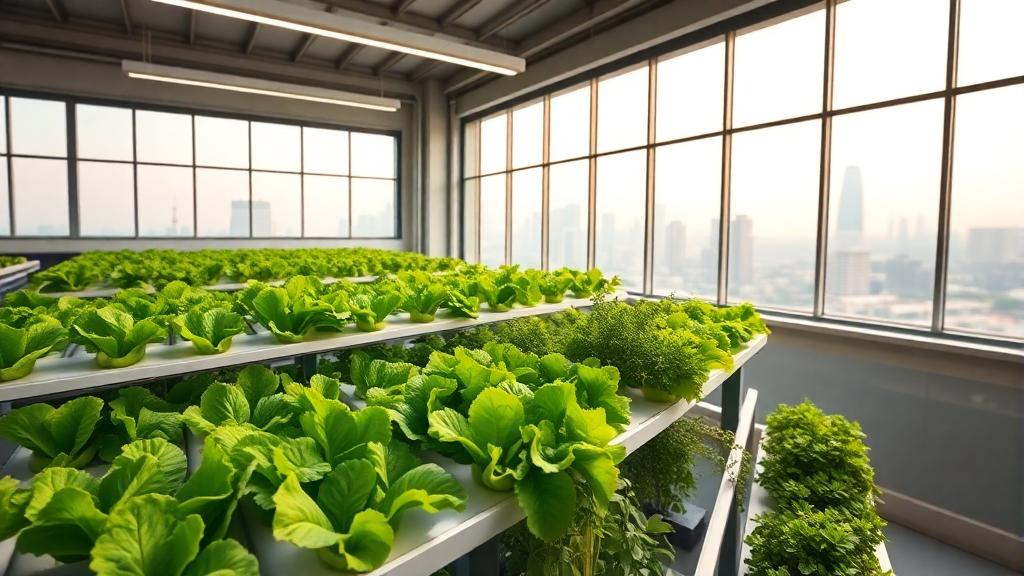
In Indian cities, vertical farming can sound like sci-fi – imagine skyscrapers stacked with spinach instead of offices. But with India’s population near 1.4 billion and almost no extra farmland to spare, new ideas are needed. Could vertical farms – indoor, LED-lit gardens – help us produce more food (saving water and beating pests), or are they just a fancy fad? We’ll unpack how these farms work, why startups and investors are excited, and whether the hype really holds water.
Why India Is Rethinking Farming
India’s agriculture faces multiple pressures, so it makes sense to look beyond traditional fields. Consider these facts:
Population boom: Nearly 1.4 billion people and limited arable land. Per capita farm size is shrinking.
Extreme weather: Recent years saw ~34 million hectares of crops lost to floods and another ~35 million to drought (2015–21). Whole states’ worth of crops vanished to unpredictable rains or heat.
Water scarcity: About 84% of India’s water goes into irrigation. In a bad monsoon, farms suffer badly.
Urban hunger: City folk want fresh veggies year-round. In fact, reports say local urban gardens in Mumbai and Delhi already provide ~60% of those cities’ fresh vegetables. India’s National Horticulture Board even estimates urban farms could meet roughly 40% of city households’ vegetable needs in coming years.
These trends – more mouths to feed, less water and land, and lots of city diners craving greens – set the stage for high-tech solutions like vertical farming.
How Vertical Farming Works
Vertical farming moves plants off the open field and into controlled indoor setups, often in cities. Here’s the gist:
Hydroponics & Aeroponics: Plants grow in water or nutrient mist instead of soil. These closed systems recycle water. For example, aeroponic towers can use 90% less water than a traditional field crop. Overall, vertical farms can cut water use by ~90–95%. That’s crucial in drought-prone India.
Stacked gardens: Crops are arranged on multi-tier shelves inside a greenhouse or warehouse. One analysis found a 30-floor vertical farm could match the output of ~2,400 acres of open farmland – a huge multiplier of space.
Controlled climate: Sensors, fans and LED lights keep temperature, humidity and light just right all year. This means year-round growing with much faster, more predictable harvests, since plants never see a monsoon flood or a winter chill.
Put simply, vertical farms are like high-tech indoor ecosystems. By removing soil pests and extremes of weather, they let us grow things much more intensively.
Who’s Doing It in India
Many homegrown enterprises are already experimenting. For example:
UrbanKisaan (Bengaluru/Mumbai): One of the largest Indian vertical farms, with multi-level growing towers. They claim their indoor lettuce yields 30× more per unit area than a field farm – and use 95% less water.
UGF Farms (Mumbai): Converts rooftops and vacant urban spaces into hydroponic micro-farms for leafy greens. They focus on zero-carbon growing and even run community workshops.
Triton FoodWorks (Delhi): A big urban farm (150,000 sq ft under glass) cultivating over 20 crops – from strawberries and tomatoes to coriander and broccoli.
365D Farms (Pune): A novel one-in-a-container vertical farm growing lettuce 365 days a year with advanced tech.
On the market side, growth is hot. Analysts estimate India’s indoor/vertical farming sector could hit around USD 200 million by 2025 (from a low base today). The global market is even bigger (over $40 billion by 2025) and Asia-Pacific is forecast to skyrocket (from $1.3B in 2023 to ~$6B by 2029). Investors and agri-majors are paying attention: many agri-tech funds are backing farms and government programs (like Startup India) now support agri-innovations with funding and incubation.
Benefits of Vertical Farming
Why all the buzz? Advocates highlight several advantages:
Local, year-round produce: Grow vegetables right in the city, 365 days a year. No long transport or seasonal gap means fresher greens in the market (great for chefs and health-conscious consumers).
Space efficiency: You can harvest a lot from a small footprint. Stacking racks multiplies yield. (Recall UrbanKisaan’s claim of 30× the lettuce yield on the same land.)
Water savings: By recirculating nutrient solutions, vertical farms use roughly 90–95% less water. In a country where most water goes to irrigation, this is a game-changer.
Clean, safe food: Indoor farming means far fewer pests. That translates to almost no pesticide use, so produce is cleaner and often qualifies as organic.
Consistent quality: Controlled lights and climate ensure even, high-quality crops. No surprises from weather means reliable supply (good for markets and restaurant supply chains).
In short, vertical farms directly tackle issues like land shortage and water use. For city residents (urban youth and families craving organic veggies), these points matter.
Challenges to Overcome
However, it’s not all smooth sailing:
High initial cost: Setting up vertical farms (LED lighting, climate controls, racks, building space) is very expensive. Only well-funded startups or companies can afford it initially. Many need heavy loans or VC cash.
Energy bills: All those lights and pumps run 24/7. If electricity comes from the grid or diesel generators, costs (and carbon footprint) can be high. India’s frequent power outages mean farms often invest in expensive backup systems or solar panels, adding to costs.
Crop limits: So far, vertical farms mainly grow leafy greens, herbs, and some fruits. You won’t see rice, wheat or corn growing under LEDs – the economics don’t work yet. This means vertical farming supplements our food supply (nice greens and specialty crops), rather than replacing staples.
Awareness & skills: Many traditional farmers and officials still view this as exotic. There’s a gap in technical know-how. Experts note that limited awareness and lack of training can slow adoption. Building a workforce that knows hydroponics is a hurdle.
Regulatory & logistics: Rules for urban farms are still developing. Cities need to allow unused buildings or land for farming. Startup teams must navigate building codes and permits, which can be a hassle.
These challenges explain why some say “the industry is struggling” despite its promise. It will take time (and likely cheaper tech) to overcome them.
Perspectives: Farmers, City-Folk & Investors
Who benefits? Urban consumers love the concept: younger city dwellers pay a premium for pesticide-free, local produce. For them, high-tech farming is very appealing. Startups are already offering subscription boxes of ultra-fresh greens via apps, tapping into this market.
Traditional farmers feel mixed. Most Indian farmers still cultivate outdoor fields of grains and vegetables. Vertical farming requires skills and investment they may not have. A few forward-looking farmers are trying hydroponics in small greenhouses, but broadly the technology is driven by startups and companies, not villages.
Investors see big potential but also risk. A projected $200M market by 2025 draws venture capital and even big AgriTech funds (some global agri-giants are keeping an eye on Indian vertical farms). But investors also watch returns carefully: the long payback and power costs mean only the best-run farms will really profit. We’ve seen a few high-profile funding rounds for farm-tech, but many projects have to prove they can scale and cut costs.
In short, vertical farming is mainly an urban tech phenomenon right now – aligning with city lifestyles and startups more than with the traditional farming sector.
Conclusion: Future or Fad?
My take: Vertical farming is more than a fad, but it’s not a standalone solution. It’s a promising piece of India’s agricultural future, especially for cities. I recently visited a vertical farm in Bengaluru – walking between metal racks of lettuce under blue LED lights felt like science fiction, but the salad it produced was real and delicious. That experience convinced me: this tech can work here.
Yet, when I chat with rice growers in rural Punjab or onion farmers in Maharashtra, vertical farming is a different world. It won’t replace the old rice fields, millet fields or orchards anytime soon. Think of vertical farming as adding a specialty crop to our menu – it lets us grow lots of salad greens and herbs with minimal water and zero pesticides right in Mumbai or Delhi. Meanwhile, our farmers will keep feeding us rice, wheat and pulses in the traditional way.
So, will vertical farms feed India by 2030? Not entirely. They will likely remain a fast-growing niche – leading to some local resilience and fresher veggies in cities, and creating high-tech jobs for young entrepreneurs. If costs come down (cheaper LEDs, more solar power) and people catch on, we could see many more towers of green in the next decade. But in my view, they complement rather than replace conventional farms.
Ultimately, vertical farming feels like the future more than a fad – it addresses real problems of land and water in a high-tech way. I’m excited that India is experimenting with it. As a food-lover and tech enthusiast, I hope these farms flourish. Just remember: a salad tower won’t solve everything. It’s one tool among many.
